
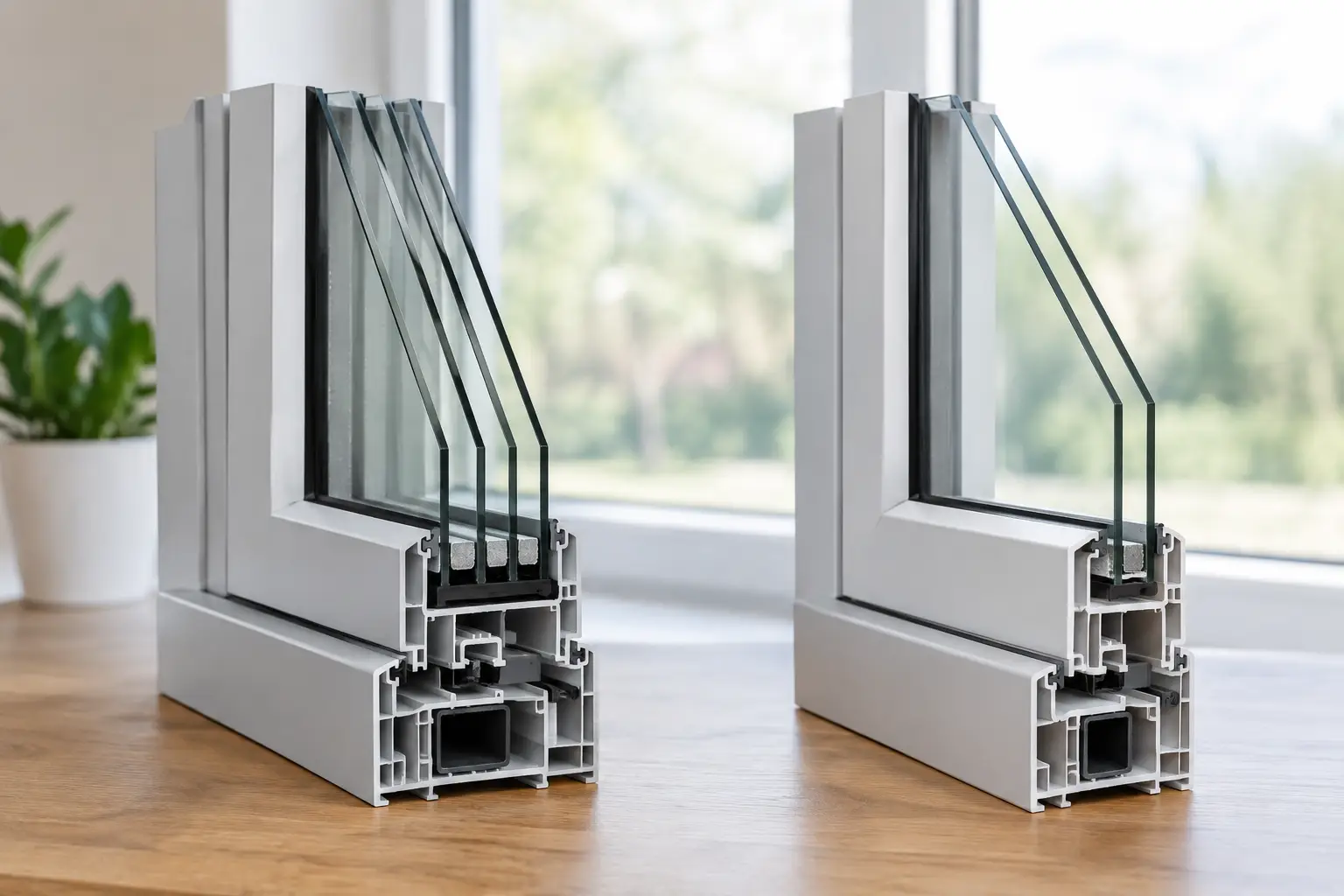
A cold patch beside the sofa, traffic noise at bedtime and heating that seems to disappear through the glass are familiar signs that older windows are no longer doing their job. When replacing them, the question of triple versus double glazing soon comes up. Triple glazing can offer excellent comfort, but it is not automatically the best choice for every home, room or budget.
The right decision depends on how your property is built, the direction it faces, the existing window frames and what you most want to improve. For many homes in Doncaster and across South Yorkshire, high-quality double glazing is a substantial step up. For others, particularly those exposed to cold, wind or regular noise, triple glazing can be well worth considering.
Triple versus double glazing: the practical difference
Double-glazed units contain two panes of glass with a sealed gap between them. Triple-glazed units use three panes and two sealed gaps. Those gaps are usually filled with an insulating gas, such as argon, and paired with low-emissivity glass coatings that help retain warmth inside the home.
That extra pane gives triple glazing another insulating layer. In simple terms, it can reduce heat loss through the glass more effectively than double glazing. It may also improve comfort near the window, because the inside pane stays warmer on a cold day.
However, the number of panes is only one part of window performance. The frame, glass specification, spacer bars, seals and fitting quality all matter. A well-made, professionally fitted double-glazed window can outperform a poorly specified triple-glazed one. It is why comparing the whole window, rather than just the glass, is essential.
Is triple glazing warmer than double glazing?
Generally, yes. Triple glazing usually achieves a lower U-value, which measures how quickly heat passes through a building element. The lower the U-value, the better the insulation. This can be especially useful in rooms that feel hard to heat, such as north-facing lounges, bedrooms over garages or exposed extensions.
The benefit is often felt as comfort rather than a dramatic overnight change to heating bills. You may notice fewer cold spots around the windows, less downdraught and a more even temperature across the room. That matters when a favourite chair sits near a large bay window or patio doors are used throughout the year.
Yet the difference will vary. If your walls, roof or floor insulation are weak, replacing windows alone cannot solve every heat-loss problem. Likewise, a modestly sized, sheltered room may not gain enough extra benefit from triple glazing to justify the additional cost. Honest advice should account for the property as a whole.
Solar gain can change the calculation
South-facing windows receive useful warmth from the sun, even during cooler months. Some triple-glazed units can admit slightly less solar heat than double-glazed alternatives, depending on the glass chosen. In a bright, south-facing room, a high-performance double-glazed specification may therefore make very good sense.
For a colder north or east-facing elevation, the greater insulation of triple glazing can be more attractive. The answer is not simply to put the same glass everywhere. A considered specification can match the glazing to each side of the house, while keeping the appearance consistent.
What about outside noise?
Triple glazing can help reduce noise, but a third pane does not guarantee a quieter home. Sound behaves differently from heat. The best acoustic performance often comes from using panes of different thicknesses, a suitable gap between them and laminated acoustic glass where needed.
If you live close to a busy road, railway line, school route or regular late-night traffic, tell your installer at the start. A window designed specifically for noise reduction may deliver a better result than a standard triple-glazed unit. Careful installation and fully sealed frames are equally important, as sound can find its way through small gaps.
For many homeowners, the greatest improvement comes from replacing older, draughty windows with modern units that close and seal properly. Triple glazing may be part of that solution, but it should not be treated as the only answer.
Weight, frames and opening styles
Triple-glazed units are heavier than double-glazed ones. That affects the choice of frame and hardware, particularly on larger opening sashes, sliding sash windows, French doors and wide glazed panels. Quality systems are engineered for the glass they carry, but the specification must be right from the outset.
This is particularly relevant when preserving a traditional look. Flush sash, timber-effect, heritage or sliding sash windows need to retain their clean proportions and operate smoothly. In some cases, double glazing offers the most practical balance between thermal performance, sightlines and the weight of the opening section.
Aluminium, uPVC and timber can all be used for energy-efficient windows, provided the product is properly designed and installed. The material should suit the style of the property, your maintenance preferences and the performance required. There is no single best frame for every home.
Cost and value: where does the extra spend go?
Triple glazing costs more because it uses more glass, additional manufacturing and heavier-duty components in some designs. Whether it represents good value comes down to your priorities and the home itself.
It can be a sensible investment if you are carrying out a major renovation, building an extension, replacing very old single glazing or tackling a particularly exposed property. It may also appeal if you plan to stay in the home for many years and want the best possible day-to-day comfort.
Double glazing remains an excellent choice for many replacement projects. Modern A-rated double-glazed windows can provide strong thermal performance, improved security and a noticeable reduction in draughts compared with ageing units. Choosing a quality product and careful installation is often more valuable than chasing a specification that does not suit the property.
When comparing quotations, check what is included. Ask about the whole-window energy rating, U-value, glass type, security hardware, guarantees and the condition in which your home will be left. A low initial price can be poor value if it compromises fitting standards, finish or long-term reliability.
Security and condensation considerations
Both double and triple glazing can be highly secure. Security depends on the complete window or door system: toughened or laminated glass where appropriate, multi-point locking, internal beading, secure hinges and professional fitting. Glazing alone should never be viewed as the full security specification.
Triple glazing can reduce internal condensation by keeping the inner pane warmer. But condensation is also linked to moisture in the home. Cooking, showering, drying washing indoors and limited ventilation can all contribute. Modern replacement windows seal far better than older ones, so suitable ventilation remains important.
Trickle vents, extractor fans and regular background ventilation can help manage moisture without leaving the house feeling cold. If condensation is a concern, it is worth discussing the rooms affected and how they are used, rather than assuming a new window will cure the issue by itself.
How to make the right choice for your home
Start with the problem you want to solve. Is the priority warmth, noise, security, appearance or replacing windows that have simply reached the end of their life? A good survey should look at the age and construction of the property, the window orientation, room use and the condition of the existing frames.
It also helps to see the glass and frame options in person. The difference in sightlines, colour, handles and opening operation is easier to judge when you can see a full window rather than a small sample. This is particularly valuable for homes with established character, where the replacement needs to look right from the pavement as well as perform well inside.
At JF Bodman, the focus is on matching a high-quality window specification to the home, rather than pushing one answer for every project. A clear, no-obligation quotation should explain the options in plain terms, so you can decide with confidence.
The best glazing choice is the one that gives your home a warmer, quieter and more secure feel without paying for benefits you are unlikely to notice. Take time to compare the complete specification, ask practical questions and choose an installer whose workmanship gives you lasting peace of mind.