
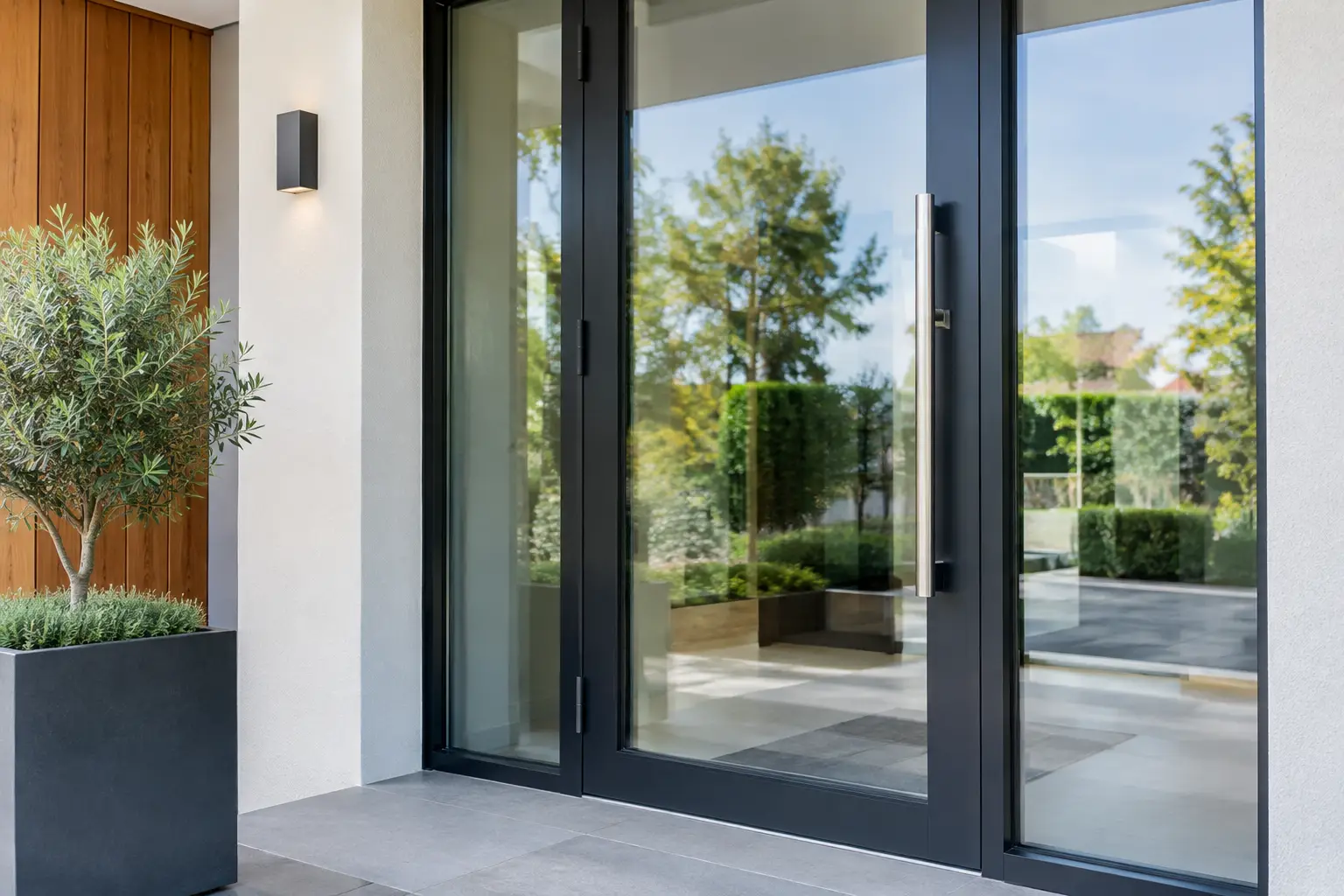
A glazed front door can make a hallway feel brighter before you have even switched on a light. It can also be one of the most exposed parts of your home. Toughened glass for external doors gives homeowners a safer way to enjoy that natural light, whether it is fitted in a composite front door, French door, patio door or aluminium entrance door.
It is often discussed as a security feature, but that is only part of the picture. The right glass needs to suit the location, the door style, your privacy needs and the rest of the door specification. Getting those details right is what gives you lasting peace of mind.
What is toughened glass?
Toughened glass is ordinary glass that has been heat treated and rapidly cooled during manufacture. This process puts the outer surfaces under compression, making the glass significantly stronger than standard annealed glass of the same thickness.
Its biggest safety benefit becomes clear if it breaks. Rather than forming large, sharp shards, it is designed to fragment into many small, relatively blunt pieces. That reduces the risk of serious cuts if a pane is hit, slammed or accidentally broken.
You may also hear it called tempered glass. For UK homes, toughened safety glass supplied for doors should carry a permanent marking that identifies it as safety glass. This should not be confused with decorative markings or stickers that can be removed.
Why toughened glass for external doors matters
External doors are used constantly. Children run in from the garden, shopping bags knock against panels, dogs jump up at the glass and gusts of wind can catch an open door. Glass in and around doors therefore needs to cope with more everyday impact than a typical window pane.
Building Regulations set out where safety glazing is required in critical locations. In practical terms, glazing within a door, and glass close to doors or at low level, will commonly need to be safety glass. A professional survey should confirm the precise requirement for your property and planned design, particularly where sidelights, glazed panels or unusual door configurations are involved.
There is also a simple human benefit. A door is not a feature you want to worry about each time the family comes and goes. Toughened glass provides a sensible level of protection without losing the light, colour and detail that make a new entrance feel personal.
Safety glass and security are related, but not identical
Toughened glass is stronger than standard glass, so it can offer greater resistance to accidental impact and opportunistic damage. However, strength and burglary resistance are not exactly the same thing.
When toughened glass is broken, it breaks away from the opening. That makes it safe in terms of the way it fractures, but it may not remain in place as a barrier. Laminated glass works differently. It uses two panes bonded with a clear interlayer, which helps hold the glass together after an impact. Depending on the specification, it can make forced entry more difficult because the pane remains in the frame for longer.
The best option depends on the door and its location. Toughened glass is an excellent and widely used safety solution for external doors. Where security is a particular concern, laminated glass or a specialist security glass specification may be worth considering. A ground-floor rear door out of view from the street, for example, may call for a different conversation from a small glazed fanlight in a well-used front entrance.
It is equally important to view the door as a complete system. High-quality glass cannot compensate for a weak frame, poor hinges, basic cylinder or rushed installation. Multi-point locking, a secure frame, correctly fitted hardware and precise installation all work together to protect your home.
Choosing the right glass unit
Most modern external doors use sealed double-glazed units rather than a single pane. These units combine panes of glass with a spacer bar and sealed cavity between them. The result is better thermal performance, less external noise and improved comfort near the door.
The glass facing outdoors may be toughened, while the inner pane and coatings are selected to achieve the required energy performance. Low-emissivity glass helps retain warmth, and the cavity may be filled with an insulating gas. The exact make-up varies by door system, panel size and manufacturer, so it is worth asking what is included rather than assuming every glazed door performs the same way.
A larger expanse of glazing can bring more daylight into a dark hallway, but it may also increase solar gain on a south-facing elevation. In a shaded entrance, that is rarely a concern. On a bright, exposed frontage, the glass choice and door colour can make a noticeable difference to comfort at certain times of year.
Privacy without closing off the light
A common concern with external door glazing is being overlooked. Fortunately, privacy does not mean choosing a solid, dark door with no natural light.
Obscure, etched and patterned glass can soften views into the home while still brightening the entrance. Decorative glazing can also echo the character of the property, from traditional leaded designs for period homes to cleaner geometric patterns for contemporary doors. Many homeowners choose clear glass in a high-level panel, or obscured glass in sidelights, to balance light with privacy.
Think about the view in both directions. During daylight hours, privacy glass may prevent passers-by from seeing clearly into the hallway. At night, once lights are on inside, silhouettes can be more visible depending on the pattern and obscurity level. Looking at samples in person is the most reliable way to judge how a design will feel at your own front door.
Style should work with the property
Toughened glass is available across a wide range of external door styles. A composite front door might use a decorative glazed panel to add character, while slim aluminium frames can support generous glazed sections and a more modern look. Timber doors bring warmth and traditional detail, and uPVC offers a practical, low-maintenance choice with plenty of panel and colour options.
For heritage-style homes in Doncaster and South Yorkshire, proportion matters as much as the pattern itself. A large modern glazed panel can look out of place on a cottage-style frontage, just as heavily patterned glass may distract from a simple contemporary entrance. The right design should look as though it belongs to the house, not as though it has been added as an afterthought.
Door furniture also affects the finished result. Letterplates, handles, knockers and numbers can either complement the glass design or compete with it. It helps to consider the door as one complete elevation before making individual choices.
What to check before ordering
Before choosing a glazed external door, ask how the glass is specified for safety, thermal performance and security. Confirm whether the glazed panel is toughened, laminated or a combination of both, and whether the whole unit meets the relevant requirements for its position.
You should also consider the practical details: how much privacy you need, which way the door faces, whether the entrance is exposed to bad weather and how visible the rear or side door is from neighbouring properties. If you are replacing an existing door, the surrounding brickwork, threshold and frame condition should be checked too. A well-made door deserves a proper fitting surface.
For doors with decorative glazing, ask to see the glass and colour together. Glass can look quite different against anthracite grey, black, oak-effect or a painted heritage finish than it does in a small brochure image. This is particularly worthwhile when matching existing windows or a porch.
Installation is part of the safety standard
Even excellent glass and a high-performance door will fall short if they are installed carelessly. The glass unit must sit correctly within the sash or door slab, with appropriate glazing beads, packers and seals. The frame must be fixed securely, aligned properly and finished so that draughts and water cannot find a route into the property.
This is why a detailed survey matters. Measurements alone are not enough. The installer should assess opening sizes, thresholds, access, drainage, surrounding materials and any potential complications before the work begins. Clear advice at this stage avoids compromises once the old door has been removed.
For homeowners, the result should be straightforward: a door that closes cleanly, locks confidently, keeps the weather out and looks right from the pavement as well as from inside the hall.
A new external door is a long-term part of your home, not a quick cosmetic change. If you are weighing up toughened glass, focus on the whole specification and how your household uses the entrance. With honest advice and a careful installation, JF Bodman can help you choose a glazed door that brings in the light while keeping safety, comfort and security firmly in place.