
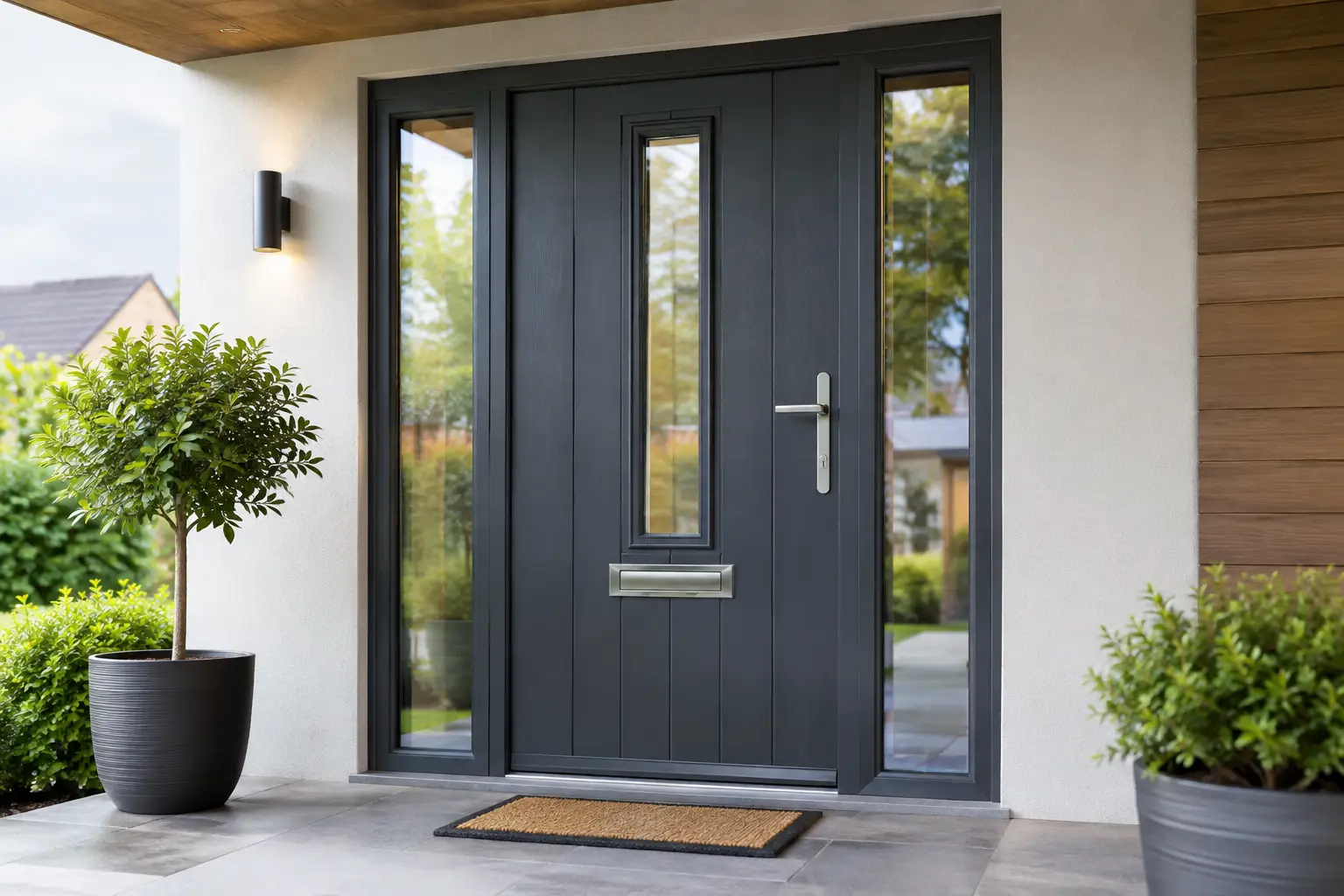
Your front door works harder than almost any other part of your home. It needs to welcome visitors, stand up to South Yorkshire weather, keep heat where it belongs and provide real reassurance when the house is empty. Solid composite doors are designed to meet all of those demands without asking you to compromise on appearance.
For many homeowners, they offer the right balance of traditional character and modern performance. However, not every composite door is made to the same standard, and the specification behind the design matters just as much as the colour, glazing or furniture you choose.
What makes a composite door solid?
A composite door is made from more than one material. Rather than relying on a single slab of uPVC, timber or aluminium, it combines layers selected for their individual strengths. The exact construction varies between manufacturers, but a quality door commonly includes a strong core, reinforced frame, durable outer skin and high-performance seals.
The word “solid” usually refers to the door’s substantial core and overall feel. A solid composite door should not sound hollow when it closes or flex easily under pressure. It has noticeable weight, a firm closing action and a reassuring sense of strength that lighter doors can struggle to match.
That construction brings practical benefits. A dense core helps slow down heat loss, while the outer layers are built to cope with moisture, changing temperatures and day-to-day knocks. It also creates a door that can support secure locking hardware and quality hinges properly.
Why homeowners choose solid composite doors
The first reason is often security. Your front door is a key part of your home’s protection, so it needs more than a good-looking handle and letterplate. A well-specified composite door can include multi-point locking, reinforced sections, secure hinges and toughened or laminated glass where glazing is fitted. Together, these features make forced entry far more difficult.
Energy efficiency is equally important. Older timber doors, poorly fitting uPVC doors and draughty frames can make a hallway feel cold before winter has properly arrived. Because a composite door is insulated and fitted with effective weather seals, it can help reduce cold spots and unwanted draughts. The difference is often felt immediately around the entrance, particularly in homes with an exposed frontage.
Appearance matters too. Composite doors are available in a wide choice of panel designs, colours, woodgrain finishes, glazing styles and hardware. A classic cottage-style door may suit a period terrace in Doncaster, while a simpler design in anthracite grey or black can complement a more contemporary property. There is no need to choose between a smart entrance and a practical one.
Maintenance is another advantage. Unlike traditional timber, a composite door does not normally need regular sanding, staining or repainting to protect it from the weather. Routine cleaning and occasional checks of the moving parts are generally enough to keep it looking its best.
The details that make a real difference
A door can look impressive in a brochure yet disappoint if the frame, fitting or security specification is weak. This is why it pays to look beyond the panel design.
Core and skin construction
Ask what sits inside the door. Some products use a high-density foam core, while others have a solid timber-based core. Both can perform well when part of a properly engineered system, but they can feel different and offer different levels of weight, insulation and impact resistance.
The outer skin also affects long-term performance. A durable, weather-resistant finish should hold its colour well and resist everyday scuffs. If your entrance receives strong sunlight or driving rain, this is especially worth discussing before you decide.
Frame, seals and threshold
The door slab is only one part of the installation. A quality frame and carefully fitted seals help prevent draughts and water ingress. The threshold should be practical for everyday use, creating a neat finish while considering access needs for pushchairs, wheelchairs or reduced mobility.
A good installer will assess the existing opening rather than treating every doorway as identical. An out-of-square frame, damaged brickwork or an old porch can all affect the result if they are not dealt with properly.
Locks and glazing
Look for a multi-point locking system and a high-security cylinder suited to the door. The cylinder is a small component, but it is central to how the door resists common methods of attack. Letterplates, handles and spyholes should also be chosen with security in mind, not just style.
If you would like glass in the door, it does not mean compromising peace of mind. Toughened glass and carefully designed decorative glazed units can bring light into a darker hall while retaining privacy. Think about where the sun falls, how visible the hallway is from the street and whether obscured glazing would suit the property better.
Choosing a style that suits your home
The most successful front doors look as though they belong to the house. Start by considering the age and character of the property, then look at the brickwork, window frames, roofline and any existing porch or canopy.
For traditional homes, a door with raised or recessed panels, a woodgrain finish and decorative glass can add warmth without the ongoing upkeep of timber. Deep blue, green, red and black are popular choices where homeowners want a distinctive but established look.
For newer properties, a clean-lined design with minimal glazing can create a more contemporary entrance. Grey remains a popular option, but it is not the only choice. A carefully selected colour can lift a plain frontage and give the home more individuality.
Do not overlook the hardware. A classic knocker, polished chrome handle or black lever can change the character of the same door design. Ideally, coordinate it with house numbers, outside lighting and nearby gate furniture for a considered finish.
Are there any trade-offs?
Solid composite doors are a premium choice, so they usually cost more than a basic uPVC front door. That higher initial price reflects the materials, construction, security hardware and range of finishes available. For homeowners planning to stay in their property, the improved comfort, appearance and durability can make that investment worthwhile.
They are also heavier than many alternatives. This is part of what gives them their substantial feel, but it means professional installation and correct hinge adjustment are essential. A poorly fitted composite door can become difficult to close, lose its weather seal or fail to perform as it should.
Colour choice deserves some thought as well. Darker finishes can look striking, yet an entrance that gets intense direct sun may need a product and finish designed to manage heat exposure. Honest advice at the survey stage helps avoid choosing a door based on a small sample rather than the realities of your property.
Why fitting quality matters as much as the door
Even the best door will not deliver its full benefits if it is installed carelessly. Accurate measuring, secure frame fixing, correct packing and a clean finish around the opening are all vital. The lock, hinges and keeps must be aligned precisely, so the door closes smoothly and seals evenly.
At JF Bodman, this is approached as a home improvement project rather than a simple product swap. The aim is a door that looks right, operates properly and gives you confidence each time you lock up. Clear advice before fitting also makes it easier to choose the design and specification that suits your home, not just the latest trend.
Questions worth asking before you order
Before committing, ask for a clear explanation of the door construction, lock specification, glass options and guarantees. Check what is included in the quotation, including removal of the old door, finishing work and disposal. It is also sensible to ask how the installer will deal with any unexpected issues uncovered when the existing frame is removed.
Take time to view full-size samples where possible. Photographs are useful, but they cannot show the depth of a panel, the texture of a woodgrain finish or the weight of the door when it closes. A front door is a daily-use item, so those details matter.
The right choice is not simply the boldest colour or the lowest quote. It is a solid composite door specified for your property, fitted with care and chosen with enough thought to serve your home well for years to come.