
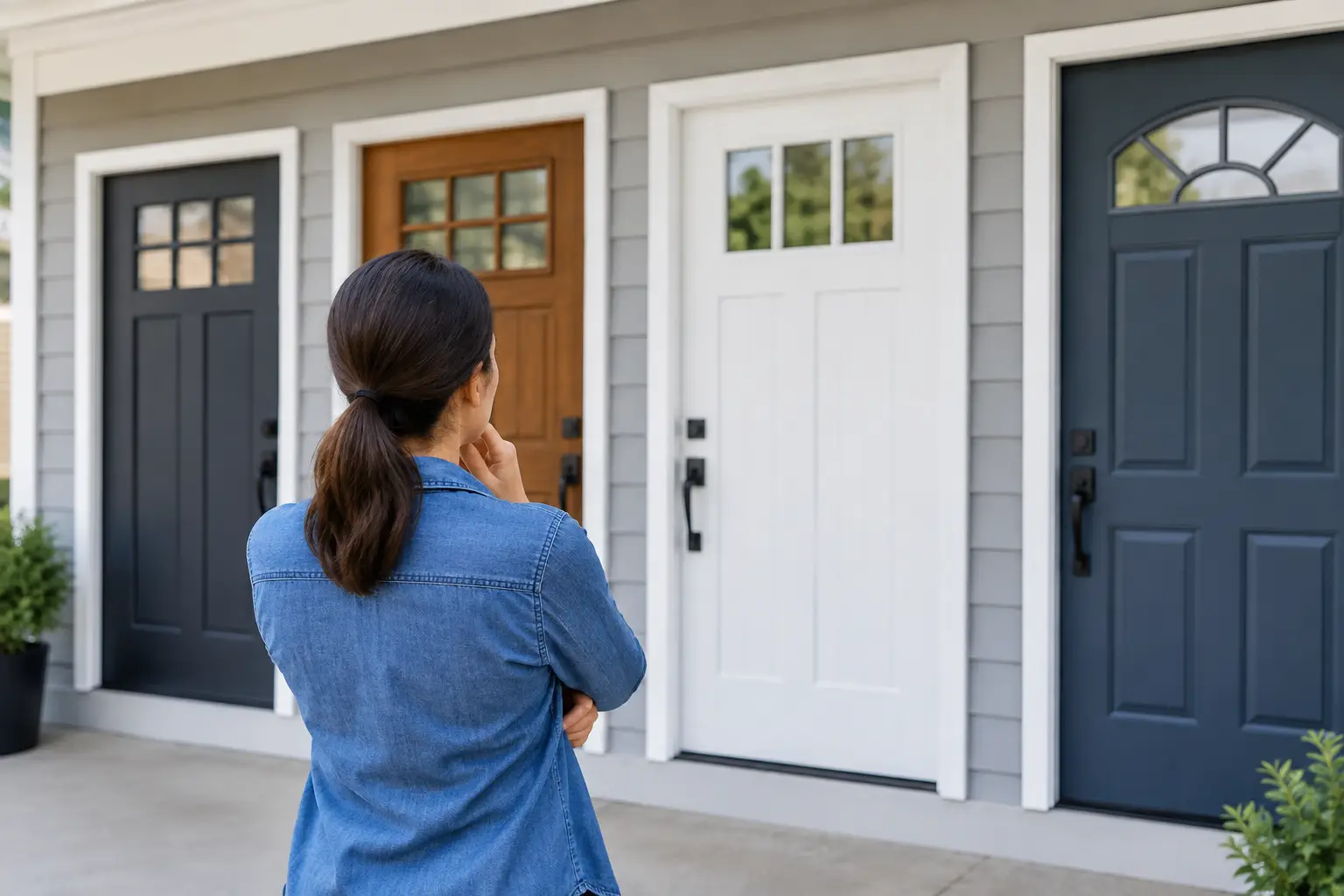
A front door has a demanding job. It needs to welcome visitors, stand up to South Yorkshire weather, protect your home and look right against the brickwork every time you pull onto the drive. This replacement door guide is designed to help you make that decision with confidence, without getting lost in technical detail or sales talk.
The best choice is rarely about picking the most expensive door or copying a style seen elsewhere. It is about finding the right balance of appearance, performance, security and budget for your particular property.
A replacement door guide that starts with your home
Before comparing materials and colours, consider what is not working with your current door. You may feel a draught around the frame, notice cold spots in the hallway or struggle with a lock that has seen better days. Perhaps the entrance simply no longer reflects the care you have put into the rest of the house.
These problems point to different priorities. If warmth and lower heating bills are high on the list, the whole door set matters – the insulated panel or sash, glazing, seals, frame and professional fitting all contribute. If security is the concern, look beyond a shiny handle and ask about the locking system, hinges, cylinder protection, toughened glass and how the frame is fixed into the opening.
The age and style of your property should guide the design too. A modern composite door can give a 1930s semi a smart, traditional feel when paired with the right glazing and furniture. A slim aluminium entrance door may suit a contemporary extension. For a period home, a carefully chosen timber or heritage-style option can retain character while improving day-to-day performance.
Choose the material for the job
There is no single best material. Each has strengths, and an honest recommendation should take account of your home, the position of the entrance and how much maintenance you are happy to take on.
Composite doors
Composite doors are a popular choice for front and back entrances because they combine a solid feel with strong insulation and low maintenance. They are available in a broad range of panel designs, colours and woodgrain finishes, so they can work on both traditional and more contemporary homes.
A good composite door should feel substantial when it closes, with secure hardware and a close-fitting frame. Quality varies between products, however. Compare the complete specification rather than choosing on appearance alone, particularly the locking, glazing, threshold and installation standard.
uPVC doors
A modern uPVC door remains a practical, cost-effective option. It is easy to maintain, resistant to the weather and available in far more styles than many homeowners expect, including wood-effect finishes and traditional panel arrangements.
For side doors, utility entrances and many back doors, uPVC can offer excellent value. It may not provide the same weight or design flexibility as a premium composite or aluminium option, but the right product, properly fitted, can make a genuine difference to comfort and security.
Aluminium doors
Aluminium is strong, stable and well suited to clean, contemporary designs. It allows for slim sightlines and is particularly effective where you want larger glazed areas, a statement entrance or doors that connect the house to the garden.
The trade-off is usually cost. Aluminium is often a bigger initial investment, but its crisp appearance, durability and low-maintenance finish make it attractive for homeowners planning a long-term improvement. Thermal performance should still be checked carefully, as it depends on the system and glass specification rather than the material name alone.
Timber doors
Nothing quite matches the natural detail of a well-made timber door, especially on a character property. Timber can be shaped, painted and finished to create a truly individual entrance, and it suits homes where authenticity matters.
It does require more care than uPVC, composite or aluminium. High-quality coatings and sensible maintenance help timber stay at its best, but it is worth being realistic about that commitment. For the right property, it is a choice that adds real warmth and character.
Security should be built in, not bolted on
A replacement door should give you peace of mind from the moment it is fitted. That starts with a strong door and frame, but it also includes the details that are easy to overlook.
Look for multi-point locking that secures the door at several points around the frame. Ask whether the cylinder is designed to resist common forms of attack and whether hinges have security features where appropriate. If your design includes glazed sections or sidelights, toughened safety glass is an important consideration.
The letterplate, spyhole, handle and threshold should be treated as part of the overall security picture. A handsome door with poor-quality hardware is not a complete solution. Equally, even the best product will not perform as intended if it is badly measured or poorly installed. Accurate survey work and skilled fitting are where much of the long-term value lies.
Think about glass, light and privacy
Glazing can turn an ordinary entrance into a brighter, more welcoming part of the house. A glazed panel, fanlight or sidelight can bring daylight into a dark hallway, while decorative glass can add personality without exposing your home to the street.
Your choice depends on the position of the door. Clear glass may work beautifully on a private drive, while obscure, textured or patterned glass is often better for an entrance that faces a pavement. Consider the view from inside as well as the appearance outside. A small change in glass design can make a hallway feel much less enclosed.
Safety and energy efficiency matter here too. Toughened glass is commonly used in doors for added safety, while modern double glazing helps reduce heat loss. If you are comparing quotes, make sure they describe the glass specification clearly rather than simply saying glazed.
Get the style details right
A replacement door is one of the most visible improvements you can make to a home. The panel design should sit comfortably with the property, but colour, glazing and hardware are what bring it together.
Black, anthracite grey and deep blue can create a confident, contemporary entrance. Greens, reds and softer heritage shades often complement traditional brickwork. White remains a clean and dependable choice, particularly where it matches existing window frames. A woodgrain finish can provide the look of timber with less upkeep on selected uPVC and composite options.
Do not choose the handle as an afterthought. Letterplates, knockers and handles should suit each other in both finish and proportion. Chrome, black, antique-style and stainless-steel furniture can each change the character of the same door design. If the entrance is exposed to wind and rain, ask which finish is most suitable for that location.
Do not overlook the frame and threshold
Homeowners naturally focus on the door leaf, yet the frame and threshold affect appearance, access, weather resistance and performance. A low threshold can make entering the property easier for children, older relatives, pushchairs and anyone with limited mobility. It may be especially worthwhile at a frequently used rear or patio entrance.
Colour-matched frames create a more unified finish, while a contrasting frame can suit certain styles. During survey, the installer should also assess the surrounding brickwork, existing opening and any nearby windows. This is how a replacement looks like it belongs to the house rather than being placed into it.
Set a budget around lasting value
Prices vary because doors vary. Material, size, glass, hardware, colour, bespoke design work and installation complexity all affect the final figure. It can be tempting to compare only the headline price, but that does not tell you whether two quotations cover the same quality of product or level of work.
A clear quotation should explain what is included: survey, removal of the old door, frame, glazing, locks, furniture, trims, making good and waste disposal. It should also make the guarantee clear. Paying for good fitting and dependable aftercare can save considerable frustration later.
For homeowners in Doncaster and the surrounding area, JF Bodman brings the practical advantage of an established family-run installer: direct advice, a careful survey and a fitted result that is built to last. Since 1974, that local accountability has mattered just as much as the product itself.
Make the final decision with samples and a survey
Photographs are useful, but colours and textures can look different in daylight. View samples where possible and hold them against your brickwork, render and window frames. Think about how the door will look in winter as well as in bright summer sun.
A proper survey is the point to discuss opening direction, access, threshold height, ventilation, sidelights and any concerns about the existing frame. It is also the right time to ask straightforward questions about security, energy performance and installation. You should not feel rushed into a choice.
The right replacement door is the one that feels secure when it closes, keeps the hallway more comfortable and makes you pleased to arrive home. Take time over the details, choose quality worth the difference, and the result will serve your home well for many years.