
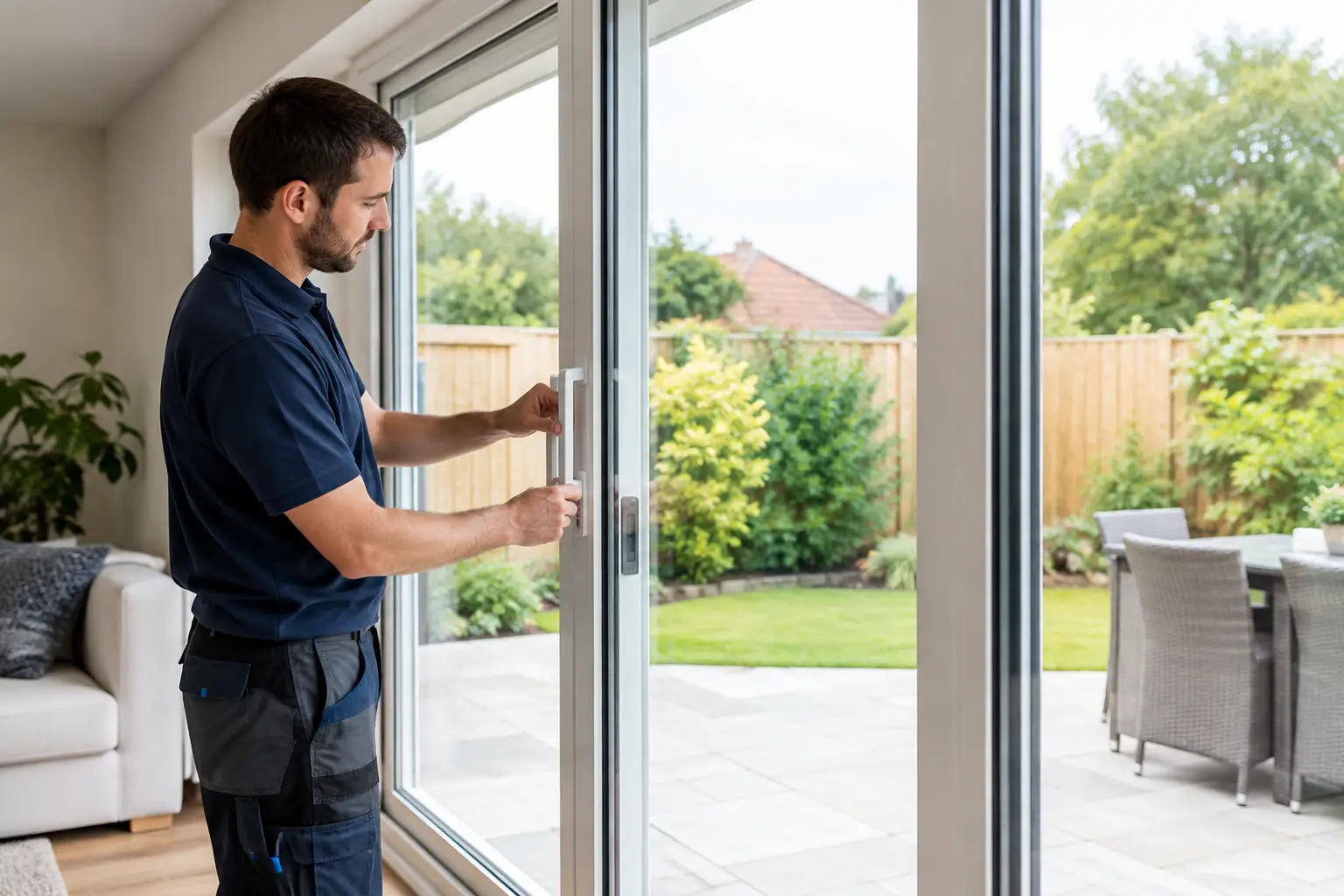
A patio door that sticks, lets in a cold draught or no longer locks with confidence soon affects more than the view of the garden. For homeowners considering patio door replacement Doncaster, the right choice can make a room warmer, brighter and easier to enjoy every day – while improving security and the appearance of the property.
The best replacement is not always the largest expanse of glass or the most fashionable style. It needs to suit how you use the room, the available opening, your budget and the character of your home. A well-planned door should feel good to operate, close securely and perform properly through South Yorkshire winters.
Start with how you use the space
Before comparing frames, colours and glazing options, consider the route between house and garden. Is it used constantly by children, pets and family members? Do you want a clear, uninterrupted view while sitting indoors? Are you hoping to open up the room for summer entertaining, or simply replace a tired existing sliding door?
These answers usually point towards the right style. A sliding patio door is often the practical choice where furniture, a dining table or a narrow patio sits close to the opening, because its panels do not swing into the room or garden. French doors give a more traditional look and can provide a wide opening when both doors are opened. Bi-fold doors create a striking open-plan connection to the outside, but need room for the panels to fold back and are not automatically the best option for every property.
It is also worth thinking about the everyday routine, rather than only sunny-day photographs. If the door will usually be opened briefly to put washing out or let the dog into the garden, a configuration with one easy-access traffic door may be particularly useful.
Patio door replacement Doncaster: choosing a style
Sliding patio doors
Modern sliding doors are a strong all-round option for many homes in Doncaster. They offer generous glass areas, slim sightlines on selected systems and smooth access to the garden without taking up valuable floor space. Larger panels can bring more daylight into a kitchen, extension or lounge while keeping the layout of the room practical.
The trade-off is that only part of the overall opening is available at any one time. With a two-panel sliding door, one panel typically moves behind the other. This is rarely a problem for daily use, but homeowners hoping to remove almost the entire boundary between inside and outside may prefer bi-fold or French doors.
French doors
French doors remain a popular choice for period homes, traditional properties and smaller openings. They are welcoming, balanced in appearance and can be made in uPVC, aluminium or timber to complement existing windows and exterior details.
When both doors are open, French doors provide a clear and useful opening. However, the outward or inward swing must be considered carefully. Outward-opening doors preserve interior floor space, although they need a clear patio area. Inward-opening doors may suit a covered external space, but require room inside.
Bi-fold doors
Bi-fold doors are designed for homeowners who want the widest possible opening. Folded neatly to one side or split to either side, they can transform an extension into a sociable space during warmer months. Aluminium bi-folds are especially popular for contemporary projects because they allow strong, slimmer frames and a wide choice of finishes.
There are practical points to weigh up. More panels mean more frame lines when the doors are closed, and the threshold, drainage and setting-out need careful attention. A quality system, professionally fitted, makes a real difference to how bi-folds operate and how well they keep out wind and rain over time.
Frame materials: performance and appearance
uPVC remains an excellent value choice for replacement patio doors. It is low maintenance, efficient and available in a broad range of finishes, including realistic wood-effect colours. For many homes, it provides the balance of performance and cost that makes a replacement project straightforward.
Aluminium is well suited to larger glazed areas and more contemporary designs. Its strength allows narrower profiles in many applications, so there is more emphasis on glass and light. It is durable and requires little upkeep, though it can cost more than uPVC depending on the size and specification.
Timber has a warmth and character that can be right for heritage homes and properties where an authentic finish matters. It requires more care than uPVC or aluminium, but a well-made timber door can be a lasting and attractive feature. The sensible choice depends on the property, the desired finish and how much maintenance you are happy to take on.
Do not overlook glass, security and thresholds
A door is only as good as its full specification. The glass, locking system, hardware and installation all influence comfort and peace of mind.
Double glazing with a high-performing sealed unit helps reduce heat loss and can make a noticeable difference near the door on cold days. Depending on the location of the property, homeowners may also benefit from enhanced acoustic glass to soften traffic noise or toughened safety glass in areas where it is required. South-facing rooms can become uncomfortably warm in summer, so solar-control glazing may be worth discussing for large areas of glass.
Security should be built into the design rather than added as an afterthought. Look for strong multi-point locking, secure handles and cylinders suited to the door system. Good hardware should feel solid and operate cleanly. The doors should also be fitted squarely, with no excessive movement, gaps or difficulty engaging the lock.
Threshold design matters too. A low threshold can make the garden easier to access for pushchairs, children and anyone with reduced mobility. It must still be detailed correctly to manage weather exposure and avoid water ingress. The most suitable arrangement depends on whether the door is sheltered, the level of the patio outside and the construction of the existing opening.
Getting the measurements and layout right
Replacing an existing door is often more involved than measuring the old frame and ordering something similar. A survey should assess the structural opening, lintel, surrounding brickwork, internal finishes and external levels. This is particularly important when changing from a small sliding door to a wider bi-fold or French door arrangement.
The opening direction, handle position and panel configuration should be agreed before manufacture. Small decisions can have a big effect. For example, choosing the wrong side for the main access door can make moving between the kitchen and garden unnecessarily awkward for years to come.
Colour also deserves consideration. Anthracite grey remains popular, but it is not the only option. White can suit traditional homes, black frames can create a bold contrast, and softer heritage shades or woodgrain finishes may better complement brickwork and existing windows. Viewing samples against the property in natural light is always worthwhile.
Why fitting quality matters as much as the door
Even a premium patio door will not perform as it should if it is poorly installed. Accurate surveying, careful preparation and proper finishing around the frame protect the investment. They also help ensure the door slides or folds smoothly, locks correctly and remains weather-tight.
A local, experienced installer should explain what is included, identify any building work that may be needed and provide clear advice without pushing a one-size-fits-all product. At JF Bodman Ltd, this consultation-led approach helps homeowners compare practical options before committing to a design, finish or configuration.
Ask about the product specification, glass type, locks, handles, threshold and warranty, rather than comparing quotes on price alone. A lower initial figure may not include the same level of glazing, hardware, finishing or installation care.
Plan for a door you will enjoy using
A replacement patio door should improve ordinary moments: opening the garden on a bright morning, watching the children outside from the kitchen, or sitting near the glass without feeling a chill. The most successful projects are usually the ones where style and performance have been considered together.
Take time to discuss the opening, the way your household uses it and the details that affect daily life. With honest advice and a properly specified installation, your new patio door can feel like a natural part of the home from the first day it is fitted.