
A cold line across the hall floor, a rattling letterbox or a noticeable draught around the frame can make a whole house feel harder to heat. Knowing how to improve door insulation starts with finding where heat is actually escaping, then choosing a repair or upgrade that suits the age, condition and style of your property.
A well-insulated external door should feel solid, close evenly and form a consistent seal against the frame. If it does not, your heating system has to work harder to maintain a comfortable temperature. Small improvements can make a real difference, but an ageing or poorly fitted door may need more than another strip of foam.
How to improve door insulation: find the weak point first
Before buying any draught-proofing materials, inspect the door on a cool or windy day. Run your hand slowly around the edges of the closed door, particularly at the hinge side, lock side and threshold. You may feel moving air, although a visible gap or daylight around the frame is an even clearer sign.
Look for worn, flattened or broken seals. Check whether the door catches, drops on its hinges or needs a firm push to latch. These issues are often connected: when a door is out of alignment, even good seals cannot do their job properly.
It is also worth checking the letterbox, keyhole and glazing. A door can look sound from a distance while losing heat through several small gaps. In older homes across Doncaster and South Yorkshire, changes in temperature, damp weather and years of use can gradually affect timber, seals and moving parts.
Seal gaps around the frame
The gap between the door and its frame is usually the first place to address. Modern uPVC, composite and aluminium doors typically use fitted compression seals around the frame. These should be clean, flexible and continuous, with no splits, loose corners or sections that have pulled away.
Wipe seals with warm, soapy water and dry them thoroughly. Dirt can prevent a close seal, while a little appropriate silicone-based lubricant can help rubber remain supple. Avoid painting over seals or using harsh products that may cause them to deteriorate.
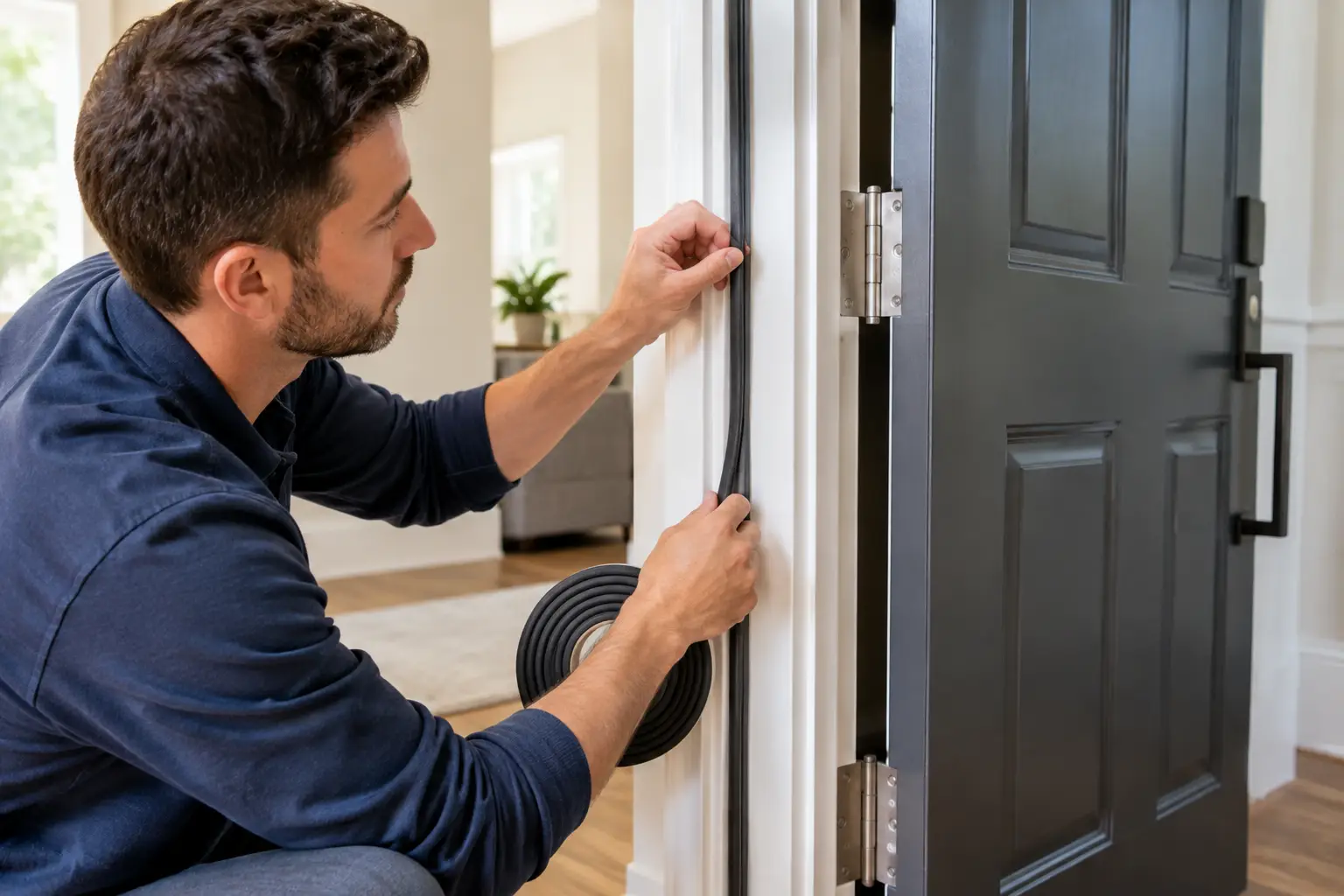
If your door does not have integral seals, or there is still a gap, self-adhesive weatherstripping can be a sensible short-term improvement. Choose a strip sized for the gap rather than the thickest option available. A seal that is too bulky may stop the door closing properly, strain the hinges or make the lock difficult to operate.
Foam strips are inexpensive and easy to fit, but they can wear quickly on a busy front or back door. Rubber or brush seals usually last longer. They are a practical choice where the gap is small and consistent. If the gap varies significantly from top to bottom, the door is more likely to need adjustment than extra packing.
Do not overlook the hinge and lock sides
Homeowners often focus on the bottom of the door, but draughts can enter along either vertical edge. Check that the door sits evenly in the frame and that the locking points pull it firmly against the seals. A loose handle, stiff lock or door that needs lifting before it shuts can point to an alignment issue.
Many modern doors can be adjusted at the hinges or keeps, but this should be done carefully. Small adjustments can improve the fit; incorrect ones can make the door difficult to lock or affect its security. If you are unsure, professional advice is the safer option.
Improve insulation at the bottom of the door
The threshold takes plenty of punishment from shoes, rain and everyday use, so it is a common source of heat loss. Look for a gap beneath the door when it is closed. A brush or rubber draught excluder fitted to the bottom edge can help, especially on an older timber door with no effective threshold seal.
The right solution depends on how the door opens and the floor surface beneath it. A brush strip suits uneven paving or a rough surface, while a rubber blade can provide a closer seal over a smooth threshold. Neither should drag heavily, trap water or prevent the door from opening freely.
For external doors, avoid relying on a fabric draught excluder as the main fix. It may make a room feel warmer when placed inside, but it does not seal the door properly and can become damp near an entrance. A correctly fitted threshold and bottom seal will give a more reliable result.
If the threshold itself is loose, damaged or poorly sealed to the surrounding floor, the issue may extend beyond the door. Water ingress can damage adjoining materials and create a persistent cold spot. This is worth investigating before fitting cosmetic draught-proofing over the top.
Check letterboxes, keyholes and glazed panels
A letterbox is a surprisingly common route for cold air. A flap that does not sit flat, lacks an internal brush or has a damaged surround can let in a steady draught. Replacing it with a quality, insulated letterplate can improve comfort without changing the character of the door.
Keyhole covers are another simple addition, particularly on older doors. Choose one that is suitable for your lock type and does not obstruct normal use. Security should never be compromised for the sake of draught reduction.
If your door has glazed sections, inspect the beads and seals around the glass. Condensation between panes suggests that a double-glazed unit has failed and is no longer performing as it should. Replacing the glass unit may be possible in some doors, but the condition of the frame, panel and locking system should be considered at the same time.
When door insulation is really a door replacement issue
Draught-proofing is worthwhile where the door is fundamentally sound. It is less effective if the frame is warped, the panel is thin, the glazing has failed or the door no longer locks securely. Repeatedly replacing strips and seals can become a false economy when the main structure has reached the end of its useful life.
A modern composite door offers a dense, insulated core with durable outer skins, while a well-specified uPVC door can provide excellent thermal performance at a more modest budget. Aluminium entrance doors are strong, slim and highly weather-resistant, with thermally broken frames designed to reduce heat transfer. Timber remains a popular choice for character properties, but it needs quality construction, a suitable finish and regular care to perform well over time.
The best choice is not simply the door with the highest advertised figure. The frame, glazing, threshold, hardware and installation all affect the finished result. A high-performing door fitted poorly can still allow draughts and water ingress around the perimeter.
For homeowners planning a replacement, consider security and appearance alongside warmth. Multi-point locking, reinforced frames, toughened or laminated glass where appropriate, and a style that suits the property can provide everyday peace of mind as well as lower heat loss. At JF Bodman, this is why advice begins with the home and the entrance itself, rather than a one-size-fits-all recommendation.
Avoid common draught-proofing mistakes
Do not block purposeful drainage holes in a uPVC or aluminium door frame. These channels allow rainwater to escape, and sealing them can create a bigger problem with water sitting inside the frame.
Be cautious about filling large gaps with expanding foam from the inside. It can look like a quick answer, but it may interfere with movement, conceal an underlying fitting issue and leave an untidy finish. Large gaps around an external frame should be assessed and sealed using suitable materials as part of a proper repair.
Also avoid forcing a door tighter if it is already difficult to close. A door that needs excessive pressure may be misaligned, swollen or affected by a damaged lock. Insulation improvements should make the entrance more comfortable without making it less secure or harder to use.
Keep seals working through the year
A quick seasonal check can prevent small faults becoming bigger ones. Clean the frame and threshold, remove grit from drainage channels, inspect seals for damage and make sure hinges and locks operate smoothly. Autumn is an especially useful time to do this, before colder weather exposes every small gap.
If one room feels colder than the rest of the house, do not assume the problem is solely the door. Nearby windows, wall insulation, ventilation routes and the heating setup can all play a part. Even so, an external door that shuts cleanly and seals properly is one of the simplest ways to make an entrance hall feel warmer and more welcoming.
A door should protect your home from the weather without becoming something you have to wrestle with each day. Start with the seals and fit, act on any signs of movement or damage, and choose a quality replacement when repairs are no longer giving the comfort, security and finish your home deserves.