
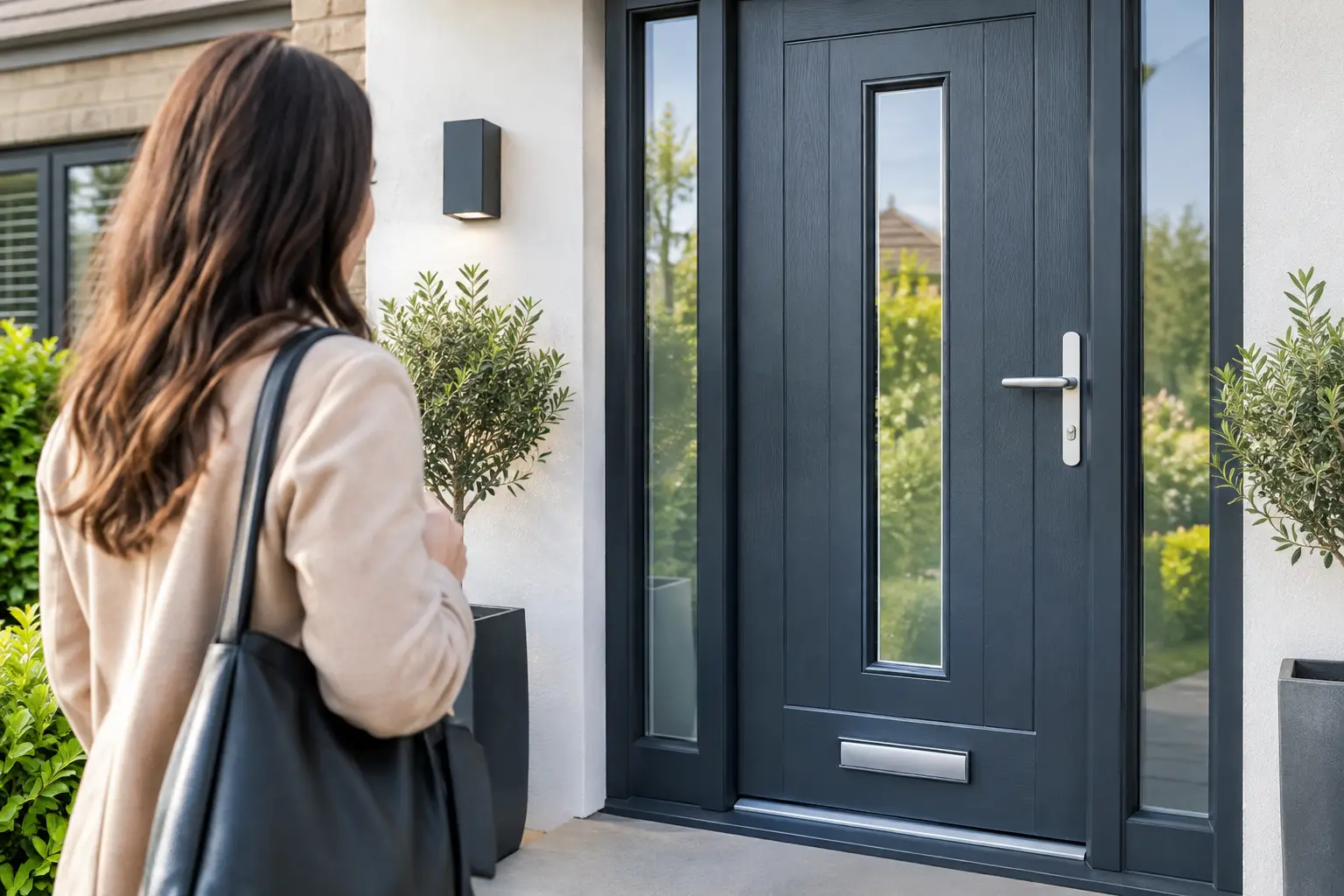
A front door should feel reassuring the moment it closes behind you. For homeowners replacing an older timber or uPVC door, one question usually comes first: how secure are composite doors? A well-made, professionally fitted composite door can offer an excellent level of protection, combining a strong outer skin, reinforced frame, multipoint locking and secure glazing in one entrance system.
The key phrase is well-made and professionally fitted. Security is not simply about choosing the heaviest-looking door. The quality of the slab, frame, lock cylinder, glass, hinges and installation all matter. Get those details right and a composite door is a strong, dependable choice for homes across Doncaster and South Yorkshire.
What makes a composite door secure?
A composite door is built from several materials rather than one solid piece of timber or plastic. Its internal construction commonly includes a high-density insulated core, with reinforced sections and durable outer skins designed to resist everyday knocks, weather and attempted forced entry.
This layered build gives composite doors an advantage over many older door types. They are difficult to force, less prone to warping or splitting than traditional timber, and more rigid than a basic, unreinforced uPVC door. The door is designed as part of a complete system, so the frame, locking points and hinges work together rather than relying on a single central lock.
That does not mean every composite door offers identical protection. Product specifications vary, and a low-cost door with basic hardware may not perform like a premium door with a reinforced frame and tested security fittings. It is worth looking beyond the colour, glass design and handle style before making a decision.
How secure are composite doors against forced entry?
In practical terms, a quality composite door is highly resistant to the most common methods of forced entry. A solid, rigid door leaf makes it harder to kick, shoulder or pry open, while a multipoint locking system secures the door at several positions around the frame.
Instead of relying only on the lock in the middle, multipoint locks may engage at the top, bottom and sides of the door. Depending on the design, these can include hooks, rollers, bolts and deadbolts. When the handle is lifted and the door is locked, the slab is pulled firmly into the frame, reducing weak points around the edge.
The frame matters just as much. Even a very strong door can be undermined by a poorly secured or lightweight frame. A proper installation ensures the frame is fixed squarely to the structure of the house, with appropriate fixings and no gaps that could compromise security or weather performance.
The lock cylinder is a vital detail
The cylinder – the part where you insert your key – deserves particular attention. Standard cylinders can be more vulnerable to attack than modern security cylinders, especially on older doors. Look for a high-security cylinder designed to resist common methods such as snapping, drilling and picking.
Cylinder snapping has received plenty of attention because it can affect certain euro cylinder locks. The solution is straightforward: choose an anti-snap cylinder with a sacrificial section. If an attacker attempts to break the outer part, the internal locking mechanism is protected, helping to keep the door secure.
A thumbturn cylinder can also be useful in some homes, allowing you to lock and unlock the door from inside without searching for keys. However, its suitability depends on the door layout and any nearby glazed panels. An experienced installer can advise on the safest option for your entrance.
Hinges and hardware should not be overlooked
On outward-opening doors, hinges are visible from outside, so security hinges or hinge bolts are especially valuable. These prevent the door being lifted away from its frame if hinges are attacked. On inward-opening composite doors, the hinges are typically inside the property, but the overall quality and adjustment of the hinges still affects how tightly the door closes.
Handles should be durable and securely fixed. A quality security handle helps protect the cylinder and makes the door harder to tamper with. It is a small detail, but it is part of the same wider system.
Secure glazing without losing natural light
Many homeowners want glazed panels or sidelights to brighten a hallway. This does not have to mean compromising security. Toughened safety glass is considerably stronger than ordinary glass and, if broken, is designed to crumble into small pieces rather than dangerous sharp shards.
For an even higher specification, laminated glass can be considered. It uses an interlayer between panes that helps hold the glass together if it is damaged. This can make it more difficult to create an opening through the glass.
The design also matters. Glass should be securely glazed into the door or side panel, with beads positioned on the internal side where appropriate. Decorative glass, obscured designs and smaller glazed sections can provide privacy as well as light. For homes facing a busy road or pavement, that balance can be particularly welcome.
Security standards worth asking about
Security claims should be supported by recognised testing, not simply a reassuring description in a brochure. When comparing composite doors, ask whether the door set – including its frame, locks, hinges and glazing – meets relevant British security standards.
PAS 24 is a recognised standard for enhanced security performance in doors and windows. A door tested to this standard has been assessed against methods of attack that reflect common burglary attempts. Secured by Design is a police-backed initiative that may also be available on selected door systems and hardware.
These standards are useful indicators, but they should not replace a sensible conversation about the exact door you are buying. Ask what is included as standard, whether the quoted cylinder is anti-snap, what glazing is specified and whether upgrades alter the tested configuration.
Why installation is as important as the door itself
A composite door can only perform as intended when it is accurately measured, fitted and adjusted. If a door catches, has uneven gaps, does not engage fully with its locking points or is set in a weak frame, its security and everyday performance can suffer.
Professional fitting includes checking that the opening is sound, securing the frame properly, packing it correctly and making sure the door operates smoothly. The lock should engage without excessive force, the weather seals should sit evenly, and the threshold should be secure and practical for the household.
It is also worth arranging a final handover. You should be shown how to lift the handle, engage every locking point, use any thumbturn or key-operated lock, and look after the hinges and moving parts. A door that is used correctly is safer than one with features no one has explained.
Are composite doors safer than uPVC or timber doors?
There is no single answer because the specification matters more than the material alone. A modern uPVC door with a reinforced frame, quality lock and professional fitting can be very secure. A well-built timber door with suitable locking and security upgrades can be too.
However, composite doors are often chosen because they combine a weighty, solid feel with very good thermal performance and low maintenance. They are less likely to require the regular painting and maintenance associated with traditional timber, and their rigid construction gives homeowners confidence at the main entrance.
For period properties, the right timber or heritage-style door may be the best fit aesthetically. For a contemporary home, aluminium may suit the architecture. Security should be assessed door by door, rather than assuming one material is automatically best in every situation.
Simple ways to get the best security from your door
Once your composite door is fitted, a few straightforward habits help maintain its performance. Keep the keys out of sight and away from the letterplate, particularly if your door has glazed sections. Do not leave keys in the inside cylinder overnight if they could be reached through the letterbox or nearby glass.
Check periodically that the handle lifts smoothly and the lock turns without resistance. Seasonal movement in a property, everyday use and general wear can affect alignment over time. If the door begins to catch or the lock feels stiff, have it adjusted rather than forcing it.
Consider the entrance as a whole too. Good exterior lighting, a clear view from the property, secure side gates and a visible doorbell camera can all act as useful deterrents. A secure front door works best as part of a well-considered home security setup.
A properly specified composite door offers much more than an attractive new entrance. It gives you a solid barrier, dependable locking and the everyday peace of mind that comes from knowing the details have been handled properly. At JF Bodman, honest advice starts with understanding your home, your priorities and the security features that will genuinely make a difference.