
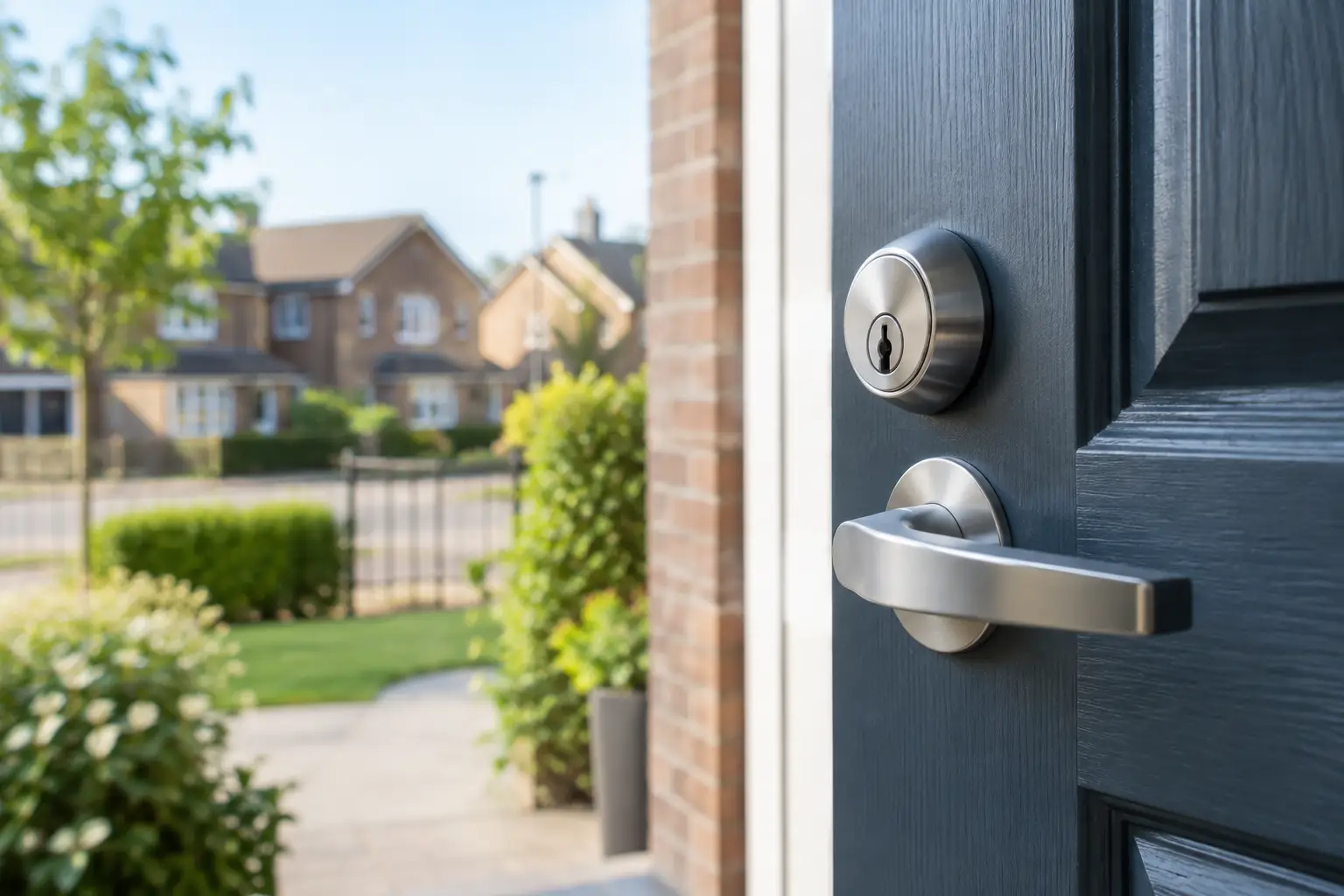
A new front door can look excellent and still leave a weak point if its security hardware is not suited to the job. Door lock ratings help homeowners compare the resistance, quality and intended use of locks, cylinders and complete door sets before making a decision. The difficulty is that there is no single rating that tells the whole story.
For a home in Doncaster or across South Yorkshire, the right choice depends on the door type, how the entrance is used, your insurer’s requirements and the protection already built into the frame, hinges and glazing. A well-made lock matters, but it must work as part of a properly fitted door.
Door lock ratings are not one single score
It is easy to assume that a higher number always means a better lock. In practice, different standards assess different things. One may measure the lock mechanism itself, another the resistance of a cylinder to attack, and another the security of the entire doorset.
That distinction matters. A quality cylinder will not compensate for a poorly adjusted multipoint lock, weak hinges or a door frame that has not been installed securely. Equally, a strong composite, uPVC, aluminium or timber door needs reliable hardware to perform as intended.
When comparing doors, ask which standard applies to which part. A clear answer is a good sign that the specification has been considered properly rather than selected from a list of impressive-sounding features.
BS 3621: a familiar standard for external doors
BS 3621 is one of the best-known British Standards for thief-resistant locks. It is commonly associated with locks fitted to external doors, particularly traditional rim locks and mortice deadlocks. Many home insurance policies either recommend it or specify it for certain properties, so it is sensible to check your policy wording before replacing a lock.
A lock to BS 3621 is designed to resist common forms of forced entry, including drilling, picking and physical attack. It is normally key-operated from both sides. That can suit some entrances, but there is an important practical consideration: anyone inside needs access to a key to leave through that door.
For a main escape route, particularly in a busy family home, that arrangement may not be the best fit. The key must always be readily available while the house is occupied. It should never be hidden away where it cannot be found quickly in an emergency.
BS 8621 and BS 10621: security with escape in mind
BS 8621 is intended for locks that offer keyless escape from the inside. The door can be secured from outside with a key, while an internal thumbturn or handle lets occupants leave without searching for one. This approach is often appropriate for a main entrance door, provided the overall design is suitable for the property.
BS 10621 covers another type of key-operated lock arrangement used where security and emergency escape need to be balanced. These standards can be useful where there are particular access needs or an insurer has set a requirement, but they should not be chosen in isolation.
The best option depends on where the door leads, whether it is a principal exit and who uses the home. A parent carrying a child, an older resident and a household with pets all benefit from a door that is straightforward to operate from inside. Security should never create unnecessary difficulty when you need to get out quickly.
TS007 door lock ratings and anti-snap protection
Most modern composite, uPVC and aluminium doors use a euro cylinder within a multipoint locking system. In these cases, TS007 is one of the key door lock ratings to understand.
TS007 assesses the resistance of cylinders and security door furniture against forced attack. You will often see star ratings rather than a long technical description. A three-star cylinder offers the highest level within this scheme. Alternatively, a one-star cylinder can be used with two-star security hardware, such as a protective handle or escutcheon, to provide a combined three-star solution.
This matters because the cylinder can be a target for snapping, drilling or pulling attacks if it projects beyond the handle or is not adequately protected. Anti-snap cylinders are designed to break in a controlled way if attacked, helping to protect the internal locking mechanism. The handle and cylinder need to be specified together, not as separate upgrades with no regard for how they interact.
A three-star arrangement is often a sensible choice for a front or rear entrance door. It is not automatically necessary for every internal door, porch door or low-risk location. Honest advice should account for the position of the door, visibility from the street and how easily an intruder could work without being seen.
Why the multipoint lock still matters
The cylinder is only one part of a modern door’s security. A multipoint locking system secures the sash into the frame at several points, commonly using hooks, rollers, bolts or mushroom cams. When the handle is lifted and the key turned, these points work together to resist levering and force along the opening edge.
For this system to work properly, the keeps in the frame must line up precisely. A door that catches, needs force to lock or has dropped slightly can place strain on the mechanism and may not engage every locking point as intended. Seasonal movement, worn hinges and everyday use can all affect alignment.
A professional installation includes setting up the door carefully from the outset. It is also worth acting if a door becomes difficult to close. Do not keep lifting the handle harder in the hope that it will improve. A prompt adjustment can prevent damage and maintain the security you paid for.
PAS 24: testing the whole doorset
PAS 24 is different from a lock-only standard. It is a test for the security performance of the complete doorset, including the door, frame, locking system, hinges, glazing and associated hardware. Products are subjected to a range of attack methods intended to reflect an opportunistic attempt to gain entry.
For homeowners, PAS 24 provides useful reassurance because it looks beyond one component. A door can have an excellent cylinder but still be vulnerable if the hinge side, glazing or frame is not up to standard. A PAS 24-tested doorset has been assessed as a system.
This does not mean every replacement door must carry PAS 24 certification. Budget, property type and the door’s location all play a part. However, it is a strong feature to consider for principal entrances, exposed rear doors and properties where added reassurance is a priority.
Secured by Design is another name you may see. It is a police-backed initiative that recognises products meeting defined security standards, often including PAS 24. It can be a useful indicator, particularly where a homeowner wants a clearly evidenced level of protection. As always, check exactly what product has been certified and whether the installed specification matches it.
Security is more than the rating on the lock
A good rating is valuable, but security is only as strong as the complete installation. The material and construction of the door make a real difference. Composite doors combine a solid core with durable outer skins, while quality aluminium and timber doors can provide excellent strength when designed and fitted well. Modern uPVC doors can also offer very good security with reinforced frames and suitable locking hardware.
Glazing needs equal attention. Toughened safety glass is made to break safely, while laminated glass can provide a greater delay against forced entry because an interlayer helps hold the pane together after impact. The right choice depends on the door design, the glazed area and the level of security required.
Hinges should be appropriate for the door’s weight and configuration. Outward-opening doors may need hinge bolts or security hinges to help prevent the hinge side being forced. Letterplates, spyholes and handles should also be positioned and selected with care. A letterplate should not give easy access to an internal thumbturn or keys placed nearby.
Finally, fitting is not an afterthought. A high-specification door cannot deliver its full performance if it is fitted into an unsuitable opening, inadequately fixed or left out of adjustment. Measurements, packers, fixings and final checks all matter.
Choosing the right level of protection
Start by considering the entrance itself. A front door facing a busy road has different risks from a secluded rear entrance, side door or door opening into a garden. Think about how the door is used every day, whether it is a designated escape route and whether your insurer has named a particular lock standard.
When requesting a quotation, ask what cylinder and handle combination is included, whether the door has been tested to PAS 24, and how the multipoint mechanism is secured. You should also ask about glazing, hinge security and the warranty on both product and installation. These are straightforward questions, and a good installer will answer them plainly.
At JF Bodman, the focus is on matching quality doors and security features to the home, rather than treating every entrance in the same way. The result should be a door that looks right, operates smoothly and gives you confidence when you turn the key at night.
If you are replacing an external door, bring your insurance requirements and day-to-day needs into the conversation early. The most reassuring choice is not simply the lock with the biggest label, but a well-specified, professionally fitted doorset that protects the people and property behind it.