
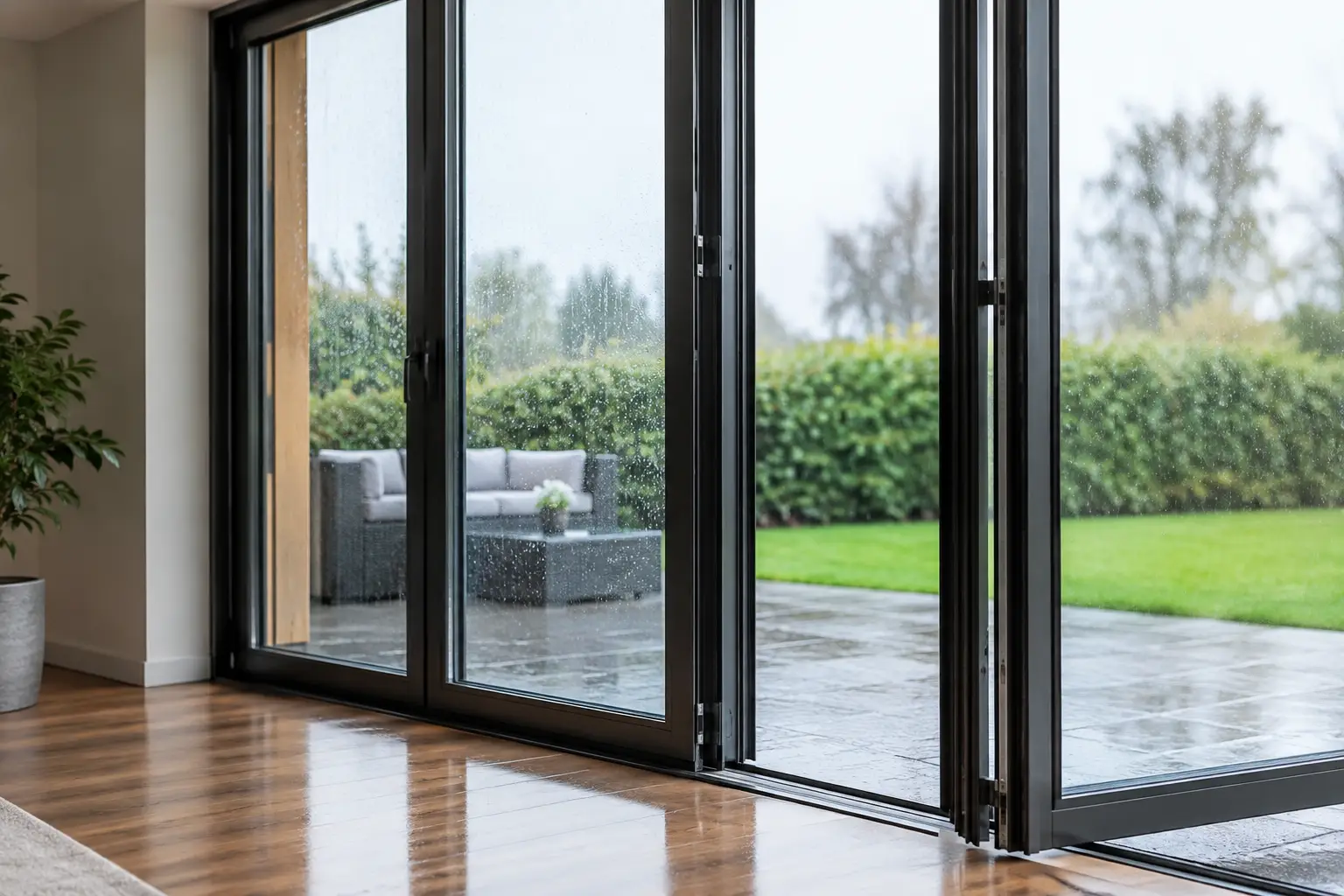
A wet patch by a set of doors is frustrating, particularly when you have invested in opening up your home to the garden. So, do bifold doors leak? Properly specified, professionally installed and maintained bifold doors should not leak. If water is getting inside, there is usually an identifiable issue with drainage, installation, adjustment or the condition of the seals.
Bifold doors are exposed to more moving parts than a standard single external door. That does not make them unreliable. It simply means that accurate fitting and occasional care matter. A well-made aluminium, timber or uPVC bifold system can provide years of weather protection, security and comfortable living.
Do bifold doors leak in heavy rain?
Even well-fitted bifold doors are tested harder by driving rain than by a typical shower. In South Yorkshire, wind can push rain against the door frame and threshold from angles that are not always obvious. The door needs to manage that water correctly rather than relying on seals alone.
Modern external bifolds are designed with drainage channels in the outer frame and threshold. Water that reaches the system should collect in these channels and escape through drainage holes to the outside. When the drainage route is clear and the doors are aligned correctly, this process happens quietly in the background.
A small amount of water within the external drainage channel is not necessarily a problem. Water on the internal floor, under the threshold or around the frame is different. That should be investigated, especially if it happens repeatedly.
It is also worth separating a leak from condensation. Condensation forms when warm, moist indoor air meets a colder glass surface or frame. It may appear as droplets on the inside of the glass in cold weather, often first thing in the morning. A leak is normally linked to rainfall and may leave a damp area around the threshold, jambs or adjacent plasterwork.
The most common reasons bifold doors let water in
Blocked drainage holes
Blocked drainage is one of the most straightforward causes. Leaves, soil, moss, pet hair and general garden debris can build up in the bottom track. If water cannot leave through the intended drainage holes, it can rise within the frame and eventually find a route indoors.
This is more likely where doors open directly onto a patio, decking or a garden with overhanging plants. Clearing the track carefully as part of regular cleaning can prevent many avoidable call-outs. Take care not to push debris further into the drainage channels.
Incorrect threshold or poor installation
Bifold doors must be installed level, square and securely fixed to a suitable opening. The threshold must also sit at the right height in relation to the external patio or paving. If the outside surface is too high, slopes towards the house or bridges the drainage path, rainwater can be directed towards the door rather than away from it.
This is one reason a low threshold should never be treated as a purely cosmetic choice. It can improve access between house and garden, but it needs careful detailing to preserve weather performance. The surrounding drainage, paving level and exposure of the property all need to be considered before fitting.
Poor sealing around the outer frame can also allow water to bypass the door system entirely. In this case, the leak may appear at the sides or top of the opening rather than through the threshold.
Doors that have moved out of adjustment
Bifold doors work as a connected set of panels. Over time, everyday use, settlement in the building or wear in components can affect how neatly the panels meet and close. A slight drop in one panel can create a gap in a seal or prevent the locking points from engaging as they should.
Signs of an adjustment issue include doors that feel stiff, catch on the frame, need lifting to lock or no longer close with an even line between panels. Water ingress may be one symptom, but draughts and reduced security can also follow.
A trained installer can usually assess whether the doors need a straightforward adjustment or whether a component needs replacing. Avoid forcing the handles or trying to make major adjustments without knowing the system, as this can cause further damage.
Worn or damaged weather seals
Weather seals are designed to compress when the doors close, creating a barrier against wind and rain. They can become damaged by age, accidental knocks, paint, cleaning products or repeated rubbing where the door is misaligned.
A seal that is flattened, torn, loose or missing should be replaced with the correct profile for the door system. Generic strips are not always suitable. The seal needs to work with the door’s original drainage and compression design.
Glass, frame or building defects
Less commonly, the source may be a failed glazed unit, a crack in the frame or a problem in the surrounding wall, render or roofline. Rain can travel along building materials before appearing inside, which can make the true source difficult to pinpoint.
If damp is visible above the doors or at the outer corners of the opening, it is sensible to inspect the wider area rather than assuming the bifolds themselves are at fault.
How to reduce the risk of bifold door leaks
Good maintenance is simple and does not need to be time-consuming. Clean the lower track regularly with a soft brush or vacuum, then wipe it with warm water and a mild detergent. Check that the drainage holes are clear and that water can escape outside.
Look at the external paving after heavy rain. Water should fall away from the house, not pool against the threshold. Garden furniture, doormats and raised planters should not obstruct the drainage route. An internal mat is useful, but avoid placing anything over drainage openings on the outside.
Keep hinges, rollers and locking points in good condition using the lubricant recommended for your specific door system. Do not use heavy oils that attract dust and grit. While cleaning, inspect the seals and make a note of any changes in how the doors open, fold or lock.
Most importantly, choose a door and installation approach suited to the property. A large glazed opening facing exposed weather needs the right threshold detail, drainage arrangement and quality hardware. The lowest initial price can become poor value if it overlooks the practical details that keep a home dry and secure.
What to do if your bifold doors are leaking
First, check whether the water is definitely linked to rainfall rather than condensation. Then clear visible debris from the track and drainage outlets. Do not drill extra holes into the frame or apply sealant across drainage slots, as both can interfere with how the system manages water.
If the leak remains, note where it appears and under what conditions. Does it happen only in strong wind? Is water coming from the bottom track, the side of the frame or above the doors? Does one panel fail to close tightly? These details can help an experienced installer diagnose the problem quickly.
For a new installation, contact the original installer promptly. For older doors, arrange an inspection with a reputable local glazing specialist. The solution may be as simple as clearing drainage, replacing seals or adjusting the panels. Where installation details or external levels are the cause, a more involved repair may be needed, but it is still usually preferable to living with recurring damp.
Quality fitting makes the difference
Bifold doors are a substantial addition to any home. They should bring light, garden views and flexible living space without leaving you watching the forecast. The product quality matters, but the survey and fitting are just as important.
At JF Bodman Ltd, we believe homeowners deserve honest advice on the details behind a lasting installation, from threshold options to drainage and secure closing. If your doors are showing signs of water ingress, acting early can protect your flooring, walls and peace of mind before a small issue becomes a larger repair.