
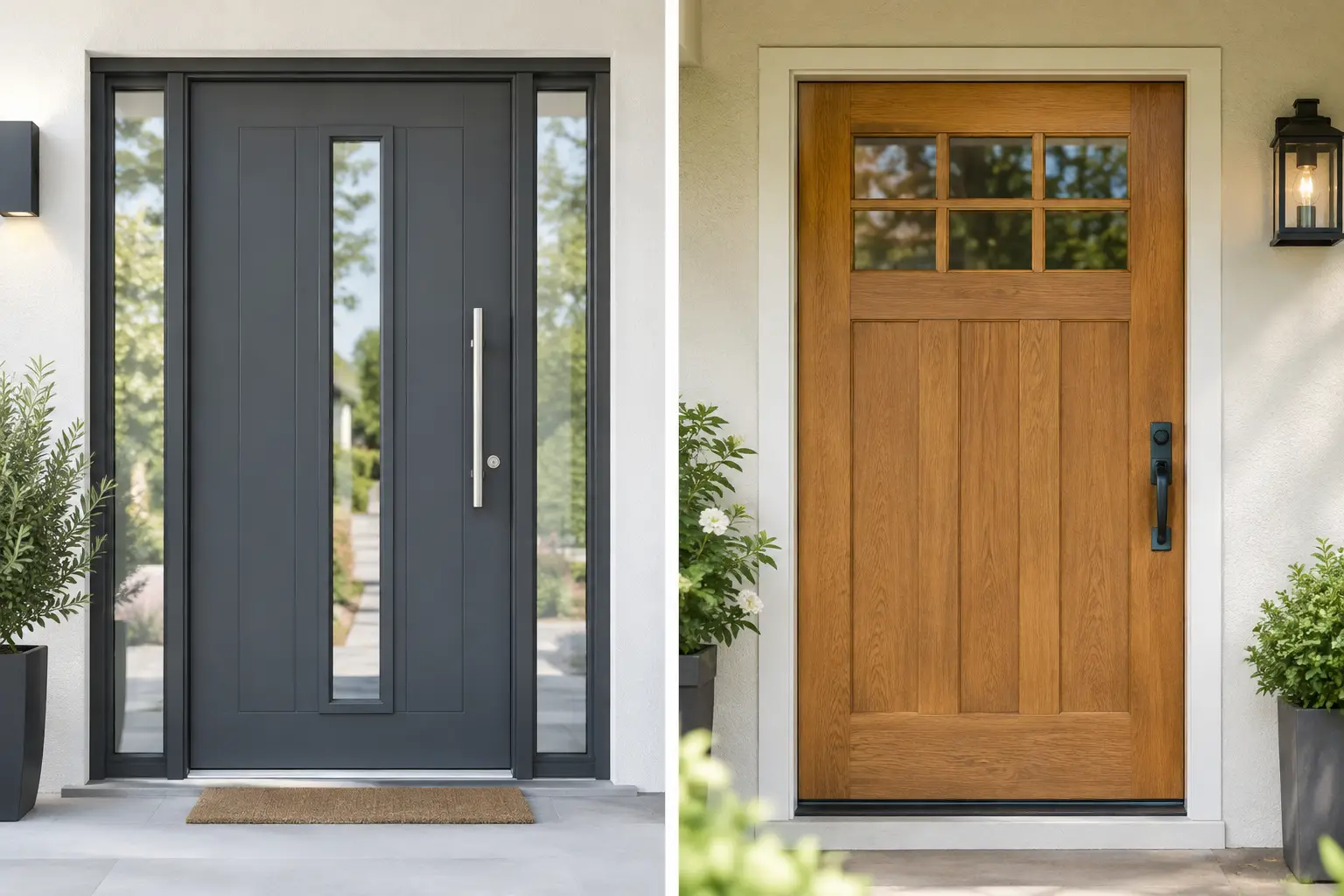
The choice between composite versus timber front doors often comes down to one simple question: do you want the lowest-maintenance option, or the unmistakable character of real wood? Both can make a home feel safer, warmer and more welcoming. The right answer depends on your property, your preferred style and how much ongoing care you are happy to give the door.
For homeowners across Doncaster and South Yorkshire, a new front door is a visible improvement with a practical purpose. It needs to stand up to wet winters, changing temperatures and daily use, while looking right from the pavement and giving you peace of mind when you lock up at night.
Composite versus timber front doors: the main difference
A composite front door is made from several materials working together. While specifications vary by manufacturer, the construction commonly combines a strong core with insulating materials, an impact-resistant outer skin and a weatherproof finish. The result is a substantial door designed for security, thermal performance and straightforward upkeep.
A timber front door is made from natural wood, often using carefully selected or engineered timber for greater stability. It brings grain, depth and individuality that imitation finishes can get close to, but never entirely reproduce. Timber suits everything from period terraces and country properties to well-designed modern homes where natural materials are part of the look.
Neither option is automatically better. Composite is usually the practical choice for households seeking a dependable, low-maintenance entrance. Timber can be the better choice where architectural character and authentic material are central to the property.
Appearance and kerb appeal
Your front door sets the tone for the rest of the house. This is where timber has a genuine advantage for some homes. Every timber door has its own grain and texture, and it can be painted in a wide range of colours or finished to celebrate the wood beneath. On a Victorian, Edwardian or traditional cottage-style property, a well-made timber door can look completely at home.
Composite doors offer far more choice than many homeowners expect. Modern designs are available in classic panelled styles, contemporary flush designs and cottage-inspired options, with woodgrain effects, coloured finishes, decorative glazing and coordinating hardware. A composite door can work particularly well on a newer home, a rendered property or a house that needs a smart, substantial entrance without the commitment of regular redecorating.
There is a useful middle ground to consider. If you love a heritage look but do not want the upkeep associated with painted timber, a high-quality composite design in a traditional colour may give you the balance you are after. Conversely, if your home has original timber windows, a timber door may provide the visual consistency that makes the whole frontage feel considered.
Colour choice matters as much as material
A black, deep blue, sage green or heritage red door can transform the front of a home, but it should suit the brickwork, window frames and surrounding properties. Darker colours can look striking, although they may show dust and marks more readily. Timber can be repainted when tastes change, while composite doors are generally chosen in their finished colour from the outset.
Security and everyday confidence
A front door is only as secure as its complete installation. The door slab, frame, hinges, locking system, glazing and fitting all matter. A strong door with a poorly fitted frame will not offer the standard of protection homeowners should expect.
Composite doors are widely chosen for security because of their solid feel and multi-point locking systems. They are designed to resist forced entry and can be specified with high-performance cylinders, reinforced hardware and toughened or laminated glass where required. For a busy family home, that combination of strength and easy operation is reassuring.
Timber doors can also be highly secure when built to a suitable specification and fitted with quality locks and hardware. Solid engineered timber is a serious, durable material, not a compromise. However, the quality of the door and the detail of the installation are particularly important, as movement caused by moisture or a neglected finish can affect how the door closes over time.
Ask about the security features included as standard, not just the appearance of the door. Good advice should cover the lock, hinge protection, letterplate, glazing and the relationship between the frame and threshold.
Warmth, draughts and energy efficiency
Both composite and timber are capable of delivering good thermal performance. A correctly specified and professionally installed door should help reduce draughts around the entrance, improve comfort in the hallway and contribute to lower heating demand.
Composite doors are known for their insulating cores and close-fitting seals. They are often a strong choice for homeowners replacing an older, thin panel door or a door that rattles in the wind. You are likely to notice the difference quickly in a cold porch or hallway.
Timber is naturally insulating, and a quality modern timber door can perform very well. The key is choosing a well-constructed product with effective seals, suitable glazing and a properly fitted threshold. Traditional-looking does not have to mean inefficient, but older-style details need to be combined with modern performance standards.
Do not compare doors on material alone. Ask for the relevant thermal performance information for the complete door set. Glass design, panel configuration and frame construction can all influence the result.
Maintenance: where the gap is clearest
For many households, maintenance is the deciding factor. Composite doors need relatively little attention. Wiping the frame and door surface with mild soapy water, keeping drainage areas clear and occasionally checking hinges, handles and locks is usually enough. The finish is designed to cope with ordinary British weather without routine painting or staining.
Timber asks for more care, but that does not make it unsuitable. It simply needs a homeowner who is prepared to inspect it and maintain the coating when needed. South Yorkshire weather can be hard on an exposed doorway, particularly where driving rain, strong sun or limited shelter affects one side of the house.
Painted timber may need touching up or recoating at intervals, depending on its exposure and finish. Catching small chips or cracks early helps protect the wood beneath. A covered porch, canopy or recessed doorway can significantly reduce weathering and make timber easier to look after.
If the idea of repainting a front door feels like another job on a long list, composite is likely to be the more comfortable choice. If you value natural materials and do not mind planned care, timber can reward that attention for many years.
Cost and long-term value
The upfront price of a front door varies with size, design, glazing, hardware, frame choice and installation requirements. Timber doors are often a higher initial investment, especially for bespoke or heritage-led designs. Their appeal lies in craftsmanship, authenticity and the ability to repair, repaint and refresh the finish over time.
Composite doors often offer strong value where security, insulation and low maintenance are the priority. They provide a premium look and feel without the same ongoing decorating requirement. For many replacement projects, that makes the overall cost easier to plan for.
Value is not simply about buying the cheapest door. A well-chosen door should suit the property, operate reliably, help protect your home and still look good years later. Poor installation can undermine either material, so the fitting standard deserves the same attention as the brochure specification.
Which front door suits your home?
Choose a composite door if you want a secure, insulated and low-maintenance entrance with plenty of design options. It is especially well suited to busy homes, exposed doorways and homeowners who want a smart finish without regular repainting.
Choose timber if your property calls for genuine natural character, you want a painted or stained finish with real depth, and you are happy to maintain it. It is often the strongest visual choice for period homes and properties with existing timber features.
There are also practical details worth discussing before you decide: whether the door opens inward or outward, how much shelter the entrance has, the amount of natural light needed in the hallway and whether sidelights or decorative glass would improve the design. These choices can matter just as much as the core material.
A front door is used every day, seen every time you arrive home and relied upon every night. Taking the time to compare samples, finishes and security options in person can make the final decision much clearer. Honest advice and careful fitting will ensure the door you choose feels right for your home, not just right on paper.