
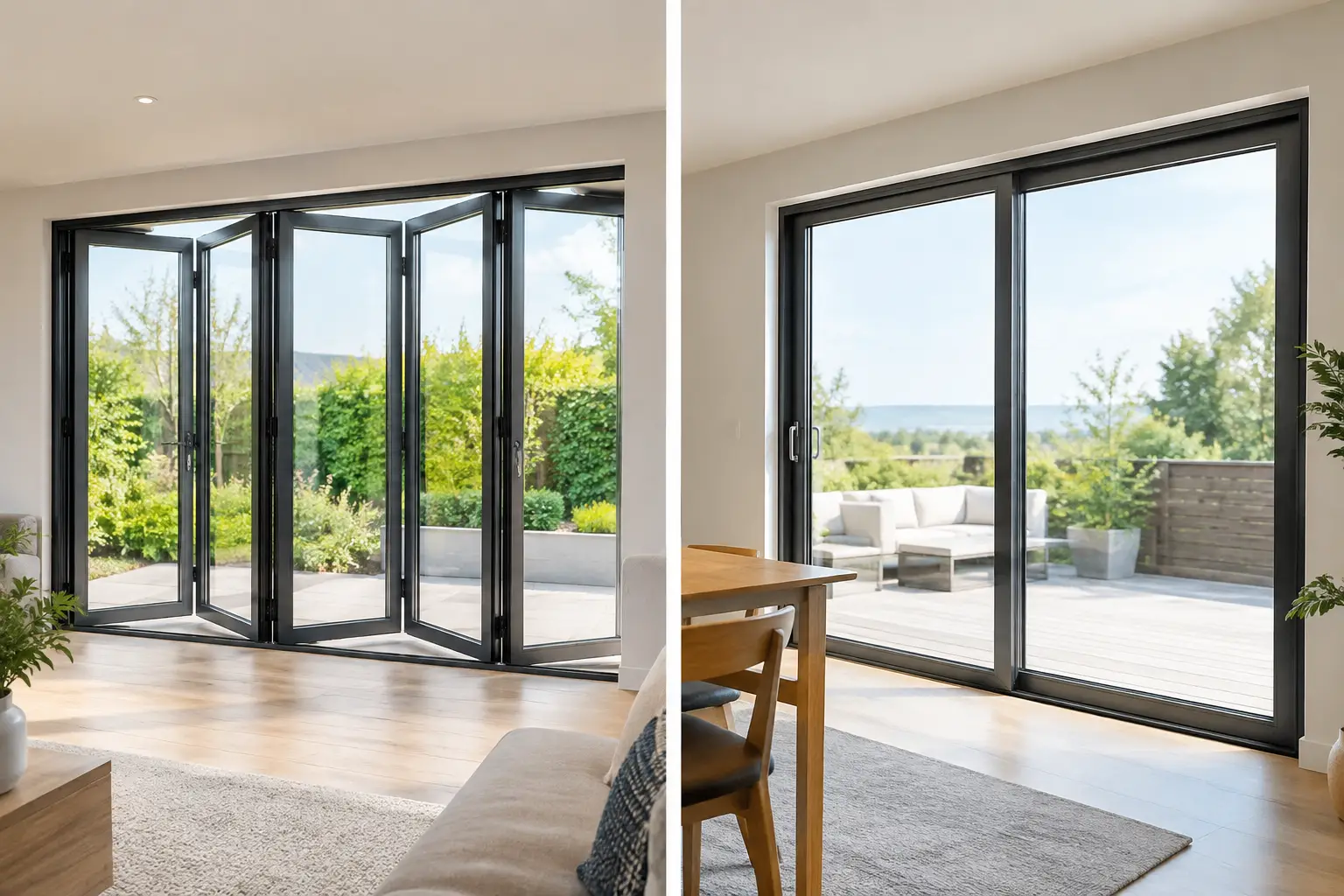
A new rear door can change how a room feels every day. It can bring more daylight into a kitchen, open up the garden for family gatherings and make a tired extension feel far more connected to the outside. When homeowners weigh up bifold versus sliding doors, the right answer is rarely about which style is best overall. It is about which one suits the opening, the room and the way you live.
Both options can provide a secure, energy-efficient and attractive route to the garden. The difference lies in how the doors operate, how much glass you see when they are closed and how wide an opening you want when they are open.
Bifold versus sliding doors: the main difference
Bifold doors are made from several glazed panels that fold and stack to one or both sides of the opening. With the doors fully folded back, they can create a broad, largely unobstructed opening between house and garden. This makes them especially popular for extensions, garden rooms and kitchen-diners designed for entertaining.
Sliding doors use large glazed panels that move sideways along a track. One panel slides behind another, so part of the opening always remains covered by glass. In return, you get wider panes of glass, slimmer sightlines and an excellent view of the garden when the doors are shut.
Neither choice is a compromise on quality when it is properly specified and professionally fitted. The practical differences become clearer once you consider views, ventilation, space and everyday use.
Views and natural light
If an uninterrupted garden view is your priority, sliding doors often have the advantage. Their larger glass panels and fewer vertical frame sections can make a room feel calmer and more open, particularly when you are looking across a lawn, patio or established garden. They are a strong choice for homeowners who want to maximise the view throughout the year, not only when the doors are open.
Bifold doors have more frames because each panel needs to fold. Modern aluminium bifolds can still offer neat, slim profiles and plenty of glass, but the vertical lines are naturally more noticeable. For many homes, that is a worthwhile trade-off for the ability to open most of the full width on a warm afternoon.
The orientation of the room matters too. A bright south-facing extension may benefit from the broad glass of sliding doors, while shading and suitable glazing should be considered to manage heat and glare. In a smaller or darker room, either style can significantly improve natural light compared with older French doors or a small patio door.
Think about the view in winter, too
It is easy to picture doors wide open during a July barbecue. For much of the year, though, they will be closed. If you enjoy looking out onto the garden with a morning coffee or want to keep an eye on children playing outside, sliding doors can be particularly rewarding every day.
How much opening do you need?
This is usually the deciding factor. Bifold doors can open almost the entire aperture, depending on the number and arrangement of panels. For a wide opening onto a patio, this creates a real sense of flow between indoors and out. It is useful when bringing food outside, hosting guests or making an extension feel like part of the garden.
Sliding doors cannot provide the same fully open span because panels slide past one another. A two-panel sliding door usually opens to around half its total width. A larger three-panel configuration can create a more generous opening, but there will still be fixed glazed sections in place.
That does not make sliding doors less practical. A half-width opening is more than enough for day-to-day access, fresh air and moving between the kitchen and patio. For many households, the doors are used as a regular entrance rather than opened completely. In that case, smooth operation and a clear view can matter more than maximum opening width.
Bifolds can also be designed with a traffic door. This is a panel that opens separately, allowing you to step into the garden without folding the whole set back. It is a sensible feature for taking the washing out, letting the dog into the garden or popping outside on a cooler day.
Space, furniture and the patio
Both door types need clear thought around the threshold and the outdoor layout. Sliding door panels move within their own frame line, so they do not swing into the room or across the patio. This can make them a tidy solution where a dining table, sofa or kitchen island sits close to the opening.
Bifold panels fold into a stack, either internally or externally. When open, that stack needs somewhere to sit. It is not usually a problem, but it should be planned around furniture, blinds, planting and the direction of foot traffic. Folding the panels outwards can preserve internal room space, while folding them inwards can keep the door leaves protected from wind on an exposed patio. The best arrangement depends on the property and should be agreed before installation.
For homes with a level threshold, both systems can create an easy transition to the garden. A low threshold is particularly helpful for young children, older relatives and anyone moving a pram, wheelchair or serving trolley between the house and patio. Drainage, floor levels and building regulations all need proper consideration, so this is not a detail to leave until the last minute.
Security, warmth and weather performance
A large glazed door should feel reassuring as well as attractive. Well-made bifold and sliding doors can both offer high levels of security, with multi-point locking, strong frames, toughened safety glass and quality hardware. Aluminium is a popular choice for larger openings because it is strong, durable and allows slimmer frames, while modern uPVC and timber options may suit particular styles, budgets or conservation-inspired homes.
Energy performance depends on the complete door specification, not simply whether it folds or slides. The glass, thermal breaks, seals, frame material and standard of installation all affect how well the doors retain heat. Ask about U-values, glazing options and the threshold design rather than relying on broad claims.
In South Yorkshire, weather exposure is worth discussing. A sheltered garden in Doncaster has different demands from a property on an open, windy site. A professional survey helps ensure the door style, drainage and fixing method are suitable for the opening, giving you peace of mind when the rain is driving across the patio.
Good installation protects the investment
Large doors are only as good as their fitting. Accurate measuring is essential so panels run smoothly, lock correctly and seal properly. The surrounding brickwork, lintel and floor level may also need attention, especially where an old window is being enlarged into a new opening.
This is where honest advice matters. An experienced local installer should explain what is achievable, flag up any building work required and help you compare like-for-like quotations. A cheaper price is not good value if it leaves you with poor alignment, draughts or difficult aftercare.
Style and configuration choices
Bifold doors bring a distinctive architectural look. They suit contemporary extensions but can also work well on traditional homes when the frame colour and hardware complement the property. Anthracite grey remains popular, while black, white and softer heritage-inspired shades can create a very different feel. The panel layout can be tailored to the opening, including doors that fold from the centre or stack neatly to one side.
Sliding doors tend to look more minimal. Their broad panes make them a natural match for modern renovations and homes with a strong garden outlook. They can also sit surprisingly well in older properties where the aim is to keep the rear elevation simple and let the view do the work.
Do not choose from a showroom image alone. Consider how the frames will look against your brickwork, kitchen colour, patio finish and existing windows. JF Bodman can help homeowners compare practical configurations alongside finishes, glazing and security features, rather than treating the decision as purely decorative.
Which door is right for your home?
Choose bifold doors if your priority is opening up a wide wall to the garden, hosting family and friends, or making an extension feel open-air in good weather. They work best where there is enough room for the folded panels and where the wider opening will genuinely be used.
Choose sliding doors if you value expansive glass, slimmer sightlines and a clear garden view every day. They are particularly well suited to rooms where furniture is close to the opening or where a calm, contemporary appearance matters more than opening the full width.
Budget may also influence the decision, but it should not be the only factor. Compare the full specification, including glass, locks, handles, thresholds, installation and guarantees. A door that feels right to use, performs well through winter and suits the house for years to come is quality worth the difference.
The most useful next step is to stand at the proposed opening and picture an ordinary February morning as well as a sunny bank holiday. The door that works best in both moments is usually the one you will be happiest with.