
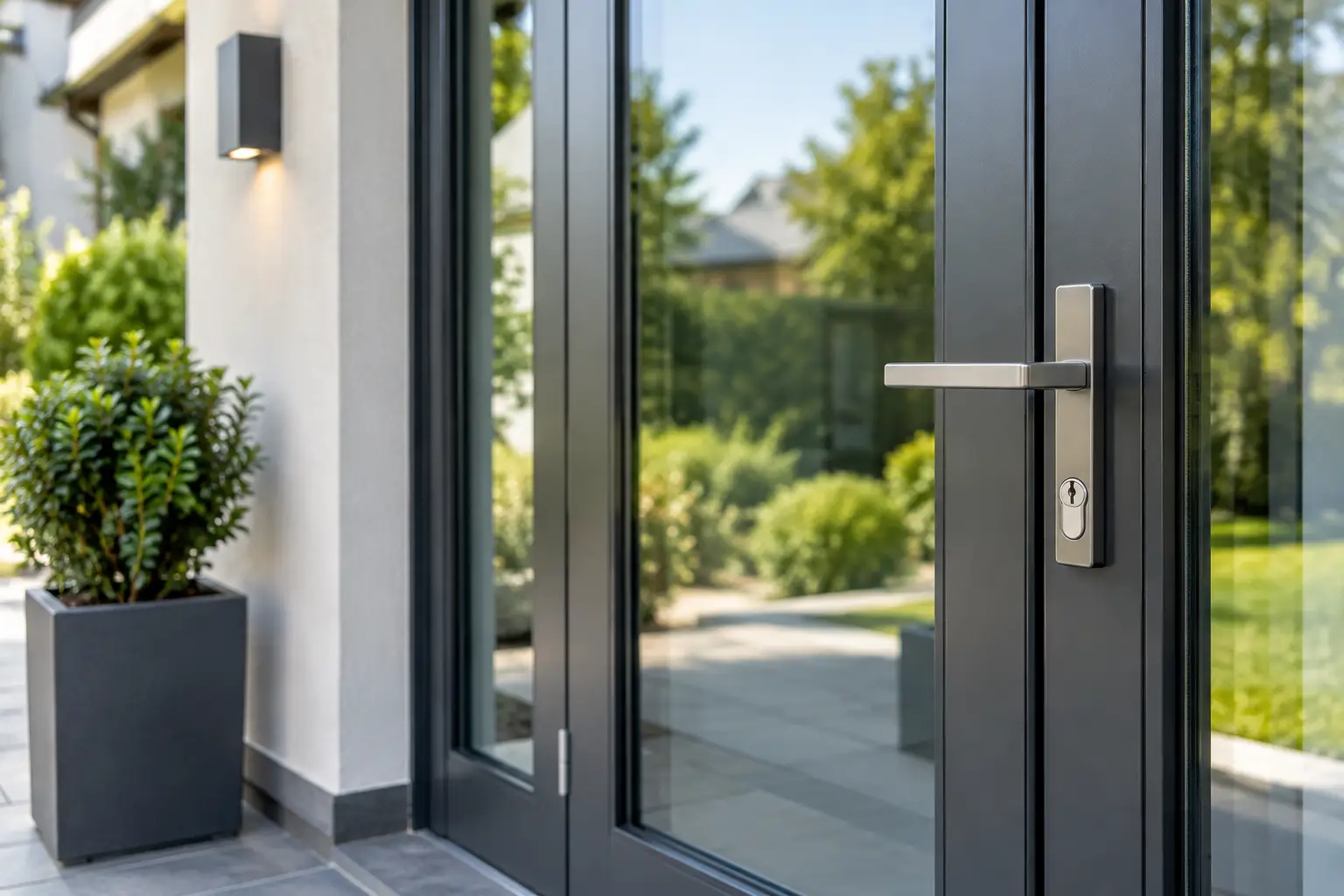
A new external door should feel reassuring from the moment it closes. Aluminium door security is about far more than a strong-looking frame: it depends on the lock, hinges, glazing, installation and how well every part works together. For homeowners in Doncaster and across South Yorkshire, choosing the right specification can make a real difference to everyday peace of mind.
Aluminium is a popular choice for contemporary front doors, French doors, patio doors and bi-fold doors. Its slim sightlines and wide choice of finishes suit modern and traditional homes alike. More importantly, a quality aluminium system can provide a strong, stable base for high-performance security hardware without sacrificing the light and style people want from their home.
What Makes Aluminium Door Security Effective?
The visible surface of a door is only one part of its security. A good aluminium door is designed as a complete system, with the frame, sash, locking points, cylinders, hinges and glass selected to work together.
Aluminium itself is naturally strong and does not swell, warp or rot as some materials can over time. This helps the door maintain its alignment, which matters because even the best lock cannot perform properly if the door does not close squarely into the frame. Quality thermal-break aluminium profiles also offer excellent weather resistance and energy performance, helping to keep your home comfortable as well as protected.
That said, not every aluminium door offers the same level of protection. The specification matters. A basic door with limited locking hardware is not equivalent to a premium entrance door with reinforced sections, a secure cylinder and multiple locking points. Honest advice at the start helps make sure the product suits both the opening and the way you use your home.
Multi-point locking provides more than one line of defence
Most quality aluminium external doors use a multi-point locking system. Rather than relying on a single latch or deadbolt, the door locks at several points along its edge when the handle is lifted and the key is turned. Depending on the system, these may include hooks, rollers, bolts or mushroom cams that engage securely with keeps in the frame.
This spreads force across the door rather than concentrating it around one lock area. It also creates a firmer weather seal, which is useful during a South Yorkshire winter. For a front door, French door or bi-folding door, multi-point locking should be a central part of the conversation.
The number of locking points alone is not the whole story. Their design, the strength of the keeps and how accurately they are fitted all count. A properly installed five-point system can be more dependable than a poorly fitted system with a longer list of features.
The cylinder deserves close attention
On doors with a euro cylinder, the cylinder is a small component with a major security role. It is the part your key enters, and it should be chosen to resist common forms of forced attack. Anti-snap, anti-drill and anti-pick cylinders are widely available and can provide a worthwhile upgrade, particularly on a main entrance.
Look for a cylinder that is correctly sized for the door and security handle. A cylinder that protrudes too far from the handle can be more vulnerable, while one fitted too deeply can be awkward to use. This is a detail an experienced installer will check as part of the job, rather than leaving it to chance.
For households with several keys in circulation, it is also worth asking about controlled key systems. These can limit unauthorised key copying and make it easier to manage access when keys have been lent to family, tradespeople or tenants.
Aluminium Door Security for Glazed Doors
Large panes of glass are one of aluminium’s biggest attractions. They bring daylight into kitchens, extensions and garden rooms, but homeowners understandably want to know how glass affects security.
For external doors, toughened safety glass is commonly used. It is designed to be much stronger than ordinary glass and to break into small pieces if it does fail. Laminated glass is another option worth considering, especially in more exposed locations or where added security is a priority. It contains an interlayer that helps hold broken glass together, making forced entry more difficult.
The glass must also be securely retained within the door. Internal beading is preferable on many designs because it means the beads cannot simply be removed from outside. Modern aluminium door systems are built with these details in mind, but it is sensible to ask exactly what glazing specification is included in your quotation.
For patio sliders and bi-fold doors, the design should prevent panels being lifted from their tracks. Strong track systems, anti-lift devices and secure interlocks between panels all contribute to a door that is practical to operate and difficult to force.
Hinges, Handles and Frames Matter Too
A secure lock is only as effective as the components around it. Hinges should be designed for the weight and size of the door, securely fixed, and protected against being forced or removed from outside. This is particularly relevant for outward-opening doors, where the hinge side may be more exposed.
Handles should be substantial, securely fixed and compatible with the lock cylinder. A high-quality security handle can shield the cylinder and reduce opportunities for tampering. On double doors, the meeting stile – where the two leaves meet – needs careful design too. A well-engineered system prevents access to the locking mechanism between the doors.
The frame is equally important. Aluminium frames can accommodate reinforced areas around locks and hinges, but the frame must be fixed securely to the structure of the property. This is where fitting quality becomes just as important as the door itself.
Why Professional Installation Is Part of Security
A door can look perfect on installation day yet cause problems later if it has not been measured, packed and fixed correctly. Gaps, poor alignment or inadequate fixings can affect the lock, create draughts and compromise security.
A professional survey should assess the existing opening, the condition of the surrounding brickwork or lintel, threshold requirements and drainage. The installer should then position the frame correctly, use suitable fixings and adjust the door so it opens, closes and locks smoothly.
This is particularly important for larger aluminium doors. Sliding and bi-folding systems involve heavy glazed panels, precise tracks and several locking points. They need careful setting-up so that the panels meet correctly and the locks engage every time. A family-run local installer with a long record of fitting doors is accountable for getting those finishing details right.
Choosing the Right Security Level for Your Home
There is no single specification that suits every property. A main front door, a rear kitchen door and a set of garden bi-folds face different risks and have different practical demands.
For a front entrance, homeowners often prioritise a high-security cylinder, strong handle, multi-point lock, viewer or smart access option, and privacy glazing where needed. For rear and side doors, reliable locking and laminated glass may be more important, particularly if the door is less visible from the street. Garden doors need security that works without making daily access frustrating for the family.
If you are comparing quotations, ask clear questions. What locking system is supplied? Is the cylinder anti-snap? Is the glass toughened or laminated? Are the beads internal? How are the hinges secured? Does the chosen door system meet recognised security standards, such as PAS 24, where applicable?
The answers should be straightforward. Security should not be hidden behind vague claims or technical jargon.
Everyday Habits That Support a Secure Door
Even the best door needs to be locked properly. With many multi-point systems, lifting the handle engages the locking points before the key turns. Simply pulling the door shut may leave it on the latch only. It is worth making this a household routine, particularly with garden doors.
Keep tracks and thresholds clean so sliding or folding doors continue to operate freely, and arrange an adjustment if a door starts catching or becomes difficult to lock. Do not ignore a loose handle, stiff key or door that needs force to close. Early attention can prevent minor wear becoming a security issue.
Aluminium doors offer a strong, attractive and low-maintenance option for a home improvement project, but the right result comes from considered choices and careful fitting. When you can close your door easily, turn the key confidently and know the hardware has been specified for your home, that is security you will notice every day.