
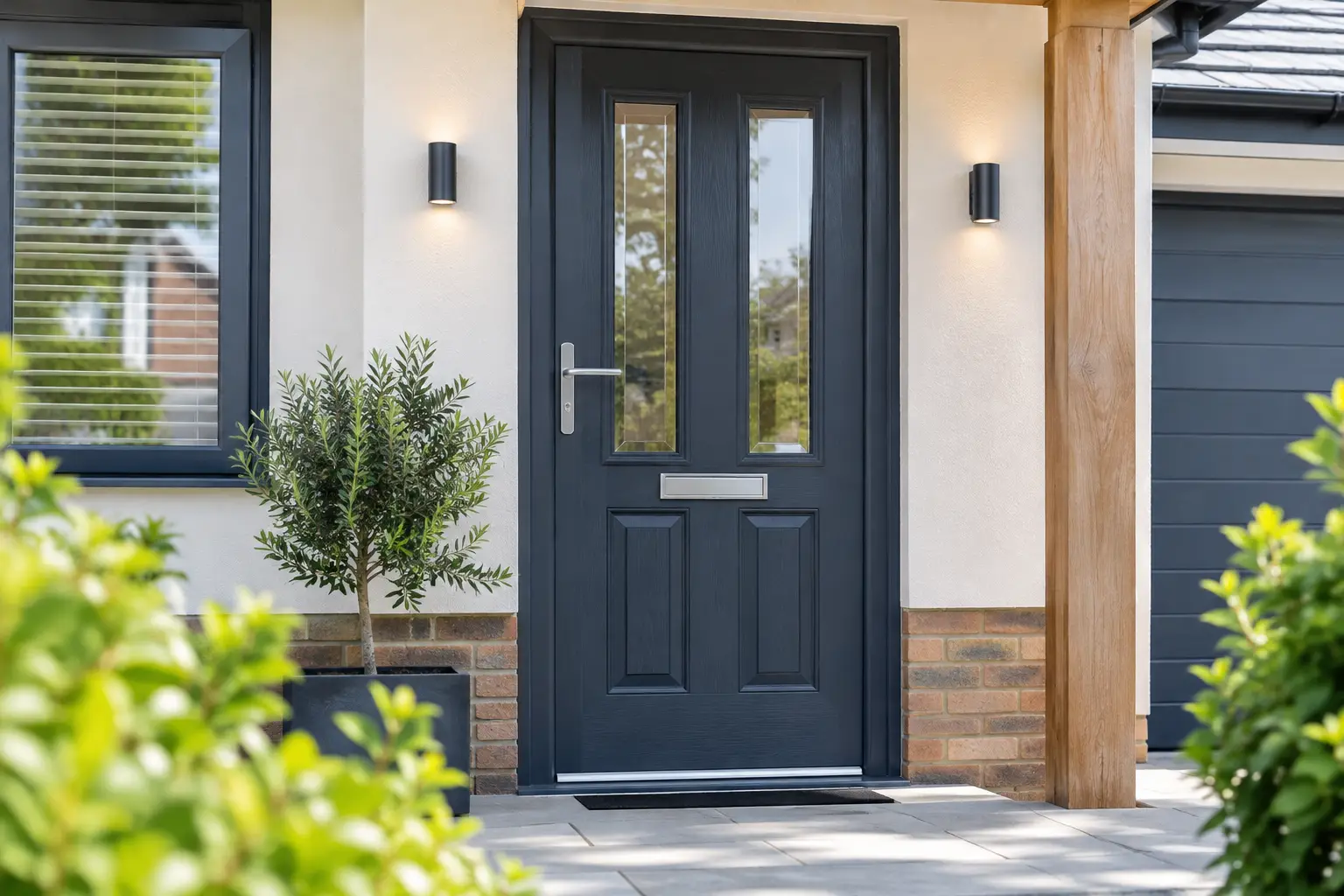
A front door has a harder job than most parts of a home. It needs to look right every time you return home, keep out wind and rain through a South Yorkshire winter, and give your family confidence when you lock up at night. This composite door review looks beyond the showroom finish to help you decide whether this popular choice is right for your property.
What is a composite door?
A composite door is made from several materials rather than one solid material throughout. The exact construction varies by manufacturer, but it commonly combines a strong internal core with insulating layers and a durable outer skin. The result is designed to bring together the best qualities of traditional timber, modern uPVC and high-performance security hardware.
From the street, a good composite door can have the depth, detail and character of painted timber. Unlike many older timber doors, it does not need regular sanding, staining or repainting to remain presentable. It is also usually thicker and more substantial than a standard uPVC panel door, which is immediately noticeable when it closes.
That does not mean every composite door is the same. The core, frame, locking system, glazing, hinges and standard of installation all affect how the finished door performs. It is worth comparing the full specification, not simply choosing by colour or brochure image.
Composite door review: the main advantages
Security that feels reassuring
For many homeowners, security is the deciding factor. A properly specified composite door has a solid feel and is commonly fitted with multipoint locking, reinforced sections and a high-quality cylinder. Together, these features help resist forced entry far better than a tired or lightweight existing door.
The hardware matters just as much as the door slab. A strong locking system is only as useful as the cylinder, handle, keeps and frame around it. Ask your installer what is included as standard, whether anti-snap protection is provided, and how the door is adjusted after fitting. These are practical details that contribute to everyday peace of mind.
Better warmth at the entrance
A draught around the front door can make a hallway feel cold even when the heating is on. Composite doors are built with insulation in mind, and quality weather seals help reduce unwanted air movement around the opening. This can make a real difference to comfort, particularly in exposed entrances or older Doncaster homes where the existing door and frame have begun to move or deteriorate.
Energy performance depends on the whole installation. A well-made door needs to be measured accurately, fitted squarely and sealed carefully to perform as intended. If you are replacing a door with glazed side panels or a fanlight, the glass specification should be considered too.
Style without a demanding maintenance routine
Composite doors suit a wide range of properties, from Victorian terraces and traditional semis to newer family homes. Woodgrain finishes, solid colours, decorative glazing and period-style furniture offer plenty of scope to make an entrance feel personal without making it look overdesigned.
Maintenance is straightforward. Usually, a gentle wash with warm soapy water and an occasional check of the moving parts is enough. There is no need for annual painting, although hinges and locks should be kept clean and adjusted if required.
A noticeable improvement in kerb appeal
Replacing an old front door changes the first impression of a property quickly. A new design can complement brickwork, window frames and porch details, while the deeper profile of a composite door often creates a more substantial entrance.
For homes being prepared for sale, this can be particularly worthwhile. A new door will not transform a property valuation on its own, but it can help make the home look cared for before anyone steps inside.
The trade-offs to consider before buying
Composite doors are often presented as the obvious answer, but the best choice depends on your home, priorities and budget. They tend to cost more than a basic uPVC door, especially once you add premium glazing, sidelights, upgraded hardware or a more detailed traditional design. The higher initial outlay can be justified by security, appearance and durability, but it should be weighed against the rest of your improvement plans.
Colour choice deserves careful thought too. Dark shades can look smart and suit many brick properties, but strong sunlight may make any dark external surface feel warmer. A reputable installer will advise on suitable finishes and positioning, rather than promising that every option works identically in every location.
There is also no single definition of a ‘composite door’. Some have more substantial cores and more detailed finishes than others. If you are comparing quotations, check the door thickness, thermal performance, security standard, lock cylinder, glazing specification and guarantee. A lower price may reflect a different product, not simply a better deal.
Finally, a composite door is not always the most appropriate choice. A timber door may be better suited to a listed building or a property with strict heritage requirements. An aluminium entrance door can offer very clean contemporary lines and large-scale designs. Honest advice should begin with the character of the house, not a one-size-fits-all recommendation.
Choosing the right design for your home
Start with the proportions of the entrance. A narrow doorway may benefit from a simple solid design or carefully positioned glazed panel, while a wider opening may suit matching side panels to bring more natural light into the hall. Consider privacy as well as brightness. Obscure or decorative glass can brighten an entrance without giving a clear view inside.
Then look at the details already on the property. Window frame colour, brick tone, roof tiles, porch style and house number can all guide the choice. Black, anthracite grey and deep blue can provide a crisp contrast on modern homes. Traditional green, red, cream or wood-effect finishes may sit more naturally with period features.
Do not leave the furniture until last. The handle, letterplate, knocker and hinges should work together rather than compete. A traditional door with a contemporary bar handle can look out of place, while a clean modern design may not need ornate decorative glass. Seeing samples in person helps, particularly when comparing colours in natural daylight.
Why fitting quality matters as much as the door
Even an excellent door can disappoint if it is poorly installed. The survey should identify uneven brickwork, a worn threshold, plaster damage around the opening or drainage issues at the doorstep before work begins. These are not minor details. They affect weather resistance, appearance and how smoothly the door operates.
A professional fitter will make sure the frame is level and secure, the door opens and locks correctly, and the external seal is neat and weather-tight. They should also show you how to use the lock, care for the surface and contact them if an adjustment is needed after installation.
This is where a local, established installer can make the process easier. JF Bodman has served homeowners in and around Doncaster since 1974, with straightforward advice and fitting standards that reflect the fact that a new entrance door is a long-term part of your home.
Questions worth asking before you accept a quote
A clear quotation should give you confidence, not leave you guessing. Before making a decision, ask about the product specification, the lock and security features, glazing options, guarantees, disposal of the old door and who will carry out the installation. Also confirm whether any making-good work around the inside reveal is included.
It is sensible to ask about lead times, but avoid choosing solely on speed. A careful survey and correct ordering are far preferable to a rushed installation that leaves gaps, damaged finishes or an ill-fitting threshold. The right door should feel secure, close neatly and look as though it has always belonged to the property.
A composite door is a practical investment in warmth, security and first impressions. Take time to compare specifications, choose a design that suits your home, and work with people who are prepared to explain the details clearly. You will appreciate that care every time you turn the key.