
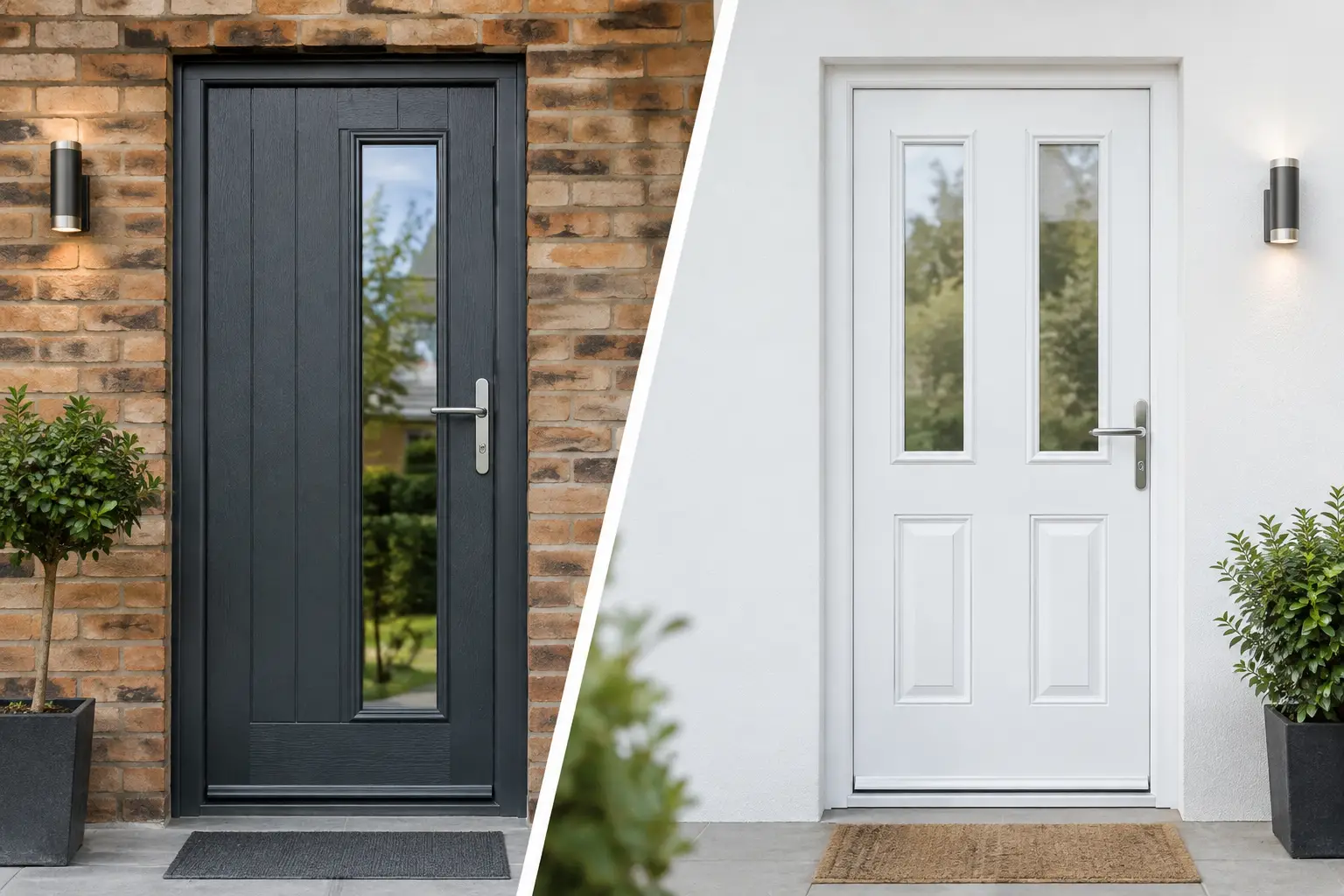
A new front door changes more than the view from the pavement. It can make a home feel warmer, quieter and more secure from the moment it closes. When weighing up composite versus uPVC doors, the best choice comes down to your priorities: the look you want, the level of security you expect, your budget and the character of your property.
Both are sensible choices for homes across Doncaster and South Yorkshire. Both can offer good insulation, dependable weather protection and very little maintenance compared with older timber doors. The difference is in how they are made, how they feel in day-to-day use and the range of finishes available.
Composite versus uPVC doors at a glance
A uPVC door is made primarily from unplasticised polyvinyl chloride, usually with a reinforced frame and insulated panels. It is a familiar, practical option that has improved greatly over the years. Modern uPVC doors are far removed from the basic white designs many homeowners remember, with better glazing, stronger locking systems and a wider choice of colours and panel styles.
A composite door uses several materials together. Its construction commonly combines an insulating core, a reinforced frame and a durable outer skin designed to resemble painted timber. This layered build gives the door a more substantial appearance and, in many cases, a heavier, more solid feel.
Neither material is automatically right for every home. A well-specified uPVC door can be an excellent replacement for a side entrance, back door or straightforward front-door upgrade. A composite door may be the stronger fit where first impressions, traditional styling and a more premium finish are high on the list.
Security: look beyond the door material
Homeowners often assume a composite door is always more secure simply because it feels heavier. Weight can add reassurance, but security depends on the complete door set rather than the slab alone. The frame, hinges, cylinder, lock, glazing and fitting quality all matter.
A quality composite door is built with security in mind and can accommodate high-performance locking and reinforced sections. Its solid construction can make it a particularly reassuring choice for a main entrance, especially where the door is exposed to the street.
Modern uPVC doors can also provide very good protection when they are properly specified and professionally fitted. Reinforcement, multi-point locking and toughened glass can make a real difference. A poorly fitted premium door is less secure than a well-fitted door with the right hardware, so installation should never be treated as an afterthought.
When comparing quotations, ask what is included as standard. Check the locking arrangement, cylinder type, hinge security, glass specification and whether the frame is reinforced. These details give a clearer picture than a simple claim that one door is safer than another.
Warmth, draughts and energy efficiency
If your existing door feels cold around the edges or lets in a noticeable draught, either replacement option should improve comfort. Modern doors are designed with insulated cores, sealed units and weather-tight frames to help reduce heat loss.
Composite doors tend to perform strongly here because of their insulating cores and tightly engineered construction. They are often chosen for exposed front elevations, where wind and rain test the entrance throughout the year. The outer skin is designed to cope with changing weather while helping the door retain its shape.
uPVC doors can also offer good thermal performance and are often a cost-effective way to improve an older entrance. The final result depends on the particular door, its glazed areas and how accurately it is installed. Large decorative glazed panels may bring more light into a hall, for example, but they can affect the overall thermal performance compared with a largely solid design.
The best approach is to compare the performance information for the actual doors you are considering, not just the material category. Good fitting and careful sealing around the frame are equally important for keeping out cold air and rain.
Style and kerb appeal
This is often where the decision becomes clearer. Composite doors offer a broad choice of colours, woodgrain effects, glazing patterns, hardware and traditional panel designs. They suit period homes, country-style properties and households looking for a statement entrance without the regular painting associated with timber.
A deep coloured composite door with decorative glass and suited furniture can give a porch or front elevation real presence. It can work especially well where the door is visible from the road and you want the entrance to complement brickwork, render, windows or a heritage-inspired style.
uPVC is often the more understated option, although it is no longer limited to plain white. Grey, black, wood-effect and coloured finishes allow homeowners to coordinate a replacement door with modern windows and fascias. For a utility door, side entrance or a simple contemporary frontage, uPVC can look neat, smart and entirely appropriate.
It is worth viewing samples in natural light before deciding. Colours can look very different on a screen, while handles, letterplates and glazing choices have a bigger influence on the finished appearance than many people expect.
Cost: initial price versus long-term value
uPVC doors usually have a lower initial cost than composite doors. For homeowners managing a wider refurbishment, such as replacing windows at the same time, that price difference can make uPVC a practical and attractive route.
Composite doors generally cost more because of their construction, finish options and premium appearance. Whether that additional spend represents good value depends on where the door is going and what you want it to achieve. On a prominent front entrance, many homeowners feel the stronger look and solid feel justify the difference. For a less visible rear door, a good uPVC design may make better financial sense.
There is also the value of living with the choice every day. A front door is used constantly, seen by visitors and central to how secure the home feels. Choosing purely on the lowest price can be a false economy if the finished style or specification does not meet your expectations.
Maintenance and everyday durability
Both composite and uPVC doors are low-maintenance options. Neither needs the routine sanding and repainting that a traditional timber door may require. Regular cleaning with mild soapy water, along with occasional checks to hinges, locks and seals, will help keep either type working well.
Composite doors are designed to withstand everyday knocks and changing weather, while retaining a timber-style appearance. As with any exterior surface, avoid harsh cleaners or abrasive pads that may damage the finish.
uPVC is similarly easy to care for and is well suited to busy family homes. Lighter finishes can show road grime more readily, particularly near main routes, but a simple clean is usually enough to restore their appearance. Darker colours deserve sensible care too, as prolonged exposure and cleaning products can affect any external finish over time.
Which door suits your home?
Choose a composite door if you want a substantial front entrance with a wide range of traditional or premium design options. It is often the natural choice for homeowners focused on kerb appeal, a timber-like finish and a reassuringly solid feel.
Choose a uPVC door if you want an affordable, efficient and low-maintenance replacement that can still look smart and provide good security. It can be particularly well suited to rear, side and utility entrances, or to homes where a clean, simple design is preferred.
There are exceptions. A carefully selected uPVC front door may be exactly right for a modern home, while a composite door can make an excellent rear entrance where security or style is a priority. Your glazing, colour, surrounding windows and the amount of shelter at the doorway should all influence the decision.
At JF Bodman Ltd, the starting point is honest advice based on the property and the people who live in it. Looking at samples, discussing the way the door will be used and checking the full security and energy specification can turn a difficult comparison into a confident choice.
The right door should feel at home on your property, close firmly behind you and give you peace of mind every time you leave the house.