
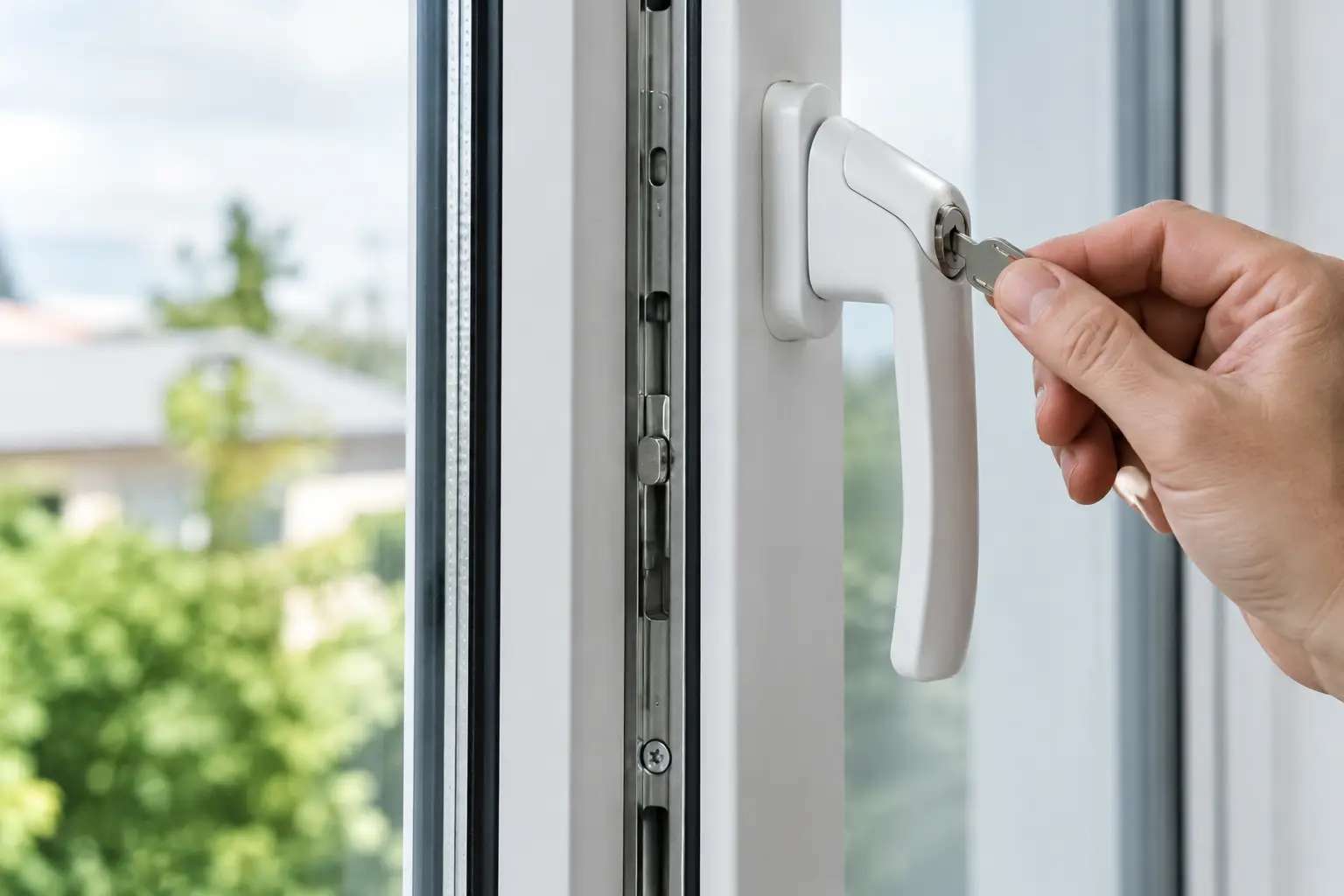
A window that only locks after a hard push, a lift of the sash or several turns of the key is not something to put off until later. It may still close tonight, but it is already telling you that a component is worn, misaligned or under strain. Knowing when to replace window locks helps protect your home, avoids damage to the window itself and gives you proper peace of mind when you go out or go to bed.
Modern window locking systems are built to provide dependable security for years. However, moving parts, weather exposure, regular use and changes in the frame can all affect how well they work. The right answer is not always a full replacement window, but neither is it always sensible to fit a new lock and hope for the best.
7 signs it is time to replace window locks
1. The key will not turn smoothly
A key should turn with steady, reasonable pressure. If it sticks, catches or needs wiggling before the handle releases, the lock cylinder or internal mechanism may be wearing out. Do not force it. A key can snap in the lock, leaving the window unsecured or difficult to open.
Try a suitable lock lubricant first, rather than oil or general-purpose spray, which can attract dirt over time. If the problem returns quickly, or the key will not turn at all, arrange for the lock to be inspected. Replacing the affected part is usually far safer than waiting for complete failure.
2. The handle feels loose, stiff or spins freely
A loose handle can be more than an annoyance. It may mean the fixing screws have worked loose, the handle spindle is worn, or the gearbox behind it is failing. A stiff handle can point to the same issues, but it can also be caused by the window sash dropping slightly out of alignment.
If the handle turns without engaging the locking points, the window is not properly secure even if it looks shut. This needs prompt attention. Continued force can damage the lock, handle and frame hardware, making a straightforward repair more involved.
3. The window will not lock unless you force it
You should never need to lean heavily on a sash or pull the handle sharply to lock a window. On uPVC, aluminium and timber windows, this commonly indicates that the locking points are no longer lining up with their keeps on the frame.
Sometimes an experienced fitter can adjust the hinges or keeps and restore smooth operation. If the locking strip, gearbox or keeps are worn, however, replacement parts may be needed. The key point is to identify the cause before replacing anything. A new lock fitted to a misaligned window can soon suffer the same damage.
4. There is visible damage, corrosion or missing hardware
Take a close look at the handle, lock plate and the metal fittings around the opening sash. Rust, pitting, cracks, bent locking cams or missing screws all deserve attention. Corrosion is particularly common on windows exposed to driving rain or condensation, and it can weaken components gradually without an obvious failure at first.
Visible damage after an attempted break-in should be treated as urgent. Even if the window still closes, bent or compromised fittings may not resist another attack as intended. A professional assessment can confirm whether a replacement lock is enough or whether the sash, glazing bead, hinges or frame also require work.
5. The window opens unexpectedly or will not stay locked
A locked window should remain firmly shut. If it pops open, the handle drops, or the sash can be moved despite the handle being in the locked position, stop relying on it for security. The lock may not be engaging at every point, or internal parts may have broken.
This is also a practical concern in homes with young children. Window restrictors can limit how far a window opens, but they are not a substitute for a working lock. Both should be checked separately, particularly on upstairs windows.
6. You have lost keys or moved into a property with unknown keys
Lost keys do not automatically mean the whole window needs replacing. In many cases, a lock cylinder or locking handle can be changed so that old keys no longer work. It is a sensible security step after moving house, especially if you do not know who may still have a spare key.
The correct solution depends on the window type and existing hardware. Some systems use a keyed handle, while others use a separate cylinder or a multi-point mechanism. A survey avoids fitting incompatible parts or reducing the window’s original security performance.
7. Your locks are old and no longer meet your needs
Older windows can have locks that still operate, but offer less protection than current high-performance hardware. This is worth considering if you are improving home security, updating external doors or preparing a property for sale.
An upgrade may provide stronger locking points, more durable handles and improved resistance to forced entry. Yet age alone is not a reason to replace every lock. Well-maintained quality fittings can last a long time. What matters is their condition, how they operate and whether they suit the level of security you expect from your home.
When a window lock repair may be enough
Not every stiff or awkward window needs a new lock. A repair or adjustment may be the better value option where the issue is limited to loose handle screws, minor sash alignment, worn hinge friction stays or a keep that needs repositioning.
This is why diagnosis matters. Forcing a handle because the window has dropped can break a healthy gearbox. Equally, repeatedly adjusting a window will not solve an internally damaged locking strip. An experienced installer will check the operation of the sash, hinges, handle, mechanism and frame together before recommending work.
For homeowners across Doncaster and South Yorkshire, that straightforward advice can prevent unnecessary expense. Security repairs should be practical, properly matched to the window and completed to a standard that lasts.
When to replace window locks and when to replace the window
A replacement lock is often suitable when the window frame, glass and sash remain sound. This can be a cost-effective way to restore security and make a window easier to use.
A new window may be the wiser long-term choice where several faults are present. For example, a failed lock combined with draughts, misted double glazing, warped frames, difficult opening and poor energy performance suggests the whole unit is nearing the end of its useful life. Replacing individual parts may keep it going temporarily, but it will not resolve every weakness.
There is also a style and performance consideration. A carefully chosen replacement window can improve warmth, reduce outside noise, refresh the appearance of the property and provide modern locking hardware as part of a complete fitted system. It is a larger investment, so it should be based on the condition of the window rather than a single faulty handle alone.
Do not overlook safe escape routes
Security and safe exit need to work together. Bedrooms and other rooms may rely on opening windows as a possible escape route in an emergency. If a key-operated lock is fitted, make sure the key is accessible to responsible adults and never leave it in a place where it could be easily reached from outside through broken glass.
Avoid making changes that restrict an opening window without considering how the room is used. This is particularly relevant with child restrictors, security fittings and older properties where window arrangements may already be less straightforward. A professional can help you balance security, ventilation and safe use.
A small fault is worth dealing with early
Window locks rarely improve on their own. The first signs are often subtle: a handle that needs a firmer push, a key that catches or a sash that must be lifted into place. Addressing them early is usually simpler, less disruptive and kinder to the rest of the window hardware.
If you are unsure whether the issue is the lock, alignment or the condition of the full window, ask for an honest inspection. The best result is not simply a window that closes, but one that feels secure, operates smoothly and gives your household confidence every day.