
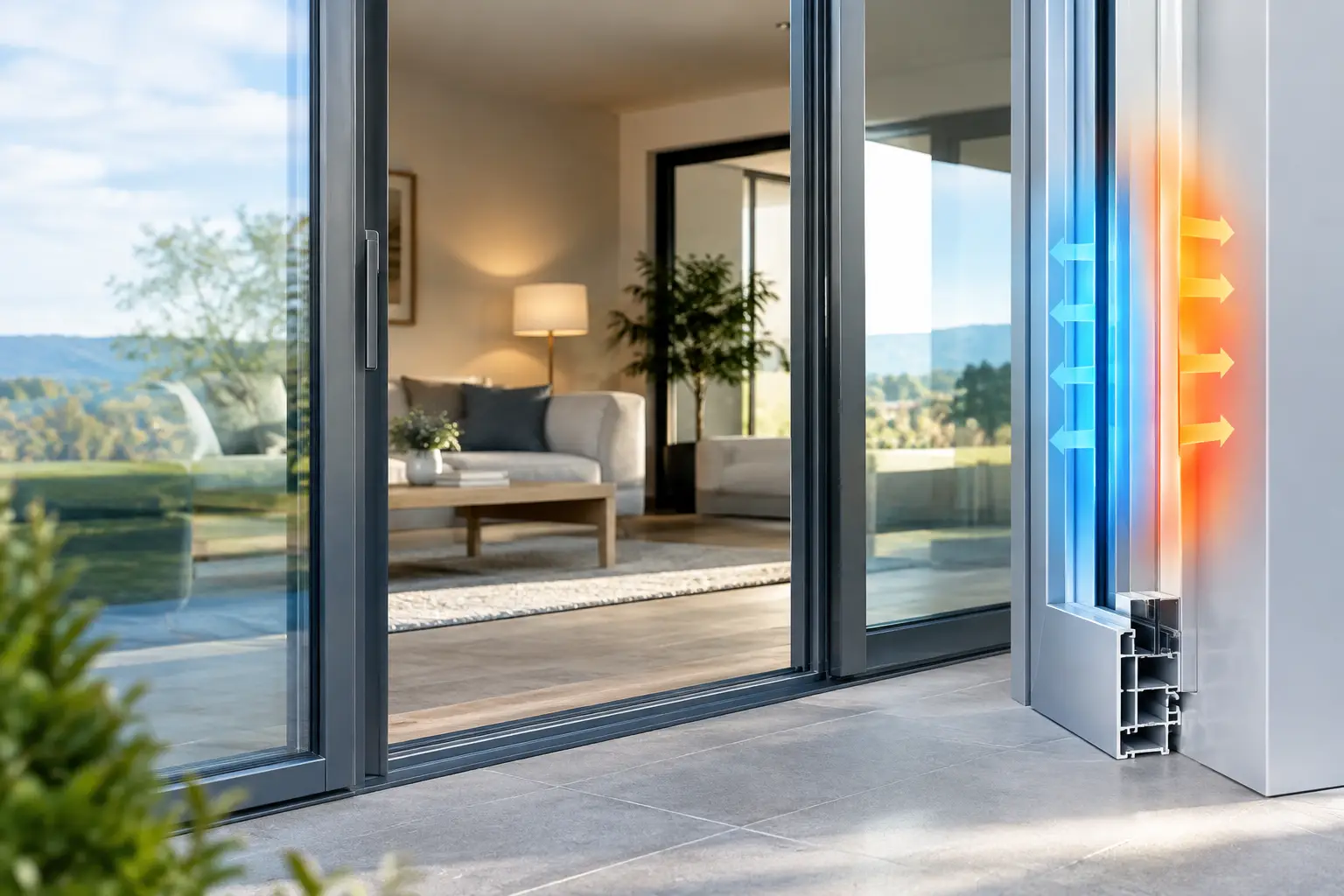
A cold patch beside the back door is often noticed long before a homeowner thinks about replacing it. If your current door feels chilly on a winter morning, lets in draughts or creates condensation around the frame, it is fair to ask: are aluminium doors thermally efficient? The short answer is yes – provided you choose a modern, thermally broken door with high-quality glazing and have it fitted properly.
Aluminium has changed a great deal over the years. Older metal-framed doors could transfer heat quickly, making them less suitable for homes focused on warmth and lower heating bills. Today’s aluminium doors are engineered very differently. They can offer excellent insulation alongside the slim sightlines, strength and contemporary appearance that make aluminium so popular.
Are aluminium doors thermally efficient in a UK home?
Modern aluminium doors can be highly thermally efficient. The key is not the aluminium alone, but the complete system: the frame, thermal break, glass, seals, threshold and installation all play a part.
Aluminium is naturally a good conductor of heat. Without careful design, warmth from inside your home could travel through the frame and escape outside. Quality aluminium door systems prevent this with a thermal break. This is an insulating barrier, usually made from polyamide, placed between the internal and external sections of the frame. It interrupts the path of heat through the metal.
With a thermal break in place, an aluminium door can achieve strong thermal performance while retaining the material’s natural strength. This allows for slimmer frames and larger glazed panels than many alternative materials. For homeowners in Doncaster and across South Yorkshire, that can mean brighter rooms without accepting a colder home.
What affects an aluminium door’s insulation?
It is easy to compare doors by appearance alone, particularly when choosing between a front door, French doors, sliding patio doors or bi-fold doors. But two doors that look similar can perform very differently in everyday use.
The thermal break in the frame
This is one of the most important features to check. A properly designed thermal break separates the inner and outer aluminium sections, reducing heat transfer and helping the internal surface of the frame stay warmer. That improves comfort near the door and can reduce the chance of internal condensation in cold weather.
Not every aluminium product offers the same specification. Ask about the particular door system rather than assuming all aluminium doors provide equal insulation.
The glazing specification
Glass makes up a large area of many aluminium doors, so it has a major effect on efficiency. Double glazing with a low-emissivity coating and an insulating gas-filled cavity is a good starting point for most homes. Depending on the door design and your priorities, triple glazing may also be considered.
Triple glazing can improve insulation, but it is not automatically the right answer in every situation. It adds weight and cost, and the benefit will depend on the rest of the property, the direction the door faces and the performance of the full system. Honest advice should look at the whole opening, not simply recommend the highest specification.
U-values and whole-door performance
A U-value measures how readily heat passes through a building element. Lower figures indicate better insulation. When comparing aluminium doors, check whether the quoted U-value applies to the whole door or just the centre of the glass.
The whole-door figure is more useful because it includes the frame, glazing and panels. This gives a more realistic picture of what you can expect once the door is in your home. A well-specified aluminium door can meet or exceed current standards, but exact figures vary by style, size and configuration.
Seals, thresholds and hardware
Warm frames and efficient glass will not do their best work if cold air can pass through gaps around the door. Quality weather seals, well-made gaskets and a correctly designed threshold are essential for reducing draughts and keeping out wind-driven rain.
This is particularly relevant for large rear openings and exposed properties. Sliding and bi-folding doors need to open and close smoothly, but they must also seal securely when shut. Good hardware and careful adjustment make a real difference to both comfort and long-term performance.
Why fitting quality matters as much as the door
A premium aluminium door cannot compensate for poor installation. If the frame is not set square, insulated correctly around the perimeter or sealed properly to the building fabric, heat can still be lost and draughts may develop.
Professional fitting also protects how the door operates. Large glazed aluminium doors are substantial pieces of joinery. They need accurate support, alignment and finishing so that panels move freely, locks engage cleanly and seals meet evenly all the way around.
At JF Bodman, this is why the conversation starts with the property, the opening and how you intend to use the space. A door should look right from the pavement or garden, but it should also feel secure, close confidently and help make the room more comfortable every day.
Aluminium versus uPVC and timber doors
There is no single best material for every home. The right choice depends on your property’s style, the size of the opening, your budget and the finish you want to achieve.
uPVC doors can offer very good thermal performance and are often a cost-effective choice for standard-sized openings. They are practical, low maintenance and available in a broad range of finishes. However, larger designs may require wider frames than aluminium, reducing the glass area and altering the overall look.
Timber is naturally insulating and can be a beautiful match for period properties or traditional homes. It does need regular care to preserve its finish and protect it from the weather. For homeowners who value authentic character, that maintenance may be worthwhile.
Aluminium is especially well suited to wide openings, contemporary extensions and doors where slim frames are a priority. Its strength means it can support larger panes of glass without becoming bulky. The initial cost can be higher than some uPVC options, but its durability, refined appearance and low maintenance can make it a sound long-term investment.
Can aluminium doors help reduce heating bills?
Replacing a poorly performing door can reduce heat loss and make the room feel warmer, which may lessen the demand on your heating. The scale of any saving depends on what you are replacing, how your home is insulated and how you heat it.
It is sensible to see energy efficiency as one part of the value rather than promise a fixed saving. A modern aluminium door can help tackle cold draughts, uncomfortable areas near glazing and excessive condensation. It may also improve security, bring in more natural light and refresh the appearance of your home.
For the best result, consider the surrounding elements too. Upgrading an old door while leaving failing windows, uninsulated walls or gaps around the opening may limit the improvement you notice. A clear survey helps identify where your investment will have the greatest effect.
Choosing an efficient aluminium door with confidence
When comparing options, focus on the full specification rather than just a brochure image or a headline price. Ask about the whole-door U-value, the type of glazing, the thermal break, weather seals, security hardware and the installer’s approach to finishing the opening.
Also think about how the door will be used. A quiet side entrance has different requirements from a busy family kitchen leading to the garden. A south-facing glazed extension may benefit from considering solar gain as well as insulation, while an exposed rear elevation may make weather performance the priority.
A well-chosen aluminium door should never feel like a compromise between style and warmth. With the right system and a high-standard installation, it can give your home clean lines, lasting security and a more comfortable place to enjoy through every South Yorkshire season.