
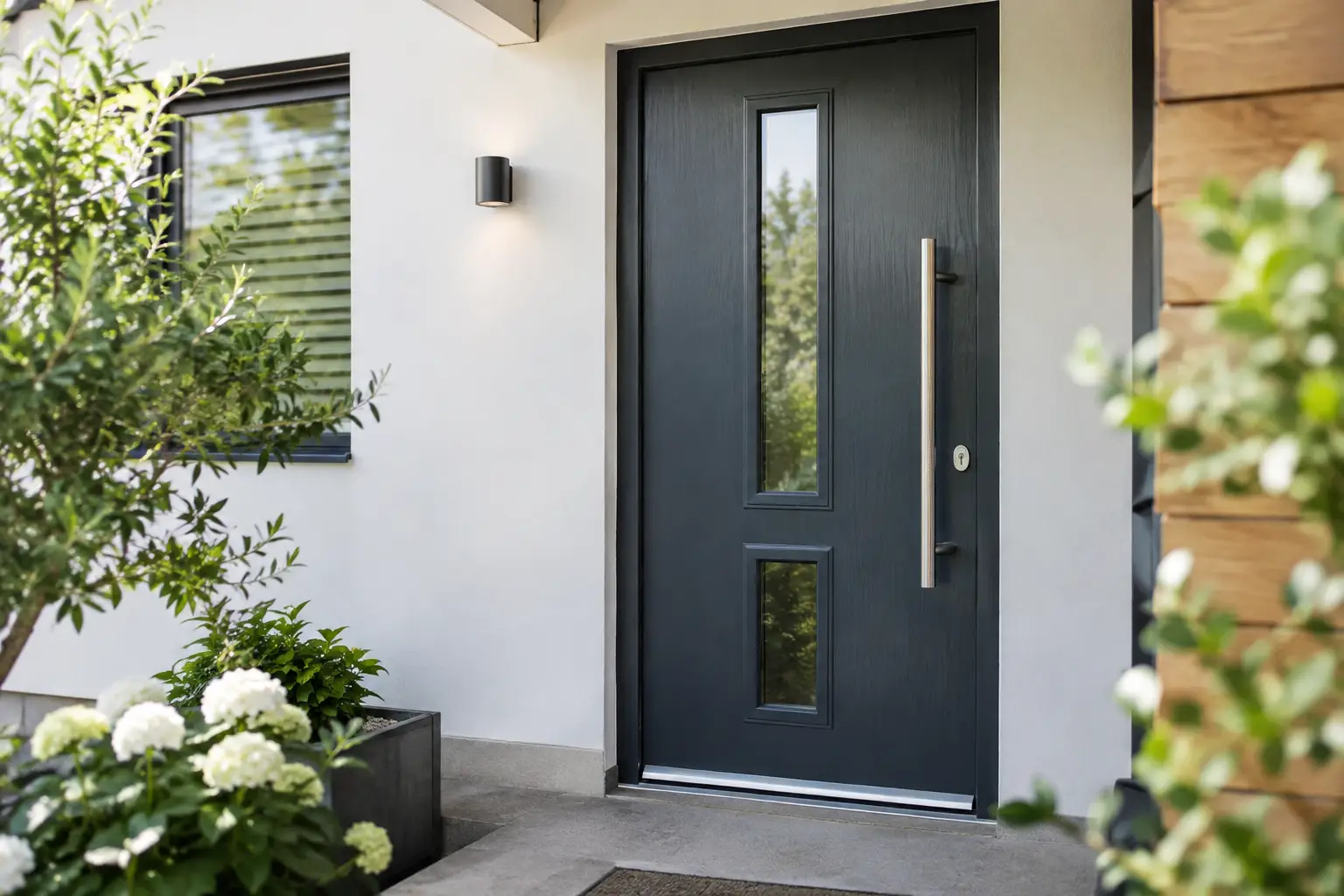
A front door takes more punishment than most parts of a home. It faces rain blowing across the drive, cold mornings, strong summer sun, muddy hands, shopping bags and the daily pull of family life. That is why composite door durability matters so much when you are choosing a new entrance for your South Yorkshire home. A good door should still look smart, close properly and feel secure years after installation.
Composite doors have earned their reputation as a long-lasting choice, but not every product is made to the same standard. The design, materials, fittings and installation all affect how well a door performs over time. Here is what homeowners should look for before deciding what will stand up to the years ahead.
What makes a composite door durable?
A composite door is not made from one material. Its strength comes from combining different materials, each chosen for a particular job. While the exact construction varies between manufacturers, a quality door commonly has a solid insulated core, reinforced outer skins and a durable outer finish designed to cope with everyday weathering.
This layered construction gives a composite door a substantial feel. Unlike a basic lightweight uPVC panel, it is less likely to flex when the temperature changes or when it is used frequently. That solidity also supports better security, as the door leaf is designed to resist force more effectively than thinner alternatives.
The outer surface is just as significant. A well-made, coloured finish should resist fading and scratching far better than a painted timber door that needs regular attention. Woodgrain effects can offer the traditional appearance many period and rural properties suit, without the routine sanding and repainting associated with natural timber.
Durability is not simply about surviving a hard knock. It is about the door keeping its shape, colour, weather seal and smooth operation through many seasons.
Composite door durability in British weather
Doncaster and the wider South Yorkshire area see their share of rain, frost, wind and changing temperatures. External doors expand and contract slightly as conditions change. A durable composite door is built to manage this movement without warping, swelling or leaving gaps around the frame.
Timber doors can be beautiful, but exposed timber needs regular maintenance to prevent moisture entering the surface. If water is allowed into unprotected areas, the timber may swell, crack or deteriorate. A composite door is generally more forgiving for homeowners who want a traditional look with lower maintenance demands.
uPVC doors are also low-maintenance and can be an excellent value option. However, a quality composite door often feels more substantial and provides a broader choice of detailed panel designs, glazing and finishes. For a front entrance that gets heavy use and makes a strong first impression, that extra weight and structure can be worthwhile.
Even the best door needs sensible protection from extreme exposure. A very dark-coloured door facing strong, direct sun for most of the day may become hotter than a lighter finish. A canopy or recessed porch can reduce the effects of driving rain and sun, as well as making arrivals more comfortable. Honest advice should take the position of your property into account, not just the colour you like in a brochure.
The frame and threshold matter too
A door can only perform as well as the frame around it. A secure, well-fitted frame keeps the door aligned, helps the seals work correctly and supports the locking system. If the frame is poorly installed, even a premium door can catch, rattle or allow draughts.
The threshold deserves attention too. It needs to create a weather-tight seal while allowing easy everyday access. Correct fitting, drainage and finishing around the opening help prevent water from collecting where it should not. This is one reason a professional survey and installation are worth more than simply comparing door prices.
Security fittings have a lifespan as well
When people ask how long a composite door will last, they often focus on the panel. The hardware needs equal consideration. Handles, letterplates, hinges, cylinders and multi-point locks are working parts, and their quality has a direct effect on security and day-to-day reliability.
A well-specified multi-point locking system secures the door at several points along the frame, rather than relying on a single central lock. Quality hinges hold the weight of the door without dropping or loosening, while a suitable cylinder offers protection against common methods of forced entry. Toughened or laminated glass options can add further reassurance where decorative glazing is included.
Hardware is also where regular care makes the biggest difference. A lock that becomes stiff should not be forced with the key. It may simply need adjustment, cleaning or a suitable lubricant, but leaving it can place unnecessary strain on the mechanism. Likewise, a door that needs lifting to lock is asking for attention before the issue becomes more serious.
A reputable installer should explain the security specification in plain language. Look beyond phrases such as “high security” and ask what locking system, cylinder and glazing are included in the quoted door.
How long should a composite door last?
There is no single number that applies to every door. A well-made composite door, correctly fitted and cared for, can provide reliable service for decades. Its appearance and operation will depend on exposure, usage, colour, product quality and the care given to its fittings.
A busy family entrance, opened many times a day, has a different workload from a sheltered side door used occasionally. A coastal property faces a different environment from a suburban street in Doncaster. These differences do not make a composite door unsuitable. They simply show why the right specification matters.
Warranties can be helpful, but they should not be the only measure of quality. Check what is covered and for how long. The door slab, frame, glass units, coloured finish and hardware may have different terms. A clear warranty backed by an established local installer offers greater peace of mind than a headline figure with little explanation behind it.
Simple care that protects your door
One of the advantages of a composite door is that it does not demand regular painting or heavy maintenance. Still, a few straightforward habits will keep it looking and working at its best.
Wash the door, frame and glazing occasionally with warm water, a soft cloth and mild soapy water. This removes road dirt, pollen and grime that can build up around edges and drainage points. Avoid abrasive pads, solvent-based cleaners and harsh chemicals, which may damage the finish or hardware.
Keep the drainage channels at the bottom of the frame clear of leaves and debris. Wipe the weather seals clean, then check they remain seated properly. If you notice a split seal, loose handle, misted glazed unit or a change in how the door closes, arrange for it to be assessed rather than waiting.
Moving parts benefit from occasional checking. Hinges and locking components may need a light, suitable lubricant, but the product guidance should always be followed. Spraying random oils into a cylinder can attract dirt or affect its operation. Small maintenance jobs are usually quick and inexpensive when dealt with early.
Choosing durability without compromising on style
A durable door does not have to look plain. Composite designs range from traditional cottage styles with decorative glass to clean-lined contemporary doors with long glazed sections and modern furniture. The best choice is one that suits your home and gives you confidence every time you close it.
Consider the colour against your brickwork, windows and porch, but also think about practical use. A heavily textured woodgrain finish can be particularly forgiving of everyday marks. Decorative glazing should complement the property while giving the privacy you need. If your hallway is dark, carefully chosen glazed panels can bring in welcome natural light without leaving the entrance exposed.
At JF Bodman, a proper conversation begins with how you use your home, the style you want and the performance you expect. It is a more reliable way to choose than selecting a door from a screen without considering the opening, the surroundings and the fitting detail.
Your front door should feel like a lasting improvement, not another item on the maintenance list. Choose a well-built composite door, have it professionally fitted and give its working parts a little care. The result is a secure, welcoming entrance that continues to do its job through the seasons.