
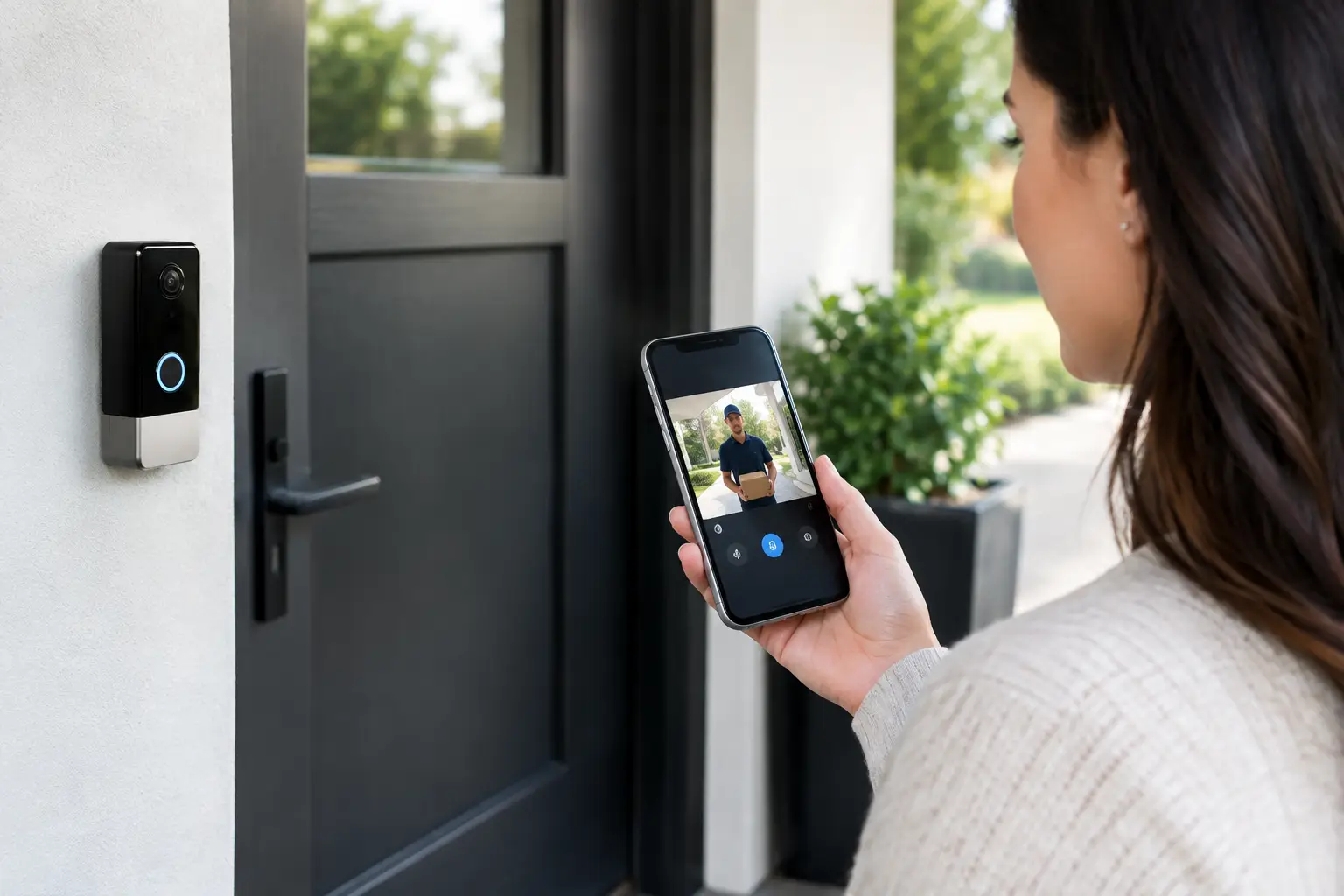
A front door should feel reassuring the moment it closes behind you. Smart door security brings together the strength of the door itself, reliable locking hardware and useful technology that helps you keep track of who comes and goes. For homeowners in Doncaster and across South Yorkshire, it is a practical way to improve security without compromising on the appearance of the entrance.
The best approach is not simply to add a gadget to an older door. Real peace of mind comes from looking at the complete entrance: the frame, hinges, glazing, locks, fitting and the way your household uses the door every day.
What smart door security really means
Smart security is often associated with keyless entry, phone apps and video doorbells. These can be useful features, particularly for busy families, people who regularly receive deliveries or anyone who wants to check that the door is locked after leaving home.
However, a smart lock is only one part of a secure entrance. A weak door panel, tired frame or poorly fitted lock can reduce the benefit of even the most advanced system. The most effective smart door security starts with a high-quality external door and proven mechanical protection, then adds technology where it genuinely makes life easier.
For many homes, this means a modern composite, aluminium, timber or high-performance uPVC door with a multi-point locking system. When the handle is lifted, several locking points engage around the frame rather than relying on one central latch. This spreads the resistance across the door and gives a firmer, more secure close.
Start with the door, frame and glazing
A secure lock needs a strong base. Older timber doors may be full of character, but movement, weathering and worn joints can affect how well they close and lock. Equally, an older uPVC door may have a serviceable panel but a loose frame or tired hinges that leave gaps around the edge.
Replacing the whole entrance can offer a noticeable improvement. A properly specified and professionally installed door should sit squarely in its frame, operate smoothly and close without force. The frame is just as important as the door leaf, as it carries the keeps that receive the locking points.
Glazed sections deserve the same care. Side panels and decorative glass can bring much-needed natural light into a hallway, but the glass should be suitable for its location. Toughened safety glass is a sensible choice for many door designs, while laminated glass may offer added resistance in areas where security is a particular concern. The right option depends on the door layout, your priorities and the look you want to achieve.
A solid slab door may sound like the safest option, but it is not always necessary. A well-made glazed composite or aluminium door, fitted with suitable safety glazing and secure beads, can provide excellent protection while making the entrance feel brighter and more welcoming.
Choose locks that work as a system
The lock cylinder is the visible part many homeowners focus on, but it should be considered alongside the multi-point mechanism, handles and hinge side of the door. A quality cylinder designed to resist common forms of attack is a worthwhile upgrade, especially where a traditional euro cylinder is used.
Look for security hardware that has been independently tested to recognised standards. Products meeting PAS 24 are designed to provide enhanced resistance to opportunist attack, while cylinders carrying an appropriate TS 007 star rating offer further reassurance. Your installer can explain what is compatible with the selected door and why it suits your home.
Handles should be secure and firmly fixed, not loose or decorative in name only. On some door styles, security handles provide additional protection around the cylinder. Hinge bolts or dog bolts may also be used on the hinge side to help prevent the door being forced open if hinges are attacked.
There is no one lock arrangement that suits every property. A traditional front door in a conservation setting may call for heritage-style hardware, whereas a contemporary aluminium entrance can accommodate a cleaner, more modern locking solution. Good security should support the character of the home rather than fight against it.
Where a smart lock can help
A smart lock can replace a key with a keypad, fob, app or biometric method, depending on the model. Some retain a conventional key override, which can be a sensible back-up. Others work with a mechanical multi-point lock and motorise the locking action once the door is shut.
The everyday benefits are straightforward. You can avoid hiding spare keys, issue temporary access to a trusted visitor and check whether the door has been locked. This can be especially handy for households with teenagers, carers, cleaners or tradespeople attending at agreed times.
That said, smart features should be chosen with care. Battery-powered locks need battery checks, app-based access depends on sensible password management, and not every lock is compatible with every door. Some systems can also alter the way the handle or cylinder operates, so professional advice before fitting is essential.
For homeowners who prefer simplicity, a high-security mechanical lock may be the better choice. There is nothing old-fashioned about choosing a dependable key if it gives you confidence and suits your routine. Technology should solve a real problem, not create another one.
Keep digital access under control
If you add connected security, treat it with the same common sense you would apply to online banking. Use a strong, unique password for the associated account, enable two-step verification where available and remove temporary access when it is no longer needed.
It is also worth agreeing who in the household has administrator access. One clear account holder and a small number of named users are easier to manage than several shared logins. Check the manufacturer’s support arrangements and software update policy before committing to a particular system.
Do not overlook doors at the side and rear
The front entrance often gets the attention, yet side, back and patio doors can be just as important. A side door leading to a driveway, utility room or garage may be less visible from the road. Patio and French doors need secure locking, strong frames and correctly adjusted hardware to prevent lifting, levering or sliding issues.
Bi-fold and sliding doors can be highly secure when designed and installed properly. Their larger glazed areas make correct glass specification, track alignment and multi-point locking particularly important. A door that drags, catches or needs a hard push to lock should not be ignored. Small operational problems can become security weaknesses if left unresolved.
External doors should also be assessed alongside nearby windows. An otherwise secure rear door is less reassuring if an adjacent opening window has a failed lock or damaged hinge. Thinking about the property as a whole helps you spend money where it will make the greatest difference.
Professional fitting makes the difference
Security ratings and premium hardware only perform as intended when they are fitted accurately. The door must be level, the frame securely fixed and the locking points correctly aligned with their keeps. There should be no need to slam, lift excessively or force the key to make the door lock.
After installation, take time to understand the operation. Ask how to engage every locking point, how to use any night latch or smart feature, and what routine care is recommended. Keep keys and access codes under control from the first day, particularly if you have recently moved into a property.
A local, experienced installer can also help you balance security with insulation, style and budget. At JF Bodman, that conversation begins with the home you have, the entrance you want and the level of reassurance that feels right for your family.
A sensible next step for your home
If your current door is difficult to lock, feels draughty, has loose hardware or simply no longer gives you confidence, it is worth arranging an assessment before the problem worsens. A well-chosen replacement door can improve kerb appeal and warmth while giving you a stronger, more dependable first line of defence.
The aim is not to make your home feel complicated. It is to make arriving home, locking up at night and leaving for the weekend feel straightforward – with the quiet confidence that your door is doing its job.