
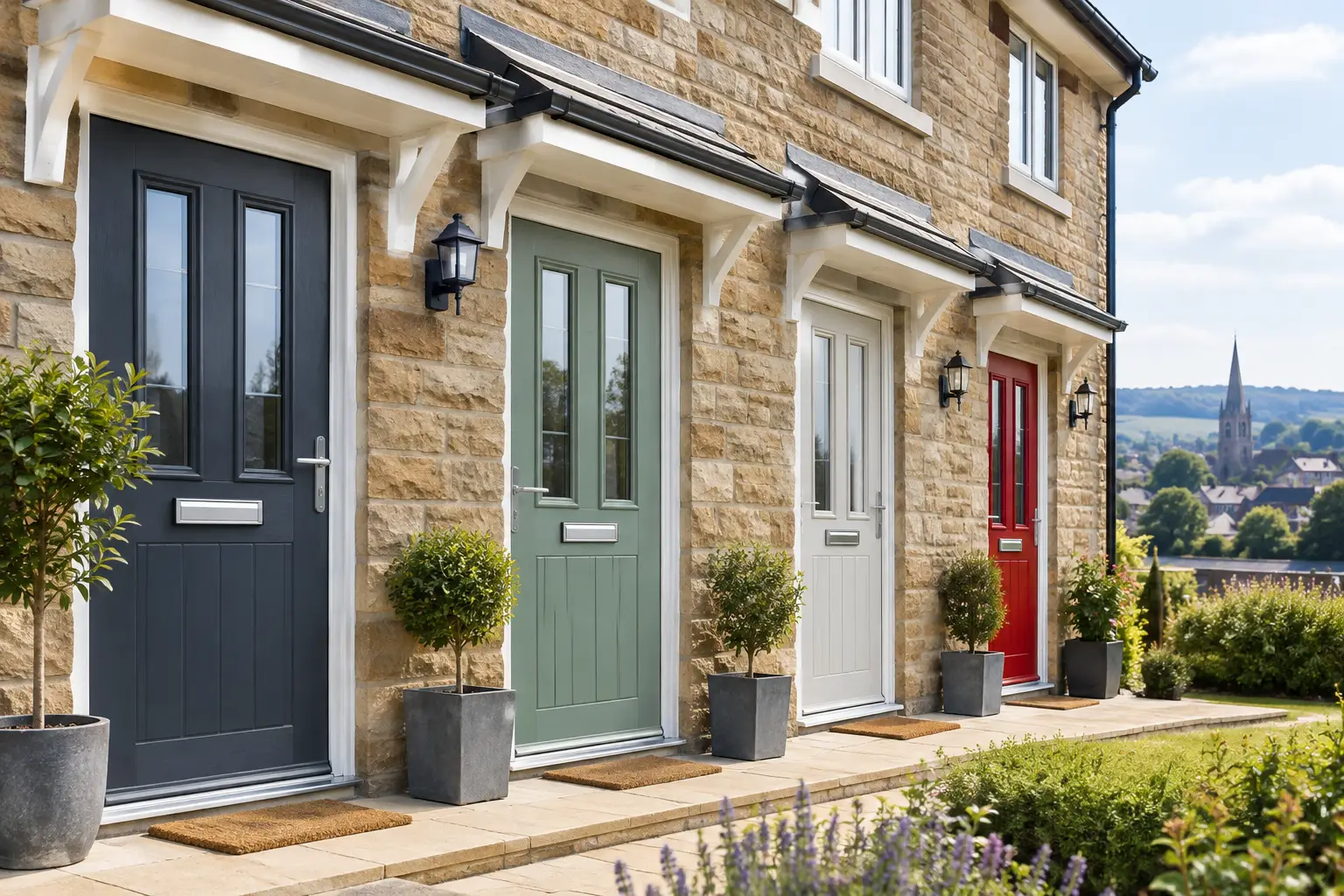
A new front door can change the way your home feels before anyone steps inside. The best door colours do more than follow a passing trend: they should suit your brickwork, reflect the character of your property and still look right through changing seasons. In Doncaster and across South Yorkshire, that usually means balancing personal taste with a practical eye for light, weather and the details already on your home.
A colour you love on a small sample can look very different across a full door in daylight. That is why it pays to take a measured approach, particularly when you are investing in a quality composite, aluminium, uPVC or timber entrance door designed to last.
How to choose the best door colours
Start with the fixed features of your property. Brick, render, stone, roof tiles, window frames and any porch or canopy will remain long after the door is fitted. Your new colour should work with these elements rather than compete with them.
Red brick homes, common across the area, are often well suited to deep blue, black, anthracite grey and traditional green. These shades create a clear contrast without looking harsh. On warmer orange or buff brick, a softer heritage green, cream or a muted blue can feel more considered than a very cool grey.
For rendered homes, there is more freedom. A white or pale grey exterior can carry stronger colours confidently, including navy, bottle green and even a carefully chosen red. On darker render, lighter doors can lift the frontage, although a bright white finish may need more regular cleaning if the entrance sits close to a busy road.
Also consider the direction your front door faces. North-facing entrances receive less direct sunlight, so very dark shades can appear almost black for much of the day. South-facing doors show colour more clearly but are exposed to stronger light, which can make vivid finishes feel brighter than expected. Looking at physical colour samples outside, at different times of day, is far more reliable than choosing from a screen.
Match the door to your window frames
Matching every frame and door exactly is not essential. In fact, a contrasting front door often gives a home more character. White windows with a black, blue or green door remain a dependable combination, while anthracite grey windows pair neatly with black, slate grey, deep blue and contemporary wood-effect finishes.
The important point is consistency in the smaller details. Letterplates, handles, knockers, house numbers and external lights should feel intentional alongside the door colour. Black furniture suits many contemporary colours. Antique black, chrome, stainless steel and brass each create a different look, so it is worth deciding on the overall effect before finalising the finish.
Classic front door colours that keep their appeal
Some colours stay popular because they work across many property types and are easy to live with. They offer a safe starting point for homeowners who want to improve kerb appeal without making a choice that dates quickly.
Black
Black is smart, versatile and particularly effective on period homes, white render and properties with pale stone details. It gives a strong frame to decorative glazing and works well with chrome or brass hardware. The trade-off is that black can show dust, rain marks and pollen more readily, especially on doors exposed to the road or driveway.
Anthracite grey
Anthracite grey has become a familiar choice for modern extensions, new-build homes and replacement windows. It is clean and contemporary without being as severe as black. It suits aluminium doors especially well, but it can also give a composite or uPVC entrance a crisp, modern edge. Choose carefully if your home already has cool grey render or pale grey brick, as too many similar tones can make the frontage look flat.
Navy and deep blue
A deep blue front door brings colour without being overly bold. It is a strong choice for red brick, sandstone and white render, and it works equally well with traditional panels or a simpler contemporary design. Navy tends to look softer than black in shaded areas, while still feeling formal and secure.
Green
From heritage racing green to softer sage, green is one of the most adaptable choices for British homes. Dark green complements older brickwork, cottages and heritage-style doors beautifully. Lighter, muted greens can suit painted render and rural settings. Very pale greens are more selective: they need the right surroundings and are best viewed outside before committing.
White, cream and soft neutrals
A pale door can make a recessed or shaded porch feel brighter. Cream is often kinder than brilliant white against traditional brick and stone, while warm greige and taupe finishes offer a quieter alternative to grey. These colours can look excellent, but they are less forgiving of everyday marks around handles, letterplates and lower panels. A durable, easy-clean surface is useful for busy family entrances.
Should your door be bold or understated?
A bold front door is not just for dramatic modern houses. Rich red, mustard, teal or brighter blue can give an ordinary frontage real personality, particularly where the rest of the exterior is simple. The key is to let the door be the feature. Keep surrounding trim, pots and accessories relatively calm so the entrance does not become visually crowded.
For most homeowners, a restrained colour with quality detailing delivers the best long-term result. A well-designed composite door in deep blue, green or black can look distinctive because of its glazing, panels and hardware, rather than relying on a fashionable shade alone.
If you are planning to sell in the near future, an understated colour may appeal to the widest range of buyers. That does not mean defaulting to grey. It means choosing a finish that looks well cared for and belongs naturally to the property. A colour that suits the house will generally add more value to kerb appeal than one selected purely because it is currently popular.
Best door colours by property style
A Victorian or Edwardian home often suits black, deep green, navy, oxblood or a timber-effect finish, especially with traditional glazing and period-style hardware. These colours respect the proportions and detail of the building without making it feel like a museum piece.
For 1930s semis and post-war brick homes, black, blue, green and anthracite grey are all reliable options. A door with modest glazed sections can add light to a hallway while maintaining privacy and security. If the property has stained glass or original features, choose a colour that supports them rather than overwhelms them.
Modern homes and extensions can carry sharper contrasts. Anthracite, black and contemporary wood effects suit slim aluminium frames and large glazed panels. A warmer colour, such as oak effect or dark green, can prevent a very modern frontage from feeling cold.
Country homes and properties with stone façades often benefit from earthy choices: heritage green, cream, muted blue, black or natural timber tones. Here, the surrounding landscape matters as much as the building itself. A finish that looks handsome against stone in summer should still feel welcoming on a wet winter afternoon.
Do not forget performance and maintenance
Colour matters, but it should not distract from how the door performs. A front door is a security feature, an insulation barrier and one of the hardest-working parts of the home. The right product should have a strong construction, dependable locking, quality hinges and professionally fitted seals as well as an attractive finish.
Darker colours can absorb more heat in direct sun, which is worth discussing when choosing the material and location of your door. High-quality products are designed for external use, but the right specification and careful installation help ensure a stable, reliable result over time. If your entrance is particularly exposed, consider the protection offered by a canopy or porch.
Maintenance is usually straightforward, but no finish is completely maintenance-free. Wash the door periodically with warm water and mild detergent, avoid abrasive cleaners and check hardware as part of normal home care. A colour that suits your routine is often a better choice than one that looks perfect only immediately after cleaning.
See the colour in context before ordering
Before making a final decision, place samples beside your brickwork and window frames. Stand back to see them from the pavement, then look again close up. Check them in sun, shade and rain if possible. Photographs of homes with similar materials can help, but your own frontage is the one that matters.
At JF Bodman, honest advice starts with understanding the home, the style you want and the performance you expect from your new entrance. The right colour should give you confidence every time you arrive home – not just on fitting day.