
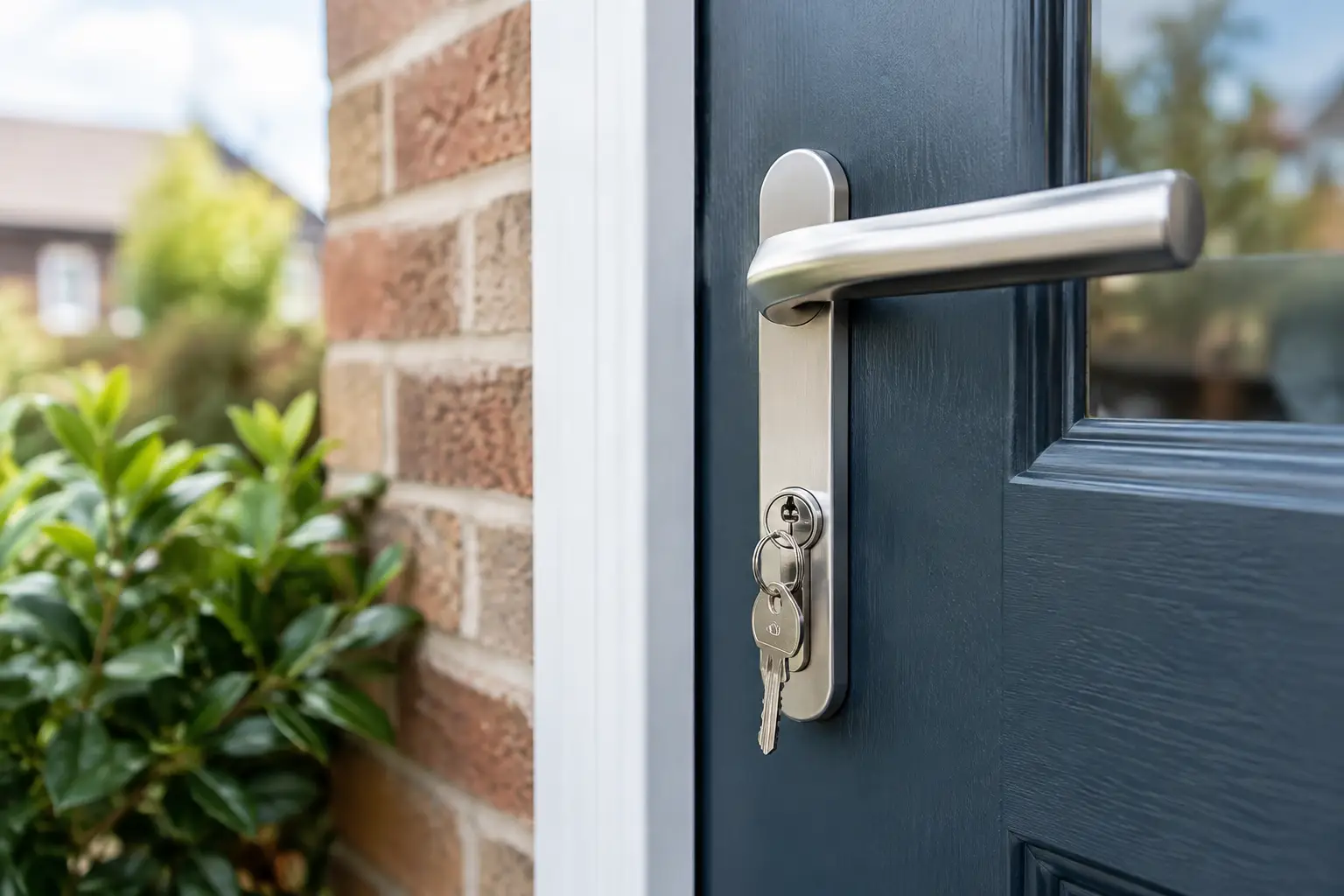
A front door can look excellent, feel solid and keep out the weather, yet still fall short if its lock is outdated or poorly matched to the door. The best locks for front doors are not always the most complicated or expensive. They are the locks that suit your door material, work properly with its frame and fittings, and give your household real peace of mind every day.
For homeowners in Doncaster and across South Yorkshire, choosing a front door lock is often part of a wider replacement door project. That is a sensible time to consider the complete security picture: the cylinder or keyway, the handles, the hinges, the glazing and the quality of the installation.
Best locks for front doors start with the door type
A lock is only as secure as the door it is fitted to. The right choice for a composite door may not be right for a traditional timber entrance door, and a uPVC door generally uses a different locking arrangement again.
Most modern uPVC, composite and aluminium front doors use a multipoint locking system. When the handle is lifted, several locking points engage along the edge of the door, commonly using hooks, rollers, bolts or mushroom cams. This spreads security across the frame rather than relying on one small locking point. The key cylinder then secures the mechanism in place.
A quality multipoint lock offers strong everyday protection, but it depends on proper use. Make a habit of lifting the handle fully before turning the key when you leave home or go to bed. Simply shutting the door may not engage all of its locking points.
Timber front doors can use a mortice deadlock, a night latch or a combination of both. A mortice deadlock is fitted within the door itself and can offer very good security when it is installed accurately into a sound, well-maintained door and frame. A night latch is convenient for everyday entry, particularly where the door locks automatically when closed, but it should be chosen with care and supported by suitable additional security where needed.
Older doors sometimes have locks that still work but no longer meet modern expectations. Worn keys, loose handles and difficulty turning the lock are not minor irritations. They can be early signs that a lock needs attention.
Euro cylinders for uPVC, composite and aluminium doors
The euro cylinder is the part of the lock where you insert the key. It is widely used on modern external doors and deserves more attention than it often receives. A basic cylinder can be vulnerable to certain forms of forced entry, while a higher-quality security cylinder is designed to resist common attack methods.
For a new uPVC, composite or aluminium front door, look for a cylinder with recognised anti-snap protection. Lock snapping involves applying force to an exposed section of a poorly protected cylinder. Anti-snap cylinders are designed to break in a controlled way, helping to protect the internal locking mechanism.
Many homeowners also choose cylinders with anti-drill, anti-pick and anti-bump features. These terms can sound technical, but the principle is straightforward: the cylinder should make forced or manipulated entry more difficult and more time-consuming.
British Standard ratings are useful when comparing options. A TS 007 three-star cylinder is a strong choice for many modern external doors. In some door configurations, security can also be achieved through a combination of a one-star cylinder and two-star security handles. The correct pairing matters, which is why the lock, handle and door should be specified together rather than selected as separate items.
Cylinder size is equally important. A cylinder that protrudes too far beyond the handle can create an unnecessary weak point. It must be measured to suit the thickness of the door, the handles and any backplates fitted. This is a small detail with a significant effect on security and finish.
Mortice locks and night latches for timber doors
For a traditional timber front door, a British Standard mortice deadlock is often a dependable choice. Look for a lock that meets BS 3621 where appropriate, particularly if your home insurer specifies this standard. These locks are designed for external doors and are commonly recognised by insurers, although it is always worth checking the terms of your own policy.
A five-lever mortice deadlock is usually preferred for a main entrance door over a basic three-lever lock. More importantly, the lock needs to be fitted into a door that is thick and strong enough to take it without compromising the timber. The strike plate also needs secure fixing into a sound frame.
Night latches are popular because they are convenient. You can close the door behind you and it latches automatically, which is useful for busy family homes. However, a standard night latch on its own may not provide the same level of protection as a deadlock. A higher-security, deadlocking night latch can be a better option, especially alongside a mortice deadlock.
If your timber door includes glazed panels, consider whether the lock can be reached through broken glass. Toughened or laminated glass, sensible lock positioning and a suitable double-locking arrangement can all help reduce that risk.
Do smart locks make sense for a front door?
Smart locks appeal to households that want keyless entry, temporary access for family members or tradespeople, and the ability to check whether the door is locked. They can be a practical addition, but they are not automatically the best answer for every property.
The strongest smart-lock installation keeps a reliable mechanical security system at its core. The door, multipoint mechanism, cylinder or lock case, handles and frame must still be of good quality. Smart functions should add convenience, not substitute for physical security.
Before choosing one, consider how it will work day to day. Battery changes, phone access, keypad codes and the option to use a physical key all matter. If you have a multi-point door, ensure the smart lock is compatible with the handle-lifting action required to engage the locking points. It is also sensible to check your insurance requirements before changing your lock arrangement.
For some households, a traditional high-security cylinder and a well-fitted door will be the simpler, more reliable choice. For others, especially families managing several users, a smart lock can be a worthwhile convenience when professionally selected and fitted.
Security is more than the lock
A premium lock cannot compensate for a weak frame, loose hinges or poorly fitted door. Good front door security comes from the complete installation working together.
The door should sit squarely in its frame, with no excessive gaps or movement. Hinges should be secure and, on outward-opening doors, protected by hinge bolts or security hinges where appropriate. Handles should be firmly fixed and designed to work with the chosen cylinder. Letterplates, glazing and sidelights should also be considered, particularly if they are close enough to the lock for someone to attempt to reach it.
Modern composite, uPVC and aluminium doors can offer excellent security when they are professionally fitted with quality locking hardware. They also bring practical benefits such as improved insulation, reduced draughts and a fresh look for the front of the property. For older homes, a carefully specified timber door can provide the same reassuring strength while respecting the character of the building.
When should you replace a front door lock?
A lock does not need to fail completely before it is replaced. It is worth arranging an assessment if the key sticks, the handle droops, the door needs force to close, or the cylinder is visibly damaged or protrudes from the handle. You should also consider changing locks after moving into a property, since you cannot know how many keys may still be in circulation.
If the door has become difficult to lock, do not keep forcing the handle or key. The problem may be alignment rather than the lock itself. Seasonal movement, worn hinges or a settling frame can stop a multipoint mechanism from engaging cleanly. Addressing the cause promptly can prevent a more expensive repair later.
Choose the lock as part of a complete entrance solution
There is no single best lock for every front door. A high-security euro cylinder and multipoint system will often suit a modern composite, aluminium or uPVC door. A British Standard mortice deadlock may be the right route for a solid timber door. The common requirement is quality hardware, correct specification and careful fitting.
At JF Bodman, we believe homeowners deserve honest advice on the parts they may not see as well as the finish they choose. A front door should feel secure when it closes, work easily every day and suit the character of your home. If you are planning a replacement entrance door or concerned about an existing lock, a professional survey can turn uncertainty into a clear, practical decision.