A replacement window should feel right when you close it on a cold Doncaster evening: quiet, solid and free from draughts. Choosing between window materials is a big part of achieving that result. uPVC, aluminium and timber can all create attractive, secure and energy-efficient homes, but they suit different properties, budgets and priorities.
The best choice is rarely the material that is simply cheapest at the outset. It is the one that works with your home’s character, gives you the performance you expect and remains practical to live with for years to come.
Why window materials matter
The frame may take up less space than the glass, but it affects almost every part of a window’s performance. Its strength determines how slim the sightlines can be. Its insulating properties influence warmth and comfort. Its finish shapes the look of your home from the street, while the frame and locking system work together to provide everyday security.
For a Victorian terrace, a 1930s semi, a village cottage or a modern extension, the right frame should look considered rather than out of place. It should also cope with South Yorkshire weather without demanding more maintenance than you are willing to give.
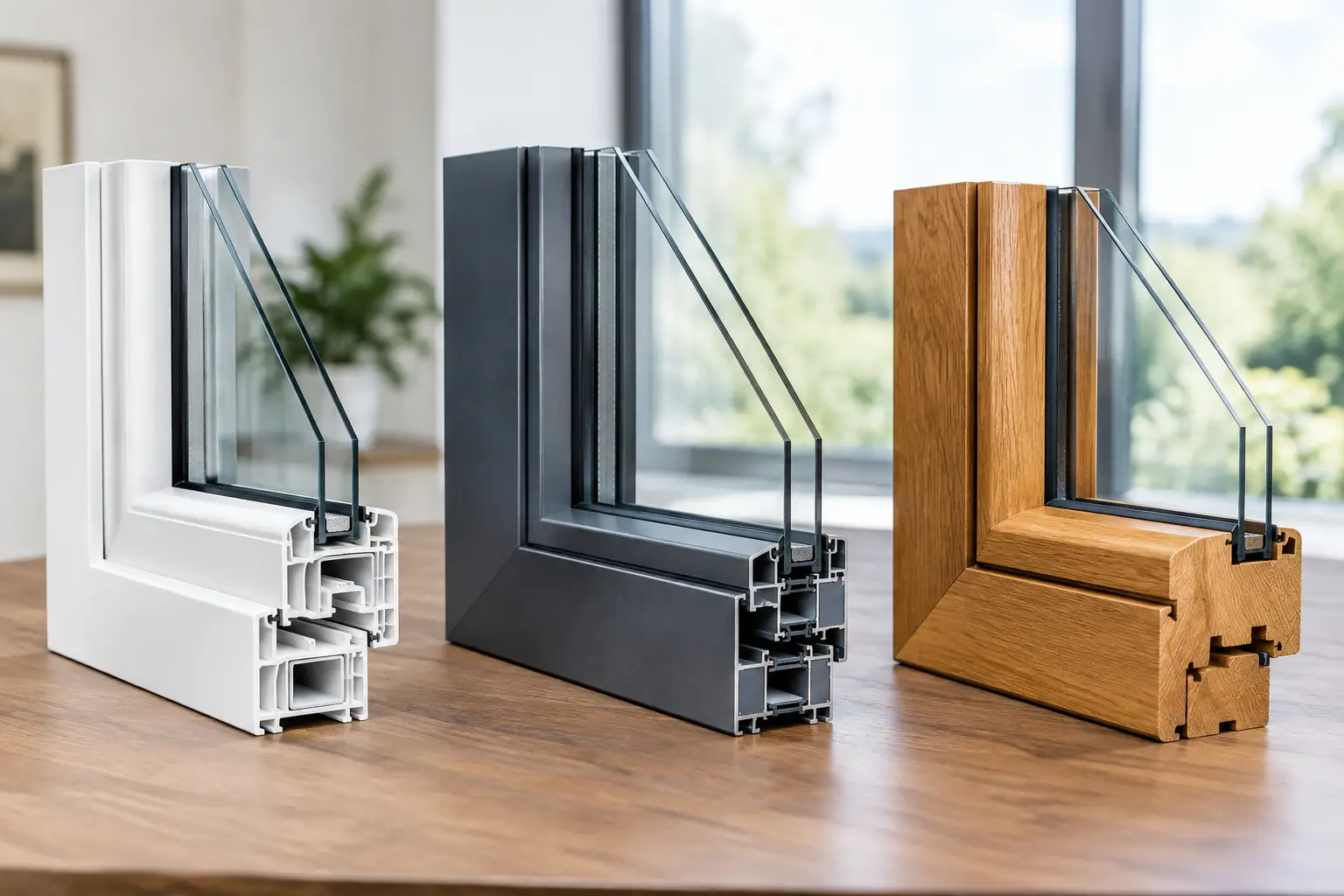
There are three main choices for most homeowners: uPVC, aluminium and timber. Each has genuine strengths. The right answer depends on the building and on what matters most to you.
uPVC windows: dependable, efficient and versatile
uPVC remains the most popular choice for replacement windows, and for good reason. Modern uPVC windows bear little resemblance to the basic white frames many people remember from decades ago. Quality systems are well insulated, secure and available in a broad choice of styles, colours and wood-effect finishes.
For many homes, uPVC offers the strongest balance of value, thermal performance and low maintenance. Multi-chambered frames help reduce heat loss, while well-specified double or triple glazing can make rooms feel warmer and reduce outside noise. The surface does not need painting or staining, and occasional cleaning with warm, soapy water is usually enough to keep it looking smart.
uPVC suits traditional casement windows, tilt-and-turn designs, sliding sash styles and flush sash windows. Flush sash is especially useful where homeowners want a more timber-like appearance, with the sash sitting neatly within the frame. Woodgrain foils in colours such as anthracite grey, black, cream and heritage green can move the look well beyond standard white.
The trade-off is that uPVC frames are generally thicker than aluminium. This is not a problem for most replacement projects, but it can matter where you want very large glazed areas or particularly slim lines. As with every material, the quality of the profile, glazing, hardware and installation matters more than the label alone.
When uPVC is likely to be the right fit
uPVC is a sensible choice if you want reliable performance, modest upkeep and excellent value over the long term. It is particularly well suited to family homes where warmth, security and a straightforward finish are the main priorities. A carefully selected flush sash or Residence-style system can also provide a more refined look for period-inspired properties.
Aluminium windows: slim, strong and contemporary
Aluminium is valued for its strength. Because it is a rigid material, it can support larger panes of glass with slimmer frames than uPVC. That means more daylight, clearer views and a crisp architectural finish that works particularly well on extensions, new builds and contemporary renovations.
It is also an excellent option for wide openings, feature windows and homes where aluminium bi-fold or sliding doors are part of the overall design. Matching window and door frames can bring a pleasing sense of consistency to the rear of a property.
Modern aluminium systems include thermal breaks within the frame. These insulating sections reduce heat transfer and allow high-quality aluminium windows to achieve strong energy performance. Combined with the right glazing specification, they can provide a comfortable home without compromising the slim profile that makes aluminium so appealing.
Aluminium is powder coated rather than painted in the usual sense. This creates a hard-wearing surface available in a wide range of colours, with popular options including black, grey and textured finishes. It needs very little routine maintenance beyond cleaning and checking that drainage channels remain clear.
The main consideration is cost. Aluminium is often a greater initial investment than uPVC, especially for a whole-house replacement project. It also has a more modern visual character, although heritage aluminium systems can be a good choice for properties that need finer glazing bars and traditional proportions.
When aluminium earns its place
Choose aluminium when sightlines, large glass areas and a modern appearance are high on your list. It is ideal for a garden-facing extension, a striking corner window or a property where daylight is as important as insulation. It can also be an excellent long-term choice for homeowners who want a durable, low-maintenance finish and are comfortable investing more at the start.
Timber windows: natural character with lasting appeal
There is nothing quite like the warmth and depth of real timber. Its natural grain, painted finish and traditional detailing make it a natural match for older homes, country properties and conservation-sensitive settings. Timber can be shaped and finished with great care, allowing faithful reproduction of period features such as slim glazing bars, horns and moulded profiles.
A well-made timber window can offer very good insulation and security. Modern engineered timber is designed for greater stability than older solid-timber frames, helping to reduce movement as temperatures and moisture levels change. Factory-applied coatings also provide far better protection than previous generations of paint systems.
Timber does ask more of the homeowner than uPVC or aluminium. It should be checked periodically for signs of wear, particularly on exposed elevations, and coatings will eventually need refreshing. This is not necessarily a disadvantage if you value the ability to repaint in a new colour or maintain an authentic period finish. It is simply a commitment to factor into the decision.
The price can also be higher, depending on the design and finish. For many homeowners, though, timber’s appearance and suitability for a character property justify the extra care and investment.
When timber is the better choice
Timber is often worth considering when preserving a home’s original character is the priority. It can be the right solution for cottages, listed or heritage-style properties, and houses where plastic or metal frames would feel visually wrong. Before ordering, check whether your property is in a conservation area and whether any planning requirements affect the design, glazing or finish.
How to compare windows beyond the frame
Material is only one part of the decision. Two windows made from the same material can perform very differently. Ask about the complete specification, not just the headline product.
Energy performance depends on the frame, glass unit, spacers and installation. Double glazing is suitable for many homes, while triple glazing can be worthwhile where maximum thermal performance or noise reduction is needed. It is not automatically the best choice in every opening, as it adds weight and cost, so it should be specified where the benefit is clear.
Security deserves equal attention. Look for high-quality locking points, secure hinges, internal beading and toughened glass where required, such as doors and low-level glazing. A well-fitted window should close smoothly and firmly, with no gaps that undermine its weather performance.
Style should be judged in context. White uPVC casements may suit one home perfectly, while a flush sash in a heritage colour could transform another. Aluminium can frame a modern extension beautifully but may look too sharp on a stone cottage. Viewing samples, finishes and recent installations helps turn a broad choice into a confident one.
Make the decision around your home
Start with the elevations that need attention. A busy road may make acoustic glazing more valuable. A north-facing room may benefit from the strongest practical thermal specification. A sunny rear extension might call for larger aluminium frames and glazing designed to manage solar gain. There is no benefit in paying for features that do not solve a real problem in your home.
It also pays to think beyond the windows themselves. New frames should complement your front door, roofline, brickwork and any patio or French doors. Matching colours across the property can improve kerb appeal, while a sympathetic material choice protects the character that made you like the house in the first place.
At JF Bodman Ltd, honest advice starts with how you live in the property, not with a one-size-fits-all recommendation. A free, no-obligation quotation gives you space to compare the options, understand the specification and choose a finish you will be happy to see every day.
The right window material is the one that gives your home warmth, security and a look that belongs there. Take time to compare real samples, ask practical questions about fitting and maintenance, and choose a solution that will still feel like quality worth the difference long after installation day.