
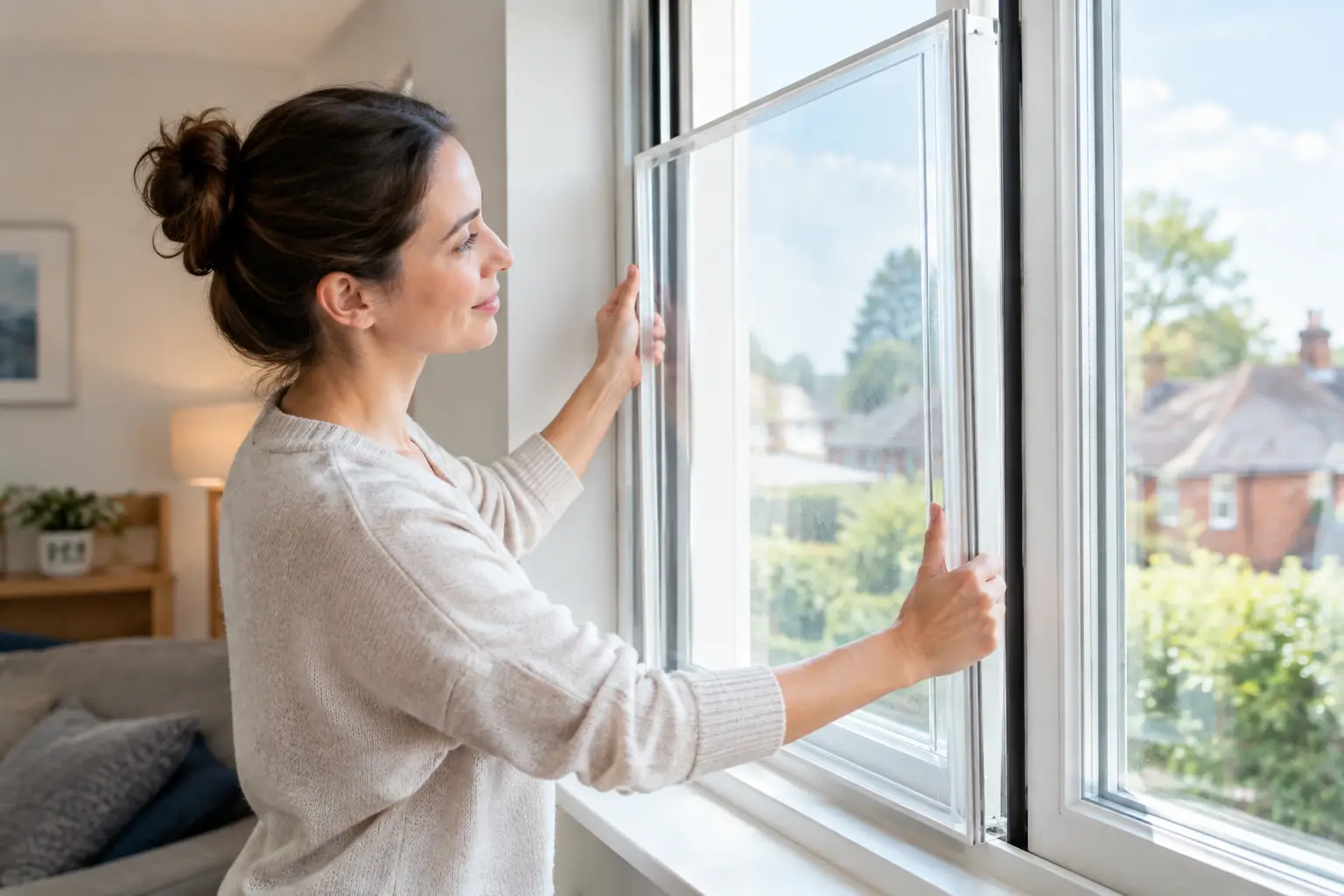
A cold draught by the window, traffic noise at bedtime or condensation on the inside of the glass can make an otherwise lovely home feel less comfortable. Secondary glazing is a practical way to improve older or difficult-to-replace windows without changing their external appearance. For many homeowners in Doncaster and across South Yorkshire, it offers a worthwhile middle ground between leaving existing windows as they are and investing in full replacement windows.
It is not the right answer for every property. The condition of the original windows, the space around the reveals and what you want to achieve all matter. However, when specified and fitted properly, it can make a noticeable difference to warmth, noise levels and day-to-day comfort.
What is secondary glazing?
Secondary glazing is an additional glazed panel fitted to the inside of an existing window. It creates a second barrier between your room and the outside, with an air gap between the two panes. Unlike replacement double glazing, the original window remains in place.
The internal unit is usually made to measure and can be fixed, hinged, sliding or lift-out, depending on the window and how it is used. A fixed panel may suit a window that does not need to open, while a hinged or sliding design can provide access for ventilation, cleaning and opening the original sash.
This approach is particularly useful where the character of traditional timber windows matters. Period homes, properties in conservation areas and houses with attractive original sliding sash windows can often benefit from improved performance while keeping the features that give the property its appeal.
Why homeowners choose secondary glazing
The most common reason is warmth. Older single-glazed windows lose heat quickly, especially on exposed elevations. The air gap created by a secondary panel reduces heat transfer, helping rooms feel less chilly and potentially reducing the demand placed on your heating.
The result will vary. A well-fitted internal panel can improve comfort considerably, but it will not solve heat loss through an uninsulated roof, draughty doors or poorly sealed floors. It works best as part of a wider plan to make a home more energy efficient.
Noise reduction is another strong reason to consider it. Homes near busy roads, railway lines or regular late-night traffic can be difficult to keep peaceful. The gap between the existing glass and the secondary pane helps disrupt sound transmission. In many cases, a larger gap performs better acoustically than simply adding another pane directly beside the first.
There are practical benefits too. Secondary glazing can help reduce internal condensation by keeping the inner glass surface warmer. It may also improve security, particularly when fitted with quality frames, secure catches and toughened glass where appropriate. It adds another physical barrier without altering the outside of the property.
Secondary glazing or replacement windows?
This is often the key decision. Replacement windows are usually the better long-term choice when existing frames are rotten, warped, difficult to secure or beyond economical repair. A high-performance replacement window can provide excellent energy efficiency, reliable ventilation options and a fresh finish inside and out.
Secondary glazing makes more sense when the primary windows are in sound condition and worth retaining. That could mean original timber sash windows with good proportions, heritage windows where appearance is important, or a home where external changes may be restricted. It can also be an appealing option where a homeowner wants to improve one particularly cold or noisy room before committing to a larger project.
Cost should be considered carefully rather than treated as the only deciding factor. Secondary units can be less disruptive than full replacement, but bespoke internal glazing still requires accurate surveying, quality materials and skilled installation. A cheap, poorly sealed panel is unlikely to provide the comfort or finish you expect.
The types of secondary glazing available
The right style depends on the original window and how you live in the room. Fixed units are neat and effective where opening is not required, such as on a decorative or inaccessible window. They tend to offer a clean appearance and a reliable seal.
Hinged units open inwards and are useful where regular access is needed. They can be a good match for casement windows, particularly if you need to open the original window for ventilation or cleaning. Sliding panels are often used on wider openings and can suit traditional sash windows, while lift-out panels provide a discreet option for windows that only need occasional access.
The frame finish also deserves attention. White remains popular, but many systems can be chosen in colours that sit quietly against painted timber, neutral interiors or darker contemporary schemes. The aim should be for the secondary unit to look considered, not like an afterthought.
Installation details that make the difference
A successful installation begins with a proper survey. Every older property has its own quirks: uneven plaster lines, deep timber reveals, shutters, blinds, window boards and opening sashes can all affect what will fit and how it should operate.
The secondary frame needs to be positioned carefully and sealed around its edges. Gaps reduce thermal and acoustic performance, while an awkwardly placed unit can make the original window difficult to use. The installer should also consider handles, catches and escape requirements, especially in bedrooms.
Ventilation should never be overlooked. Windows do more than admit light. They help manage moisture in kitchens, bathrooms and bedrooms. If the original window has trickle vents, or if a room is prone to condensation, it is sensible to discuss how fresh air will continue to move through the space. The goal is a warmer home, not one that feels stuffy.
Can secondary glazing stop condensation?
It can help, but it is not a guaranteed cure on its own. Condensation forms when warm, moisture-laden indoor air meets a cold surface. By making the room-side glass warmer, secondary glazing can reduce the likelihood of water forming on the window.
However, everyday activities such as cooking, showering and drying clothes indoors all add moisture to the air. If ventilation is poor, condensation may still appear elsewhere in the room. Extractor fans, sensible use of trickle vents, keeping lids on pans and maintaining steady background heating can all make a difference.
If you see moisture between the original window and the secondary panel, it may indicate that moist air is reaching the cavity. This is one reason careful sealing and correct installation are so important.
Is it suitable for listed and period properties?
Often, yes. Because secondary glazing is fitted internally, it can preserve the external appearance of an older property. This makes it a popular option for homes with traditional timber windows, fine glazing bars or features that would be lost with a standard replacement.
That said, listed buildings and properties in conservation areas can have specific requirements. It is sensible to check whether consent is needed before work begins, particularly if the installation could affect historic fabric or the way the window is used. A sympathetic, made-to-measure solution is usually far more appropriate than a generic panel.
What to ask before you decide
Start with the problem you are trying to solve. If road noise is the main issue, ask about acoustic performance and the available cavity depth. If warmth is the priority, look at the condition of the existing window as well as the proposed secondary unit. Where security matters, ask about locking options and glass specifications.
It is also worth asking how the panel will open, how it will be cleaned and whether it will affect curtains, shutters or blinds. These details are easy to miss at the start, yet they have a real impact on how satisfied you will be after fitting.
For homeowners who want to retain valued original windows while improving comfort, secondary glazing can be a sensible investment. Honest advice matters here: sometimes a carefully designed secondary system is the right answer, and sometimes replacement windows will offer better value over the years ahead.
A home should feel warm, quiet and secure without losing the character that made you choose it. A professional survey and a free, no-obligation quotation from JF Bodman can help you assess the options with confidence and choose a solution that suits your property rather than a one-size-fits-all approach.