
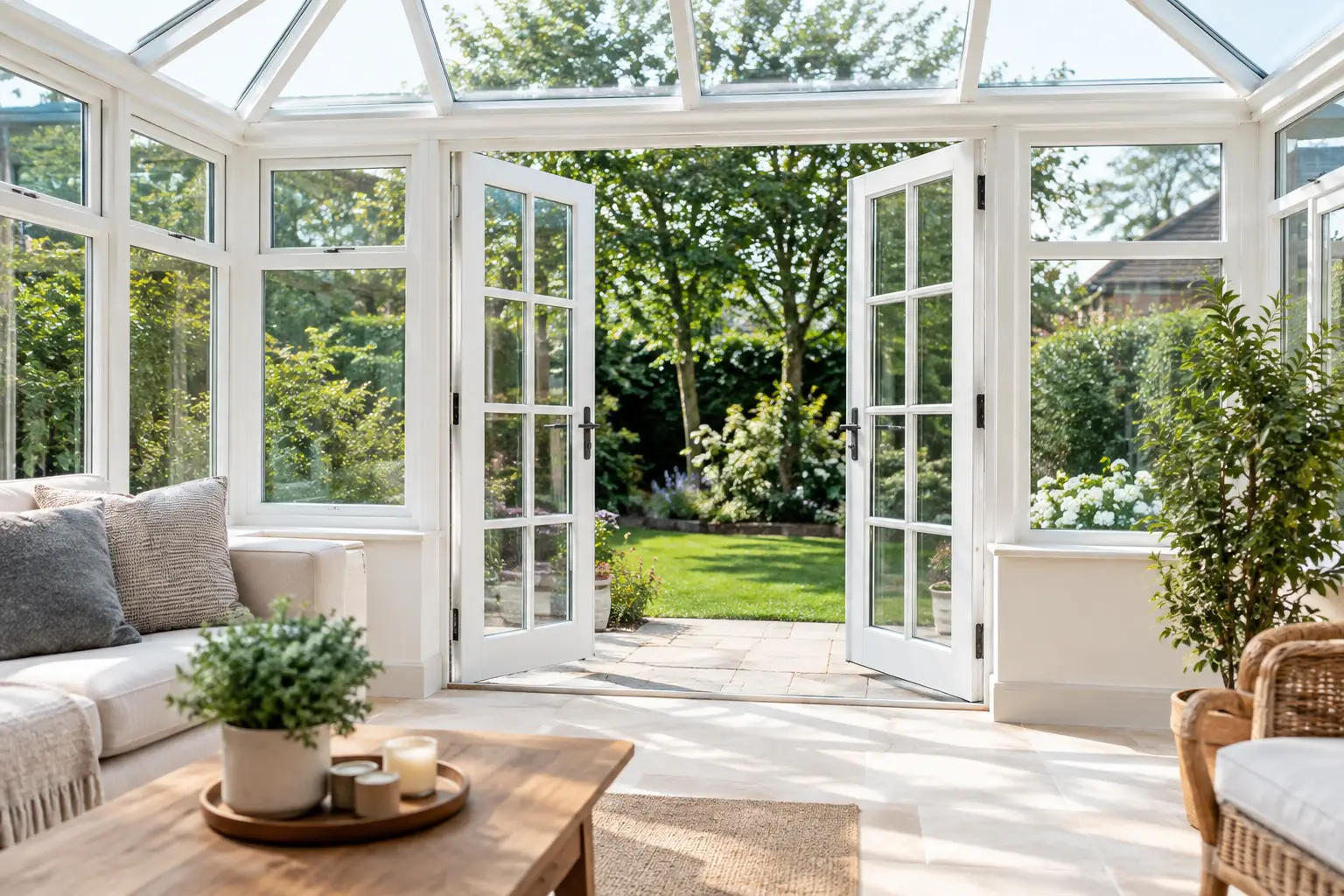
A conservatory should feel like part of the house, not a room you only use when the weather is just right. The right French doors for conservatories can make a real difference: bringing in light, improving access to the garden and helping the space feel warmer, safer and more connected to your home.
For many Doncaster and South Yorkshire homeowners, French doors are the natural choice. Their paired opening gives a wide, welcoming route outside without the visual weight of a large sliding door. Yet the best option depends on where the doors sit, how you use the room and what the rest of the property calls for.
Why French doors work so well in a conservatory
French doors have two hinged leaves that meet in the middle. Open both and you have a broad, clear opening for garden furniture, children, pets and summer gatherings. Open one leaf for everyday use and the room remains practical through the year.
Their glazed design is particularly suited to conservatories, where daylight is already a key part of the appeal. Slim sightlines keep the view of the garden open while the frame gives the space a defined, traditional finish. They can suit a period terrace, a 1930s semi or a more contemporary extension, depending on the material, colour and handle style chosen.
They are also a sensible answer where there is not enough wall width for bi-folding doors, or where homeowners prefer the familiar operation of hinged doors. A French door is straightforward to use, easy to live with and never relies on a complicated moving system.
Choose the right location before choosing the style
French doors may connect a conservatory to the garden, or they may sit between the main house and conservatory. These are different jobs, and the door specification should reflect that.
External doors need to cope with rain, wind, changing temperatures and daily security demands. They should have suitable weather seals, toughened safety glass and a secure locking system. In a north-facing or exposed garden, thermal performance matters even more, as cold glass and draughts can make a conservatory less pleasant in winter.
Internal French doors, meanwhile, are often chosen to divide the house and conservatory while retaining light. They can help keep warmth in the main home on colder days and reduce noise from the garden-facing room. Because they are not exposed to the weather, homeowners may have more freedom with finish and glazing design, although safety glass is still worth discussing for low-level panels and busy family homes.
Also consider the swing. Doors opening outwards preserve conservatory floor space, while doors opening inwards can be preferable if there is a patio step, narrow path or raised planting area directly outside. A survey should establish this early, along with the available clearance for each leaf.
French doors for conservatories in uPVC, aluminium or timber
Material affects appearance, maintenance, cost and frame proportions. There is no single best answer, only the right choice for the property and your priorities.
uPVC French doors
uPVC remains a popular choice for conservatories because it offers dependable insulation, low maintenance and good value. Modern uPVC frames are a long way from the bulky designs many people remember. Available in white, anthracite grey, black and realistic woodgrain finishes, they can be matched closely to replacement windows and existing conservatory frames.
A quality uPVC door will not need painting, and routine care is limited to cleaning the frame, glass and tracks around the threshold. It is an especially practical option for homeowners looking to update an older conservatory without taking on unnecessary upkeep.
Aluminium French doors
Aluminium has a cleaner, more contemporary appearance, with naturally strong frames that can allow slimmer profiles and larger glass areas. It suits modern extensions and properties with aluminium windows, roof lanterns or bi-fold doors elsewhere in the home.
It is durable and requires little maintenance, but is usually a higher initial investment than uPVC. Quality thermal breaks within the frame are essential, so the door helps retain heat rather than transferring cold from outside.
Timber French doors
Timber brings warmth and character that is difficult to replicate, making it a strong fit for cottages, Victorian homes and conservation-minded upgrades. It can be painted in a wide choice of colours or finished to show the grain.
It does need more care than uPVC or aluminium. Well-made, properly finished timber can perform beautifully for many years, but it should be inspected and maintained in line with the manufacturer’s guidance. For homeowners who value authentic detail, that extra attention can be worthwhile.
Keep the conservatory comfortable all year
A bright conservatory can become too hot in summer and too cool in winter if the doors are poorly specified. The glass and seals in your French doors therefore matter as much as the frame colour.
Double glazing is standard for most replacement external doors, with modern sealed units helping to reduce heat loss and outside noise. Depending on the position of the conservatory, you may also want to discuss solar-control glass, low-emissivity coatings or privacy glass. South- and west-facing rooms can benefit from glass that limits excessive solar gain, though no glass choice removes the need for sensible ventilation and shading altogether.
Toughened safety glass is normally used in door panels. It is designed to break into small, less hazardous pieces if damaged, providing reassurance around children, pets and everyday garden activity.
Do not overlook the threshold. A low threshold makes the route to the garden easier for pushchairs, wheelchairs and anyone who finds steps difficult. However, it needs to be detailed correctly to maintain weather protection, particularly where the patio level is high. This is one of those decisions where an experienced installer’s advice is more useful than a quick online comparison.
Security should be built into the design
Conservatory doors are often at the rear of the property, where privacy can make security feel especially important. A good French door system combines several features rather than relying on one impressive-looking lock.
Look for multi-point locking that secures the door at several points around the frame, quality hinges designed to resist attack and reinforced sections where required. External handles should be durable and chosen with security in mind. Laminated glass may also be worth considering in particular locations, although toughened glass remains a common safety solution.
The meeting point between the two door leaves deserves attention. One leaf is typically the everyday opening door, while the other is secured by flush bolts until needed. A well-fitted system should close firmly, operate smoothly and have no visible gaps around the frame. Security is not only about the product on paper – accurate installation is what allows every component to do its job.
Match the details to your property
The small choices are often what make French doors look as though they belong. White uPVC is a classic choice for many conservatories, while anthracite grey can provide a sharper contrast against brickwork or render. Woodgrain foils can soften the look of a newer frame on more traditional homes.
Glazing bars create a cottage or heritage feel and can be fitted within the sealed unit for easier cleaning. Plain glass offers a simpler, more modern view. Handles, hinges and trickle vents should be considered as part of the whole design rather than afterthoughts. Black hardware can suit a contemporary scheme, while chrome, white or traditional finishes may sit better with existing windows.
Try to view the doors from inside as well as outside. From the garden, they contribute to the rear elevation of the property. From the conservatory, they frame the view you will see every day. The best choice balances both.
A professional survey prevents expensive compromises
Replacing conservatory doors is not simply a case of measuring an opening and ordering a frame. Older conservatories may have settled slightly, existing thresholds can hide drainage issues, and the supporting frames around the opening need checking before new doors are fitted.
A proper survey will confirm accurate sizes, opening direction, glazing requirements and whether any repairs or alterations are needed. It also gives you the chance to raise practical questions: Will the door clear the outdoor furniture? Is the patio level suitable? Do you need a cat flap, integral blinds or restricted opening for young children?
At JF Bodman, the approach is based on honest advice, quality products and fitting that homeowners can rely on. A free, no-obligation quotation should leave you clear about the specification, the installation process and the cost, without pressure or guesswork.
A well-chosen pair of French doors can give your conservatory a better daily purpose – a warm place to sit, an easy route to the garden and a view that feels open even when the doors are closed. Start with how you want the room to work, then choose the material and details that will keep working for years to come.