
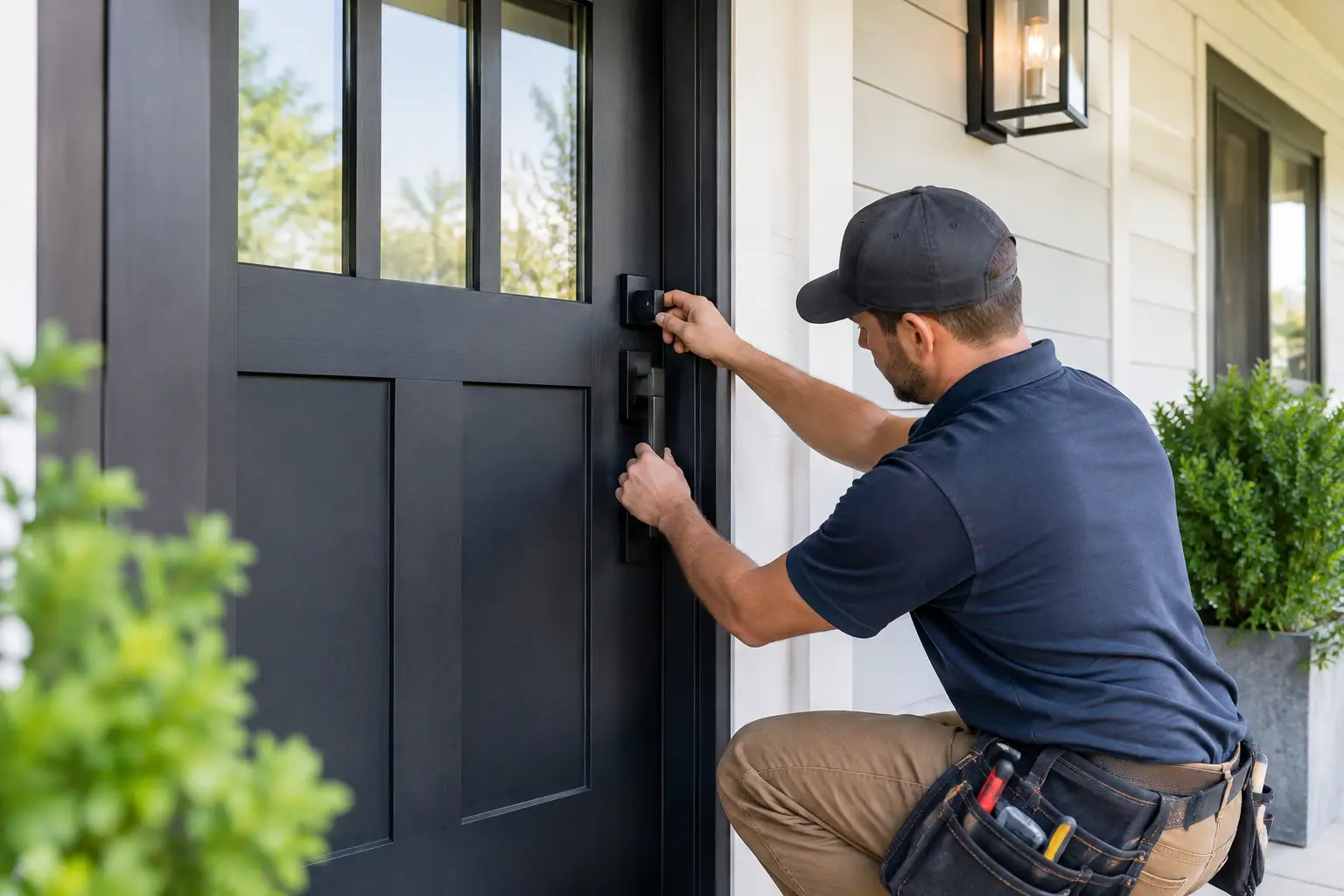
A front door can look solid, feel heavy and still leave weak points around the lock, hinges or frame. That is why secure front door installation is about far more than choosing an attractive new door. It is the combination of the door, frame, glass, hardware and fitting standard that gives your home proper protection.
For homeowners across Doncaster and South Yorkshire, a replacement front door is often chosen to improve kerb appeal or stop draughts. Those benefits matter, but security should be considered from the first conversation. A well-specified and professionally fitted entrance gives you everyday reassurance, whether you are at home with the family, away at work or heading off on holiday.
Security starts with the complete door set
A secure door is not simply a strong slab with a good lock attached. The frame must be correctly sized, securely fixed and properly aligned. The hinges need to support the door without movement, and the lock must engage cleanly every time it closes. If one part is poorly fitted, the whole entrance can be compromised.
This is why it pays to look at the complete door set rather than comparing a headline price for a door panel alone. Professional installation ensures the frame is fixed into sound brickwork or structure, the door operates correctly and the seals close evenly. It also helps prevent the sticking, rattling and gaps that can develop when an entrance has been rushed into place.
A good fitter will check the opening carefully before ordering. Older South Yorkshire properties can have uneven reveals, altered porches or previous frames that have hidden problems underneath. Measuring accurately and allowing for these details creates a neater finish and a more dependable result.
Choose a door material that suits your home
There is no single best material for every property. The right choice depends on your preferred appearance, budget, exposure to the weather and the level of maintenance you are comfortable with.
Composite doors are a popular choice for family homes because they combine a substantial feel with insulating cores, durable skins and a wide choice of colours and styles. They can suit anything from a traditional terraced home to a newer detached property, and are available with decorative glazing without losing sight of security.
uPVC front doors offer good value, low maintenance and reliable thermal performance. They are a practical option where a clean, straightforward look is wanted. Aluminium doors are particularly strong, slim in profile and well suited to contemporary entrances or larger glazed sections. Timber brings natural character and can be an excellent fit for period homes, although it needs the right finish and ongoing care to keep it looking its best.
The material alone does not decide how secure a door will be. High-quality locking, reinforced areas, dependable hinges and correct installation matter just as much. Honest advice should help you balance those factors rather than push you towards a product that does not suit the property.
Locks and hinges deserve close attention
The lock is the part of your front door you rely on every day, so it should feel positive and work without force. Many modern doors use multipoint locking, which secures the door at several points around the frame when the handle is lifted and the key is turned. This spreads resistance across the door rather than relying on a single central lock.
Where a euro cylinder is used, choose a quality cylinder designed to resist common forms of forced entry. It should be fitted at the correct depth too. A cylinder that protrudes too far from the handle can create an unnecessary vulnerability, while one that sits properly within the furniture is better protected.
Hinges are equally important, especially on outward-opening doors. Security hinges and hinge bolts can help prevent the hinge side from becoming a weak point. On any door, the hinges should be fixed firmly, aligned correctly and free from excessive play. A door that drops over time may stop locking fully, so do not ignore a handle that becomes difficult to lift or a door that needs a shove to close.
Glazing should add light, not uncertainty
Glazed panels, sidelights and fanlights can make a hallway feel brighter and create a more welcoming entrance. They should not mean accepting a weaker door. Toughened safety glass is a sensible minimum in many door applications, while laminated glass can provide additional resistance and help hold the pane together if it is broken.
The placement of glazing also matters. A small decorative panel can preserve privacy and character. Larger panels may suit a contemporary entrance, but should be specified with security and sightlines in mind. If glazing is close to the lock, the glass type and overall design need careful consideration.
Obscure glass is useful where your front door faces a busy pavement or nearby homes. It lets daylight into the hall while reducing the view inside. There are many patterned and contemporary options, so privacy does not have to come at the expense of style.
Why fitting quality makes the difference
Even a premium door can underperform if the installation is poor. The frame must be level, square and fixed at suitable points without being distorted. The door then needs to be adjusted so the locking points engage smoothly and the compression seals form an even barrier against wind and rain.
A secure front door installation also includes the details homeowners do not always see straight away: suitable packers, correct fixings, a tidy weatherproof seal and a properly finished internal reveal. These details help to keep the entrance stable and prevent gaps that affect both security and energy efficiency.
Ask how the installer deals with the existing frame and any unexpected issues around the opening. Reusing poor substrates or fitting around damaged brickwork may save time on the day, but it is rarely the right long-term answer. A reputable local company should explain what is needed clearly, without pressure or vague promises.
Check the door after installation
Once fitted, take a moment to use the door as you will in normal life. It should close without slamming, the handle should lift smoothly and the key should turn without catching. Check that the lock engages fully when the door is shut, rather than only when it is pulled hard towards the frame.
Look at the gaps around the door from inside and outside. They should be even, with seals sitting neatly in place. Open the door fully and make sure it does not scrape the threshold or swing unpredictably. If it has a letterplate, check that it is securely fitted and does not create an easy route to internal handles or keys.
Keep keys out of reach of the letterplate and avoid leaving them in the inside of the cylinder overnight if that could prevent access from outside in an emergency. It is also wise to test your door after very hot or cold weather, as small adjustments can occasionally be needed while a new installation settles.
Match security with the way you live
The strongest-looking door is not always the most suitable one. A family with children may prioritise a low threshold, clear sight of visitors and easy day-to-day locking. A period property may need a heritage-style entrance that respects its character. A home on an exposed road may benefit from extra privacy glazing and weather protection.
Think about the full entrance too. Side gates, garage access, porch doors and poor external lighting can all affect how secure the front of a property feels. A new front door is an excellent starting point, but it works best as part of a considered approach to the home.
JF Bodman has been fitting doors for local homeowners since 1974, with the practical knowledge to help match style, efficiency and security to the property in front of you. The right door should look at home from the pavement, feel reassuring when it closes and continue to do its job reliably for years to come.