
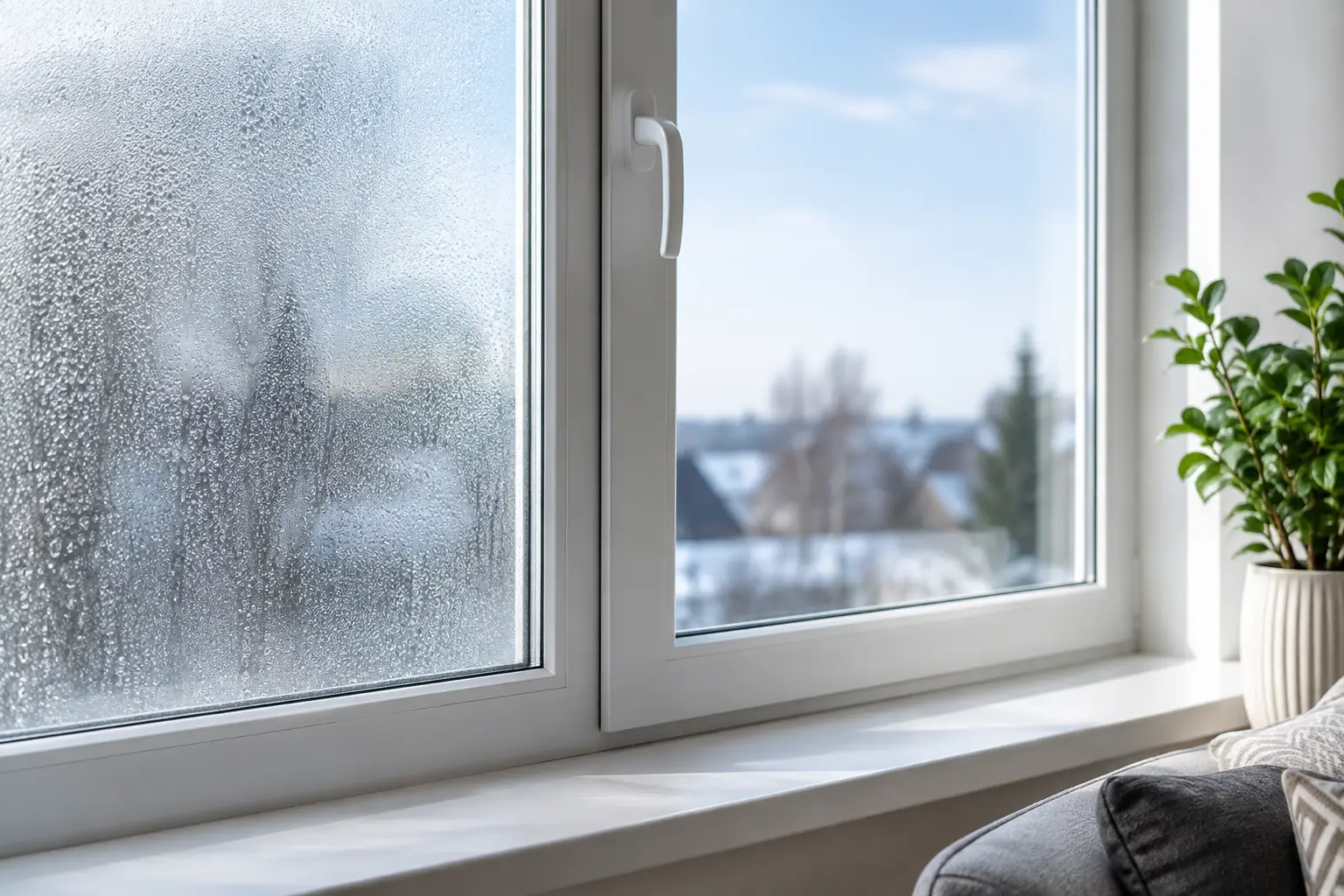
Waking up to water running down the inside of a bedroom window is more than an annoyance. Left to build up, condensation can damage timber finishes, encourage mould around reveals and make rooms feel cold and unhealthy. The best windows for reducing condensation keep the inner pane warmer, but the right answer also depends on ventilation, insulation and how your household uses each room.
For homeowners in Doncaster and across South Yorkshire, replacement windows can make a noticeable difference during a cold, damp winter. Good glazing and a careful installation reduce cold internal surfaces where moisture settles. They do not remove the need to air the home, particularly in kitchens, bathrooms and busy family households, but they give that moisture far fewer places to collect.
Why condensation forms on windows
Condensation appears when warm, moisture-laden air meets a colder surface. The air cools quickly at the glass, cannot hold as much water vapour, and releases it as droplets. Single glazing and older double-glazed units are common trouble spots because their internal pane can become very cold overnight.
Everyday life produces more moisture than most people realise. Showering, cooking, drying washing indoors, using a tumble dryer that is not properly vented and even sleeping all add water vapour to the air. A home that has been draught-proofed but has poor background ventilation can trap that moisture inside.
It is worth identifying where the condensation sits. Moisture on the room-side surface usually points to high indoor humidity or cold glazing. Mist or droplets between two panes indicate a failed sealed unit and need professional attention. Condensation on the outside of modern, efficient glazing is often a sign that the outer pane is staying cold while heat is being kept inside. It may look unusual, but it is not normally a fault.
The best windows for reducing condensation: start with glazing
High-performance double glazing is the practical starting point for most replacement projects. A sealed unit with two panes, a low-emissivity coating and an insulating gas-filled cavity helps retain heat in the room. Because the internal pane is warmer, it is less likely to fall below the dew point where condensation forms.
Triple glazing can take this a stage further. Its additional pane and cavity can improve the inner glass temperature, making it especially useful for north-facing rooms, exposed properties or bedrooms where overnight condensation is persistent. It also offers strong thermal and acoustic performance.
That said, triple glazing is not automatically the best choice for every property. It is heavier, can cost more and may not provide a proportionate improvement where good-quality double glazing already suits the home. The size and orientation of the window, the frame system, the condition of surrounding walls and the room’s ventilation all matter. Honest advice should consider the whole opening rather than simply choosing the highest specification on paper.
Low-E glass and warm-edge spacers
Look beyond the number of panes. Low-E glass has a near-invisible coating that reflects warmth back into the room while allowing useful daylight through. It is a key part of an energy-efficient glazed unit.
Warm-edge spacer bars are equally worthwhile. These sit around the perimeter between panes. Older aluminium spacers can create a colder edge to the unit, where condensation often starts. Modern warm-edge spacers reduce this cold bridge and help keep the glass temperature more even from centre to edge.
Ask about the window’s whole-unit U-value, not just the centre-pane figure. The whole-unit rating accounts for the glass, frame and spacer, giving a more realistic picture of how the finished window will perform.
Choose frames that support thermal performance
The glass receives most of the attention, yet the frame has a real role in keeping condensation at bay. A poorly insulated frame can remain cold around the edges, even with excellent glazing.
Modern uPVC windows are a popular choice because their multi-chambered profiles provide good thermal insulation, require little maintenance and suit a wide range of homes. They are available in traditional white as well as woodgrain and contemporary coloured finishes, so improved efficiency need not mean compromising on appearance.
Aluminium frames are slim, strong and particularly well suited to larger glazed areas or a modern look. For condensation control, choose a system with an effective thermal break. This insulated section separates the internal and external parts of the frame, preventing cold from travelling directly through the metal.
Timber is naturally insulating and can be an excellent option for period homes, cottages and properties where the character of the window matters. A well-made, properly finished timber window with efficient glazing combines warmth with authentic style. It does, however, need periodic care to protect the finish and maintain its long-term performance.
The best material is the one that suits the property, the desired style and the maintenance you are comfortable with, while delivering strong whole-window thermal performance.
Window styles and ventilation matter too
A new window should help you manage fresh air as well as heat. Opening windows wide for a few minutes after cooking or showering can clear humid air quickly without cooling the fabric of the home for hours. Some styles make this simpler than others.
Casement windows are versatile and can provide a useful opening for everyday airing. Tilt-and-turn windows offer another practical option: the tilt position allows controlled background ventilation while maintaining a degree of security. Sliding sash windows can suit heritage properties and can create airflow by opening the upper and lower sashes, although performance depends on the quality of the seals and installation.
Trickle vents are often an important part of the specification. They provide controlled background ventilation when the window is closed, helping moisture escape gradually. They should not be blocked, painted over or permanently shut during winter just because they admit a little cool air. Used correctly, they help protect the home from the greater discomfort and expense of damp.
In bathrooms and kitchens, opening a window works best alongside suitable extractor fans. Run the fan during and after showers, use pan lids when cooking and avoid drying clothes on radiators wherever possible. Windows reduce the likelihood of condensation, but they cannot compensate for a room that is constantly producing moisture with nowhere for it to go.
Fitting quality is part of the solution
Even premium windows can disappoint if they are not measured, sealed and fitted correctly. Gaps around the frame can cause draughts and cold patches, while poor alignment may affect weather seals, locking and ventilation. The junction between the window, the wall and the internal reveal needs the same attention as the glazed unit itself.
A professional survey should consider the existing opening, cavity condition where relevant, lintels, external finishes and internal trims. This is particularly valuable in older South Yorkshire homes, where walls and openings are not always perfectly square and previous replacement work may have left hidden issues.
The installation should leave the window operating smoothly, sealed against the weather and finished neatly indoors and out. It is the difference between buying a window and gaining a properly performing part of the home.
Signs it may be time to replace your windows
Persistent room-side condensation alone does not always mean replacement is necessary. First check ventilation habits and humidity levels. However, new windows may be worth considering if condensation is joined by draughts, cold glass, decaying timber, discoloured frames, difficult operation or failed units with moisture trapped between the panes.
If mould is appearing repeatedly around window reveals, look beyond the frame as well. Insulation gaps, cold bridges in the wall and insufficient extraction can all contribute. A sensible assessment considers the cause before recommending a product.
When choosing replacements, prioritise efficient sealed units, low-E glass, warm-edge spacers, insulated frames and ventilation that works for the way your family lives. A well-specified window, fitted with care, should make rooms warmer, clearer and more comfortable through the colder months.
A dry window is a welcome sign, but the real aim is a home that holds its warmth while letting stale, humid air out at the right pace. Taking a little time to match glazing, frames and ventilation to each room will bring better comfort and lasting peace of mind.